
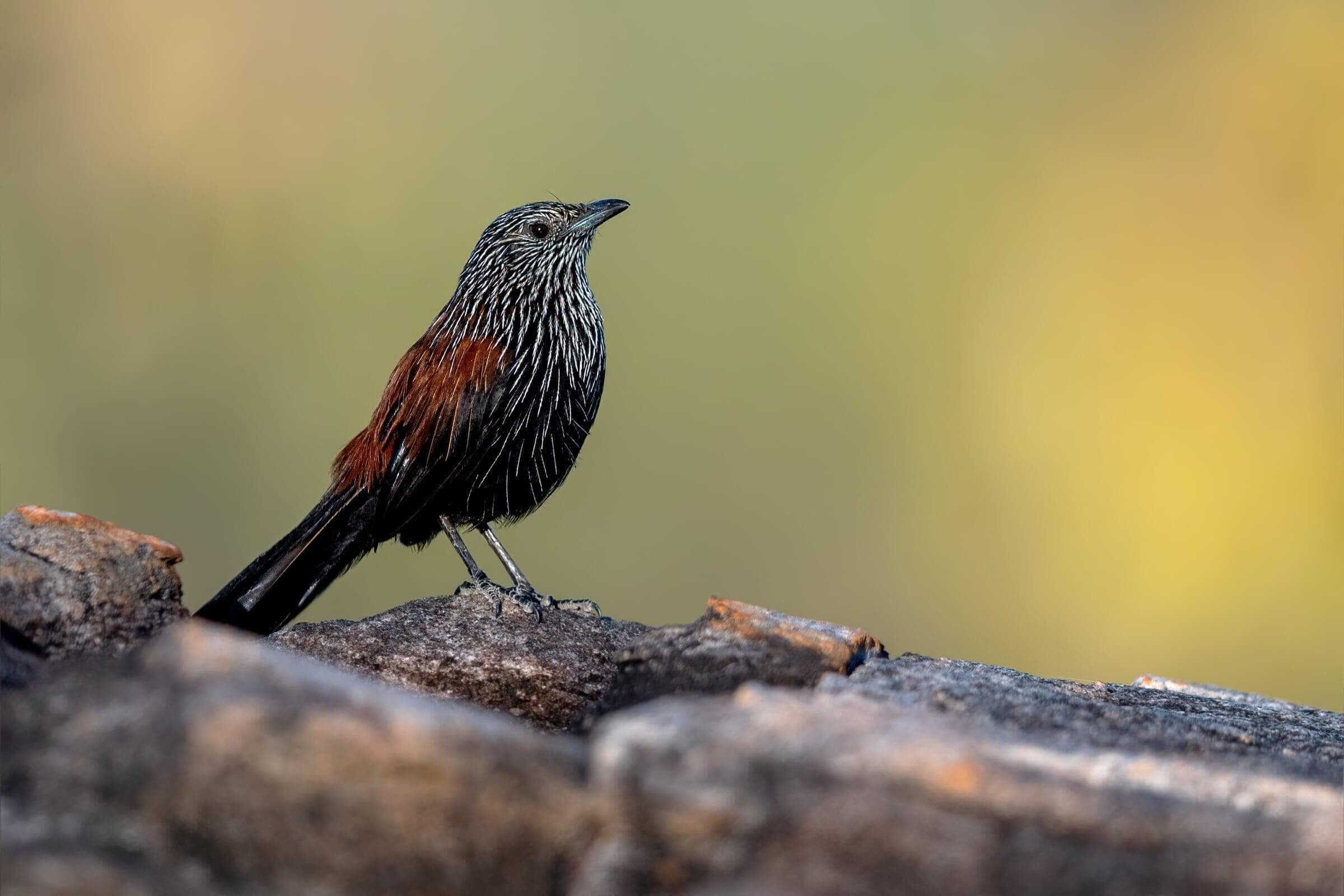
There are easier Australian birds to photograph than Black Grasswrens. Unfortunately, none of them are Black Grasswrens!
I had originally planned to drive from Darwin to the Mitchell Plateau in 2020 to see them, along with a number of other Top End birds, but the trip was cancelled due to COVID-related interstate travel restrictions. That at least meant I already had a rough itinerary and had done some very basic research. At some point I started talking about the idea with Veeraj Sheema and Raghav Sharma, and we eventually ended up booking a 4WD Toyota Prado with all-terrain tyres, insurance on the route and recovery equipment in Darwin for an eight-night road trip.
The most common way to attempt Black Grasswren is to travel by 4WD to the area around Mitchell Falls on the Mitchell Plateau and search for them there. It’s also possible to reach the area by light aircraft and helicopter. In the past, the species was sometimes attempted at other sites, such as Bachsten Camp and Surveyors Pool, but at the time of writing these sites have been closed to visitors for a number of years. A final option, for those less concerned about getting the best photographic conditions or having plenty of time to search, is offered by some Kimberley cruise operators, which make landings in areas where Black Grasswrens can be found.
Darwin
Veeraj and Raghav landed in Darwin earlier than I did, so they squeezed in some early-morning birding, collected the hire car and made a start on the shopping list before picking me up from the airport for a final round of supplies. We had brought most of our camping gear with us in our luggage. Lightweight hiking equipment is ideal for this sort of trip, as things like compact air mattresses, inflatable pillows and down sleeping bags take up little space and weight compared with conventional camping gear. This meant we could bring most of what we needed from home and only had to buy food, cooking supplies and a few odds and ends after arriving in Darwin.
We had agreed to sort out breakfast and lunch individually, while cooking dinner communally and sharing things like fruit and snacks. Veeraj had borrowed a camp stove from a friend in Darwin, and we picked up a frying pan. Unfortunately, none of the places we visited seemed to sell a suitable knife, and we also couldn’t find gas canisters that fitted the borrowed stove. We therefore spent much of the trip chopping vegetables with a $3 pair of scissors and bought another small stove from Bunnings.
Darwin, Pine Creek, Katherine
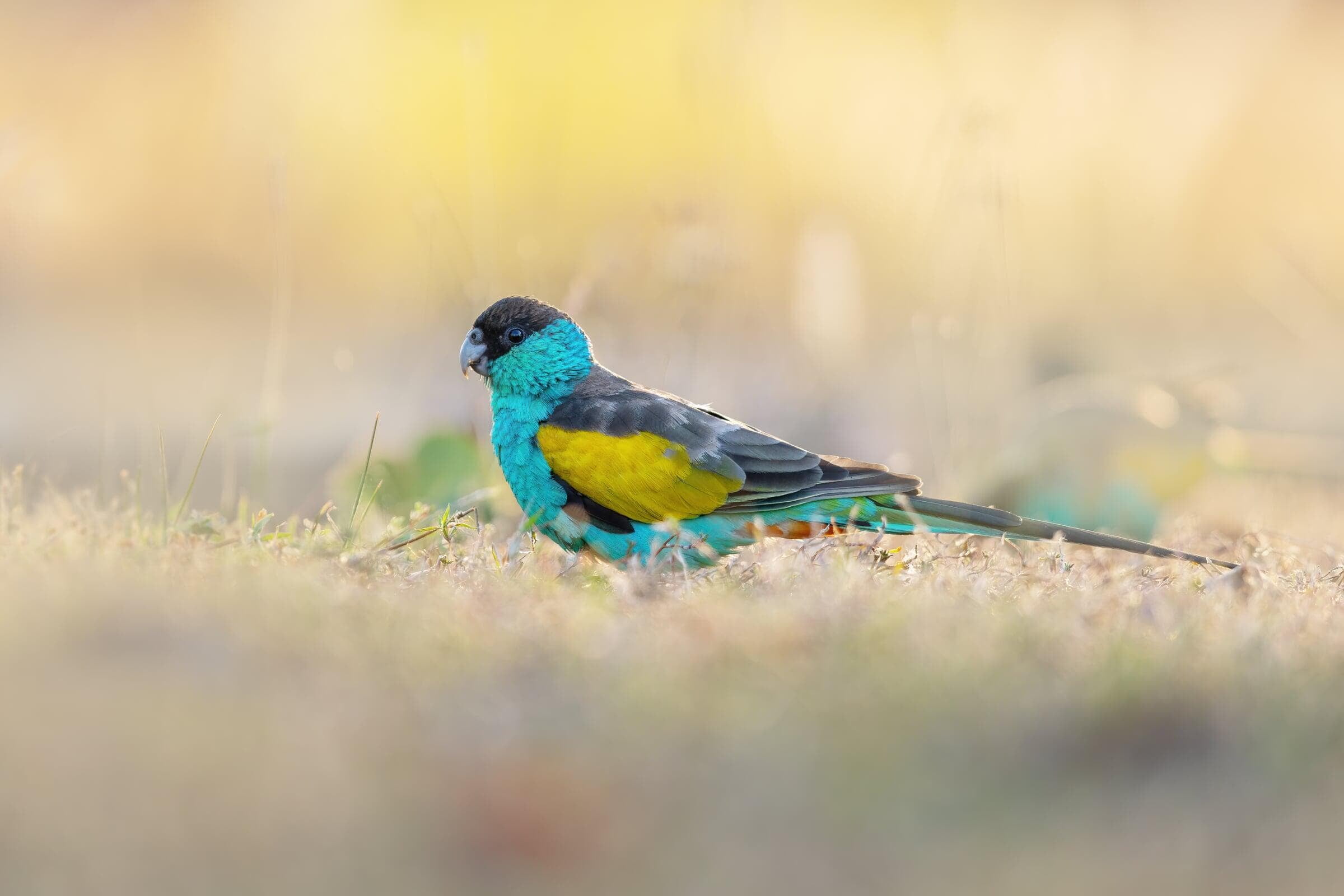
Our first destination was Pine Creek, where we had agreed to stay until sunset, or close to it. The main target for all three of us was Hooded Parrot. We weren’t initially sure where to concentrate our efforts, but after a short drive around we eventually settled on the small Water Gardens park in the centre of town, reasoning that the parrots would probably come in to drink at the ponds.
At first, there was no sign of them. Eventually, though, a few appeared in trees overhead before moving across to the Pine Creek Multi Resource Centre, where they drank from a dripping tap directly in front of a rather unattractive chain-link fence. Fortunately, things improved before long. The birds began staging in the park again and eventually started coming down near another tap on the edge of Railway Terrace.
We crept over very slowly and managed a few basic shots. At one point I walked towards the tap, where several birds appeared to be waiting for water, and turned it on just enough to create a slow drip and a small puddle. The parrots allowed me to approach within two or three metres before flying up into a tree above me. Once I moved away, they quickly returned to drink and bathe, giving us opportunities for photos on the ugly steel railings around the tap and for a few attempts at flight shots.
After bathing, the birds began feeding on the grass immediately behind us. We lay down and kept very still while they gradually worked their way towards us, and this was when I managed some of my better photographs. Unfortunately, the opportunity only lasted a few minutes before a couple of other birdwatchers approached and inadvertently flushed the flock back into the trees.
After the birds had moved on, we spent a little more time looking around Pine Creek before continuing south towards Katherine. We stopped there for dinner to break up the drive, although the meal was fairly disappointing, then continued for another hour or so to the Vince Connolly Limestone Creek campsite. I drove cautiously because of the increased risk of wildlife on the road after dark, but in the end we saw only one or two Agile Wallabies.
Gorrie/Dry River Road
The next morning we birded at a waterhole along one of the creek lines crossing the Gorrie/Dry River Road. It turned out to be one of the best mornings of the trip. We spent a few fairly painful hours lying on the rocky ground under camouflage and watched as a steady variety of species came in to drink at close range. These included Banded Honeyeaters, Great Bowerbirds, Rufous-throated Honeyeaters, Hooded Parrots and plenty more.
We also spent some time searching the surrounding area for Northern Shrike-tit and Black-tailed Treecreeper. We only managed to find the latter, but the waterhole itself more than made up for it.
We would later return to this site in the afternoon, but the light orientation was best in the morning.
Kununurra and Wyndham
We spent much of the middle of the day driving towards Wyndham. We made a quick stop at Timber Creek, although we planned to return on the way back and the midday light wasn’t particularly good, so it was mostly an opportunity to stretch our legs. We did manage to flush a Chestnut-backed Buttonquail while looking around for them, but none of us really got a satisfactory view.
By mid-afternoon we had reached Kununurra. Unfortunately, Western Australia’s quarantine restrictions meant we had to throw out some of the vegetables we had bought in Darwin, so we made another stop at Coles to replace them. A Great Bowerbird hanging around the border quarantine station seemed to be making excellent use of the steady supply of discarded food.
Once we had replenished our tomatoes and other supplies, we headed to Lily Creek Lagoon for a quick look around. Crimson Finches were feeding on the grass, and we were able to add a few waterbirds to the trip list.
As sunset approached, we headed to Mirima National Park to look for Sandstone Shrikethrush. We eventually managed a distant view, but as crowds began arriving for sunset and the area became increasingly noisy, we decided to retreat.
With the sun going down, we drove on to Wyndham, checked into the caravan park, cooked dinner, showered and went to sleep.
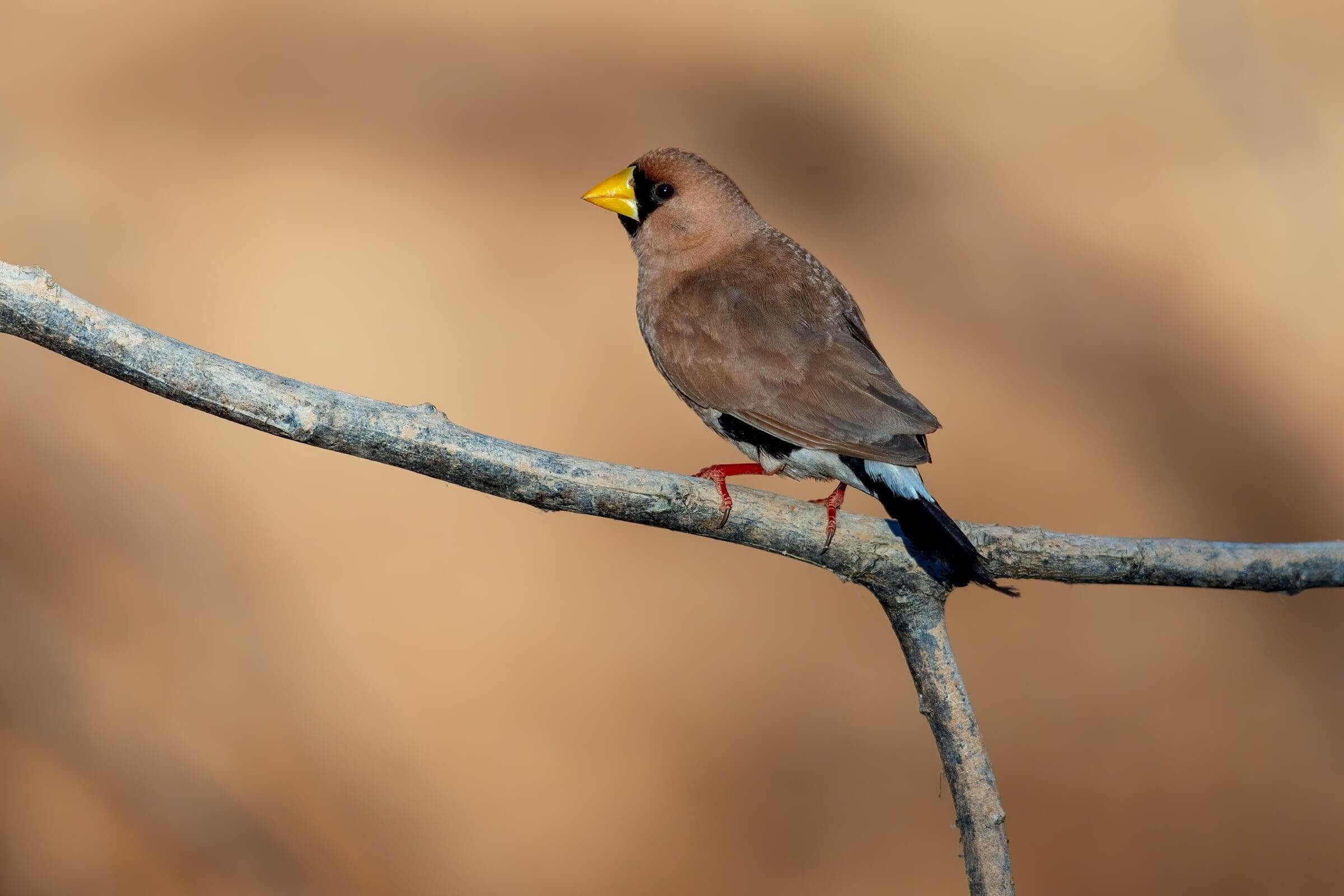
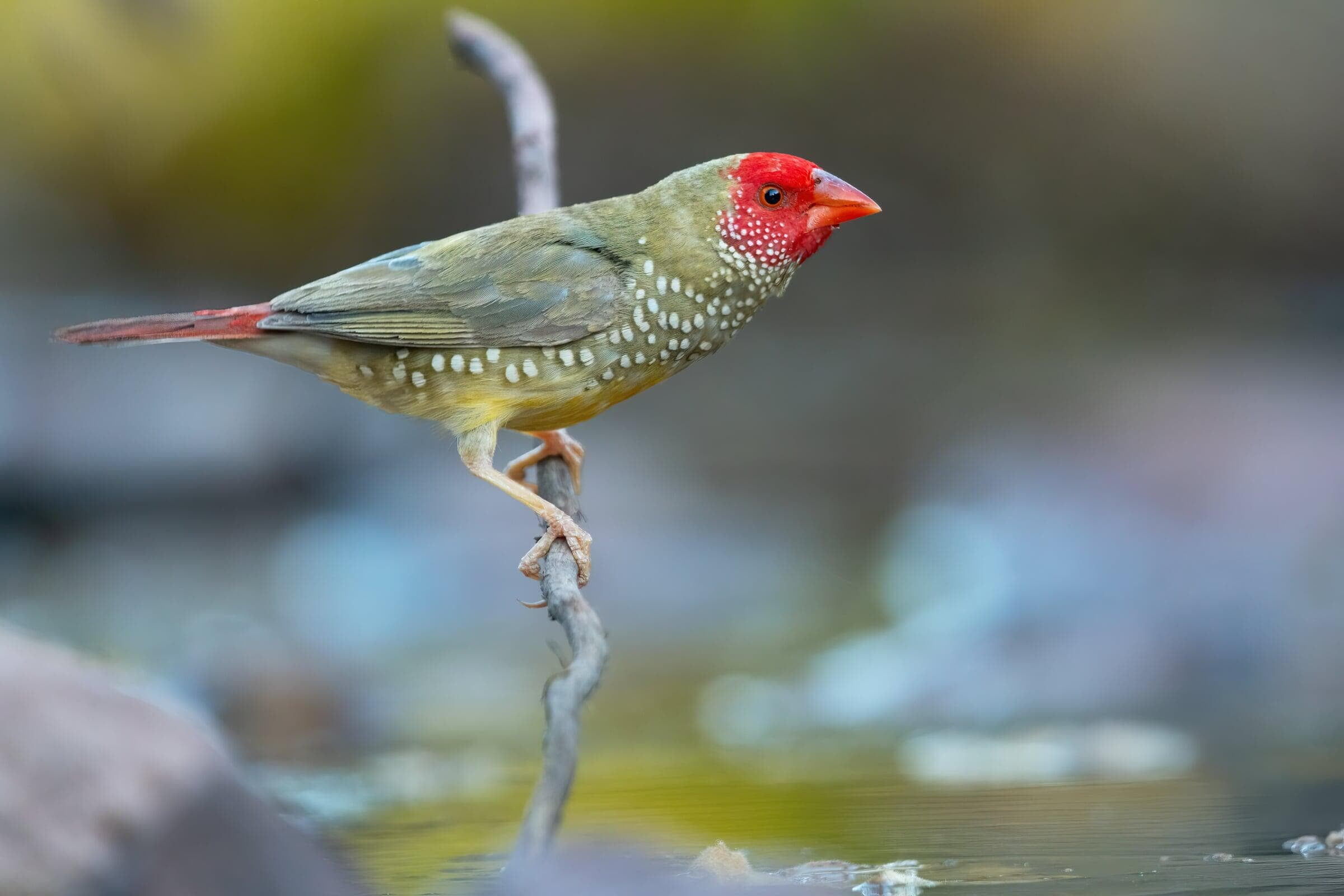
The following morning we drove to a well-known waterhole along King River Road, parked nearby and set ourselves up under camouflage in the hope of photographing finches coming in to drink. Unfortunately, two other birders joined us and chose to sit very close to the water without any concealment or much apparent concern about giving the birds space to approach.
They told us that the birds had come down to drink the previous day and that there was therefore no need to sit further back. I assumed the birds were probably somewhat habituated to people at this particular site, so we stayed and waited. Some finches did eventually come down to drink, but it was also obvious that others were hesitant to approach. At one point an entire group flushed when one of the birders stood up and walked a few metres to tell the other that something had flown in.
Unfortunately, the Gouldian Finches were among the more cautious birds. Although we saw them around the waterhole, I never managed to get any photographs of them drinking.
As the morning wore on and the light became increasingly harsh, we headed back to the road and found no fewer than three 4WDs parked across it rather than in the nearby parking area. Another group had set up beside a small puddle on the opposite side of the road, sitting in deck chairs with their feet almost in the water while waiting for finches to come in. At that point we decided we had had enough and drove back to the caravan park to check out.
As I was checking out, I was told enthusiastically about this Gouldian Finch waterhole and how you could simply sit right on the water’s edge and watch the birds come in to drink. Unfortunately, that made me suspect our experience was probably fairly typical of the site. It is a shame, because it could be an excellent place for both birding and photography if visitors gave the birds a little more space.
Wyndham to Mitchell Falls Campground
After some negotiation, we decided to drive straight through to Mitchell Falls in a single day rather than stopping overnight along the way. It meant a long drive of around nine and a half hours, but it would give us an extra buffer day if we needed more time to find the grasswren, at the cost of losing an evening photography session.
The first part of the drive, as far as the Pentecost River crossing, was sealed and straightforward. The crossing itself was also easy. Water levels were low, as expected in late July, perhaps only 20–30 cm deep, although the riverbed was a little rocky. A large flotilla of caravans had stopped on the far side to photograph their successful crossing, which gave us a convenient opportunity to get ahead of them.
Not long afterwards the road turned to gravel, and it took us another four or five hours to reach Drysdale River Station. It was heavily corrugated in places, and we were often able to use creek crossings as opportunities to get past slow-moving caravans. The coil-sprung Prado we had hired was reasonably comfortable in the conditions, however, and the drive never became particularly punishing. Eventually we joined the Gibb River–Kalumburu Road, where the gravel had been more recently graded and was much more pleasant to drive.
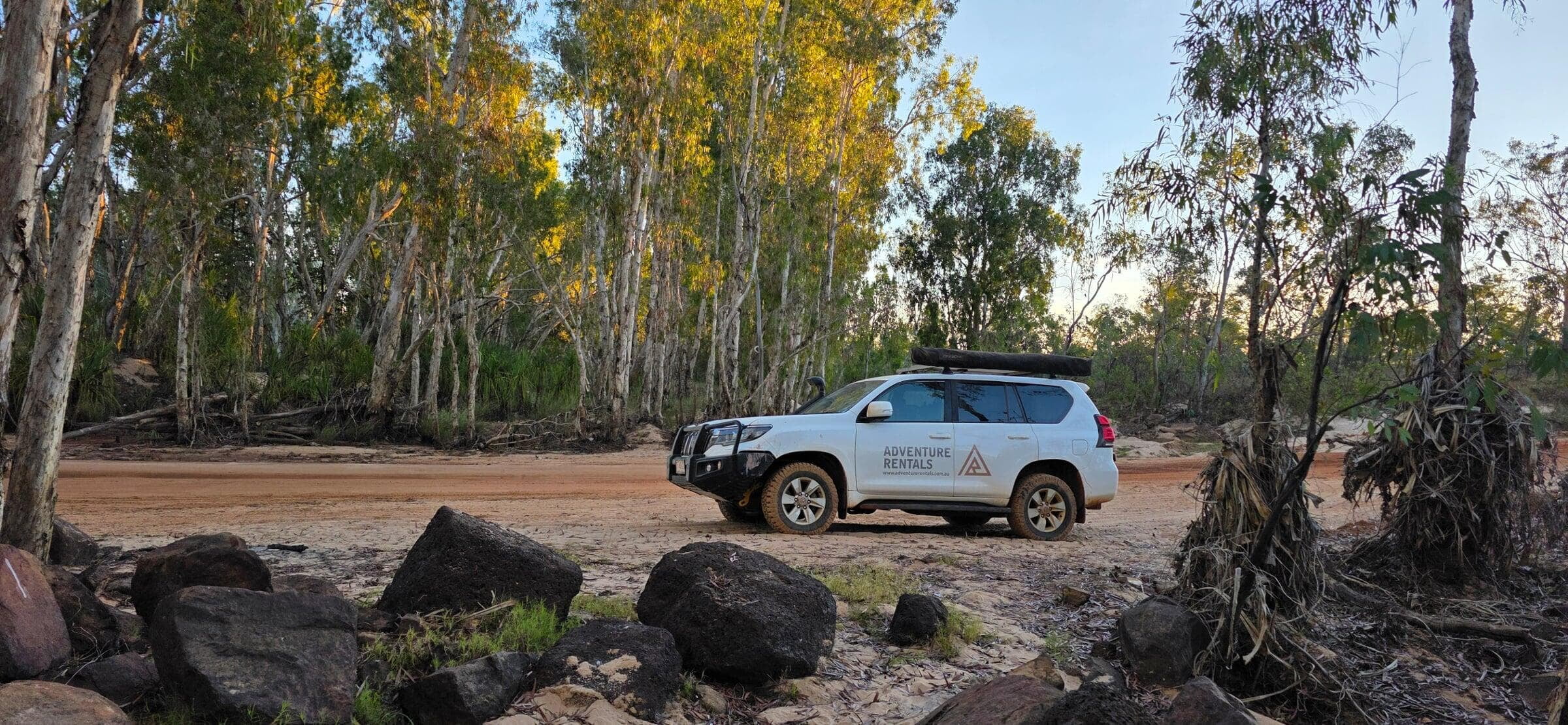
At Drysdale River Station we refuelled, stretched our legs and, before long, set off again with Veeraj at the wheel. We soon turned onto Port Warrender Road and crossed the King Edward River. During the wet season the crossing can become extremely deep, but at the time it was only around 30 cm and presented no difficulty driving slowly across in low range.
Beyond the crossing, the corrugations returned. The road was also narrower and more winding, so our pace dropped considerably. We eventually reached the Mitchell Falls campground a bit after sunset.
Birding on the Mitchell Plateau
We got up well before sunset to search for the Black Grasswrens. I have used this approach with other birds - with other species I have often found it possible to hear quiet contact calls, or sometimes territorial calls before the sun comes up, and then get into the right area as the best light appears. We initially tried a track north of the camping area as it looked to have accessible suitable habitat. Although the habitat looked promising it produced nothing! We think we heard some Grasswren early in the morning, but we simply didn't any views after spending a morning scrambling across the sandstone.
After retreating to camp for a lunch and having a very hot nap in our tents, we rehydrated and went back to Little Mertens Falls for a swim. By mid-afternoon we started searching for the grasswren again. This time we split up and I saw some good looking habitat south of the falls that I wanted to check out - terrain simply looked right based on habitat photos I had seen and I knew there were records in that area. As I went to check it out Veeraj and Raghav searched another area on the northern side of the falls.
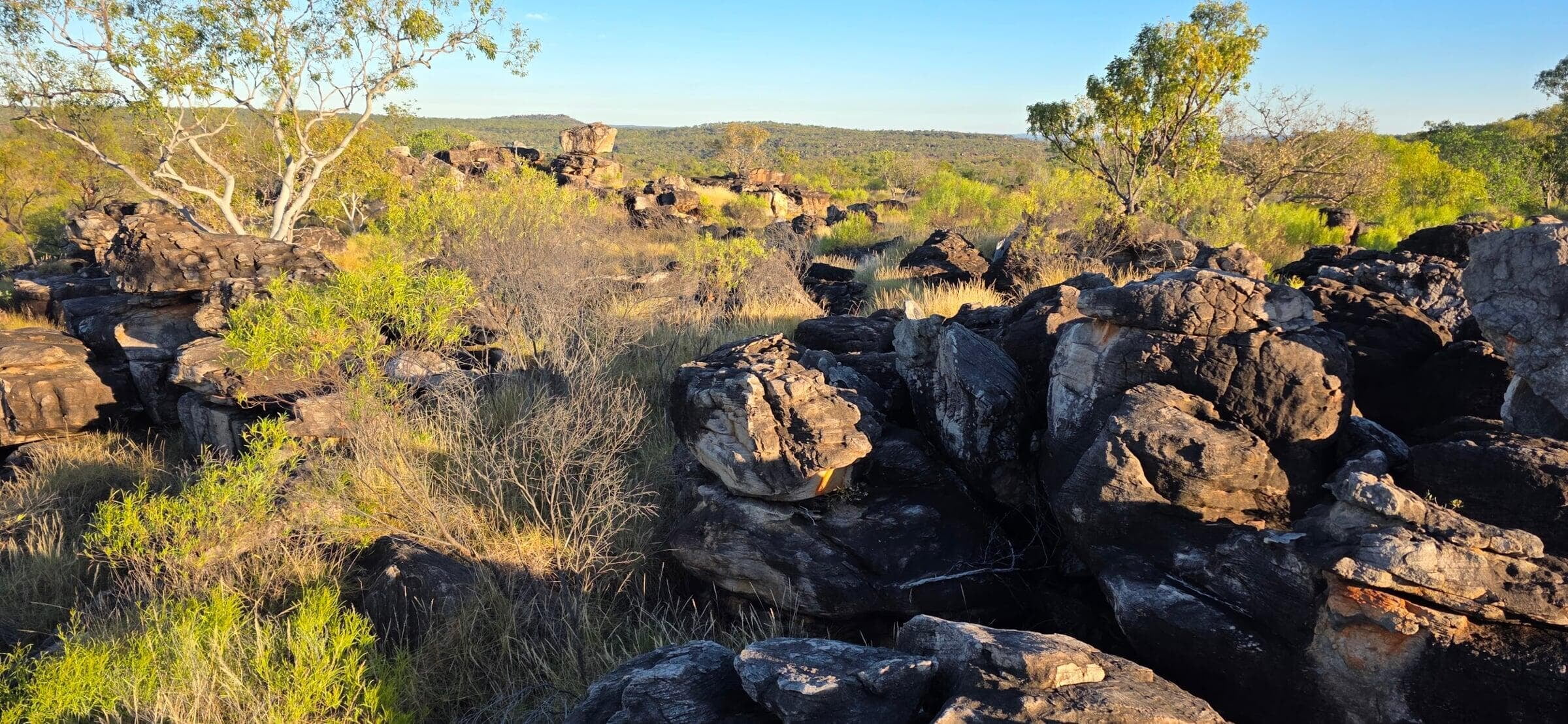
Travel south of the falls was quite slow going - scrambling across broken sandstone was required, and occasionally I had to retrace my steps due to dense clumps of vegetation or cliffs blocking my progress. Although this wasn't especially dangerous, I carried plenty of water, navigated using topographic mapping taking regular breadcrumbs on my phone, told R and V roughly where I was headed and carried a Garmin inReach as backup should anything go wrong.
After around two hours of searching I finally heard distant calls and the mostly fruitless day was all immediately justified! Following the calls carefully through the rocks eventually revealed four Black Grasswrens.
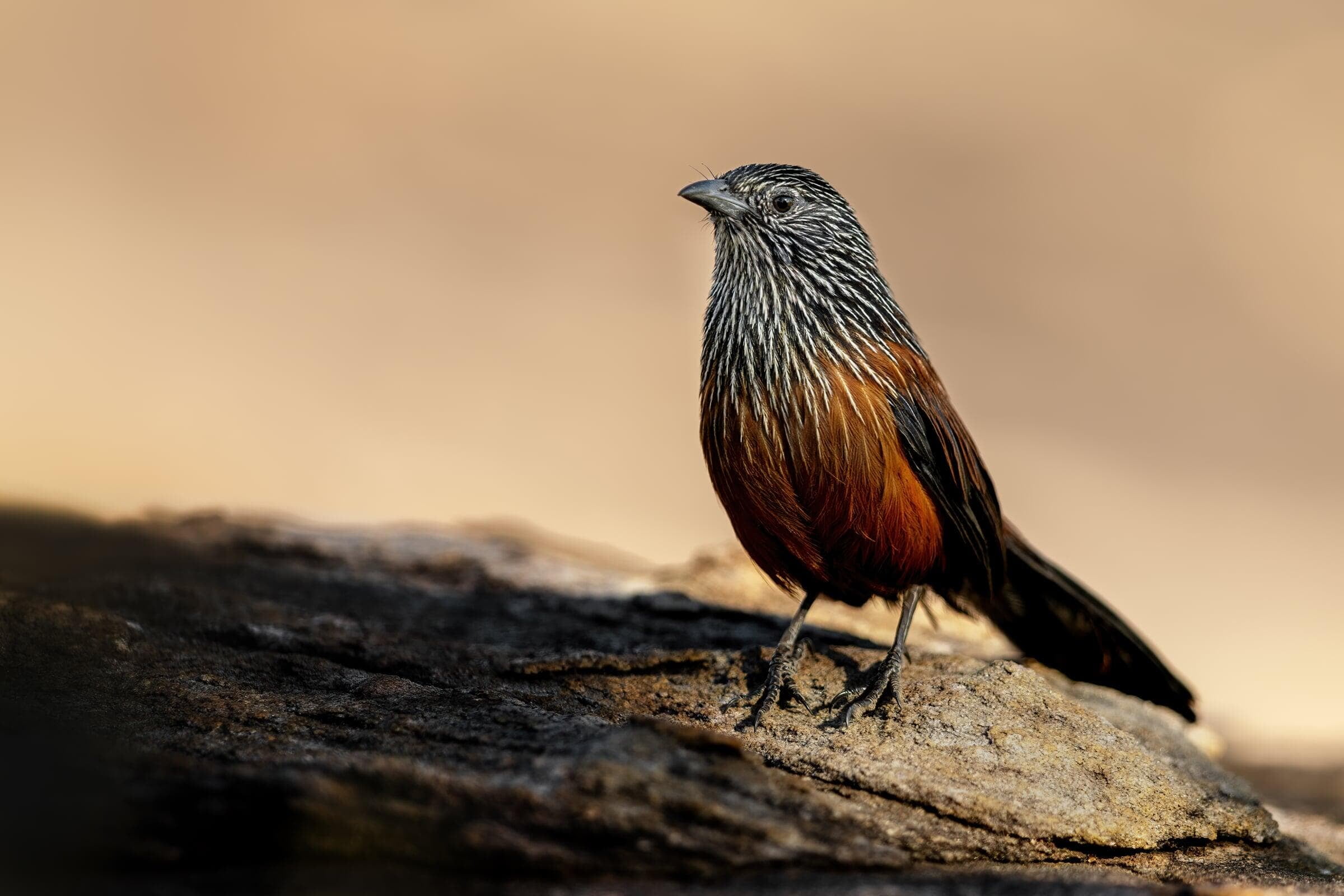
Photographically the conditions were straightforward. My Canon EOS R1 paired with the RF 600mm f/4 acquired focus without difficulty, although I found the camera tended to overexpose the dark plumage slightly against the pale sandstone, requiring minor exposure compensation.
The only casualty of the search was cosmetic. During one scramble I slipped and chipped a small piece of magnesium from the R1 body. I figured the depreciation was an acceptable price for finally photographing one of Australia's most sought-after endemic birds.
The next morning I took Veeraj and Raghav back to see the grasswrens. I think that they were a little disappointed from missing out on the previous day, but they were exactly where they were the previous evening, so we all got great views and all was well that ended well!
Aside from the grasswrens, White-quilled Rock-Pigeons were encountered every time we searched suitable rocky country. One bird became so accustomed to people that it regularly drank beneath a tap at the campground toilet. Kimberley Honeyeaters were also widespread, not to mention the Monjons that were everywhere.
We had talked about spending more time looking for herps as well, but it was probably the worst month for activity, and we were all honestly a bit sleep deprived to varying degrees so didn't try too hard at night.
Drysdale Station
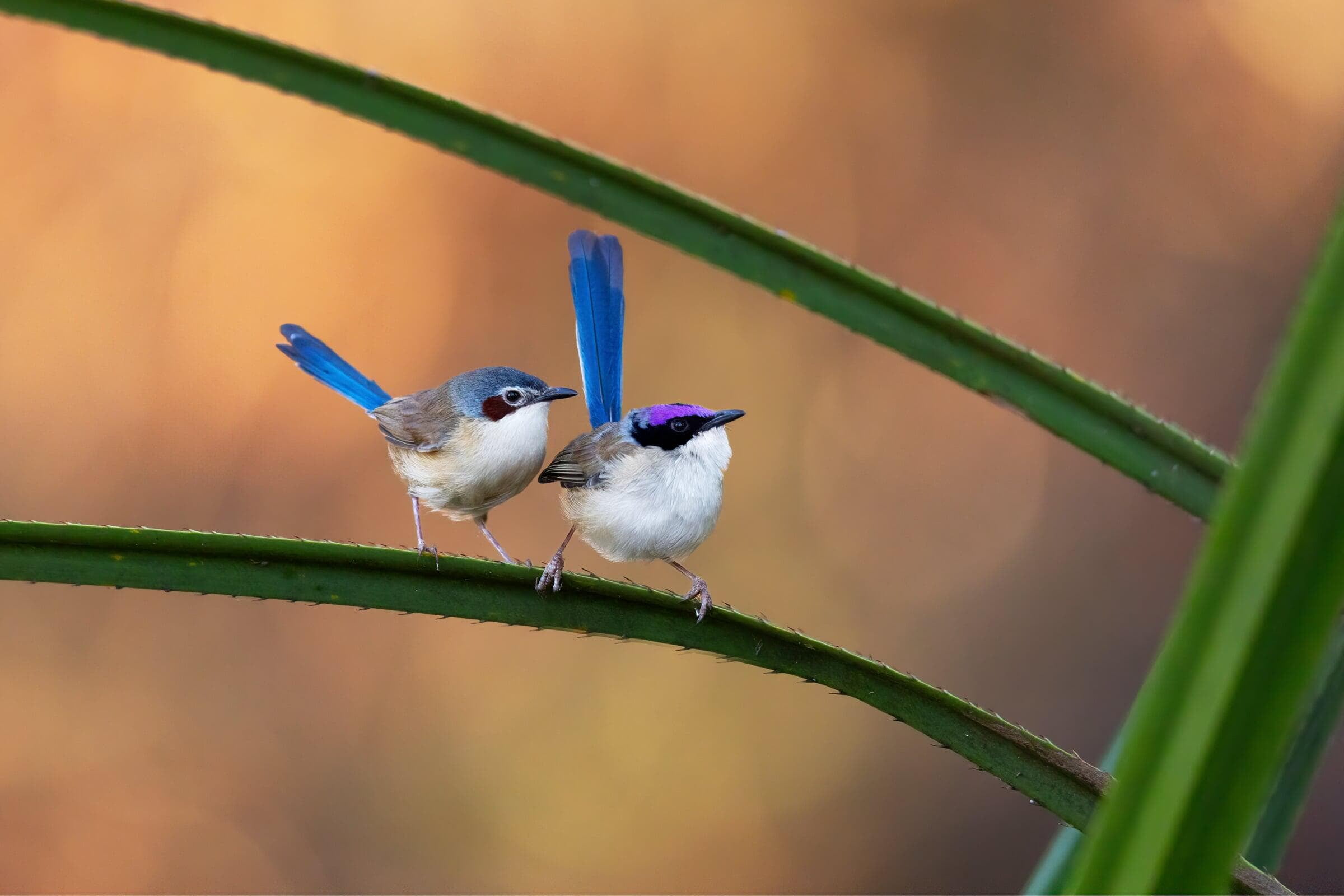
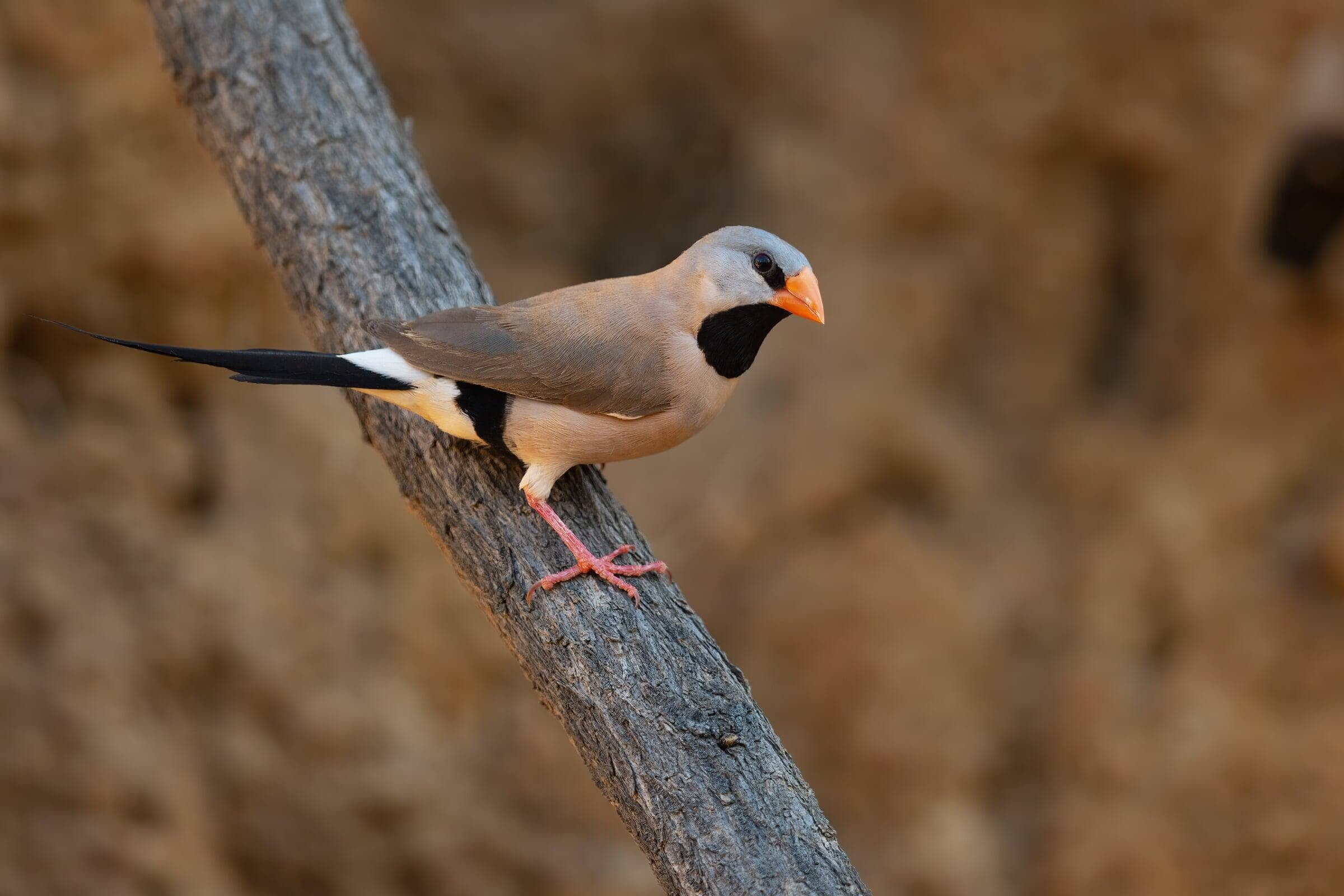
After the successful morning and some exploration the previous day, we started making our way back towards Darwin. We left at around 1pm and made it to Drysdale station at around 4:00pm. The station itself was pretty quiet, aside from the human activity. We tried searching the nearby river for Purple-crowned Fairywren and photographed some other stuff instead. In the morning we searched the other side of the river, where we had received a tip-off from another birder, and photographed the pair there.
Driving to Timber Creek
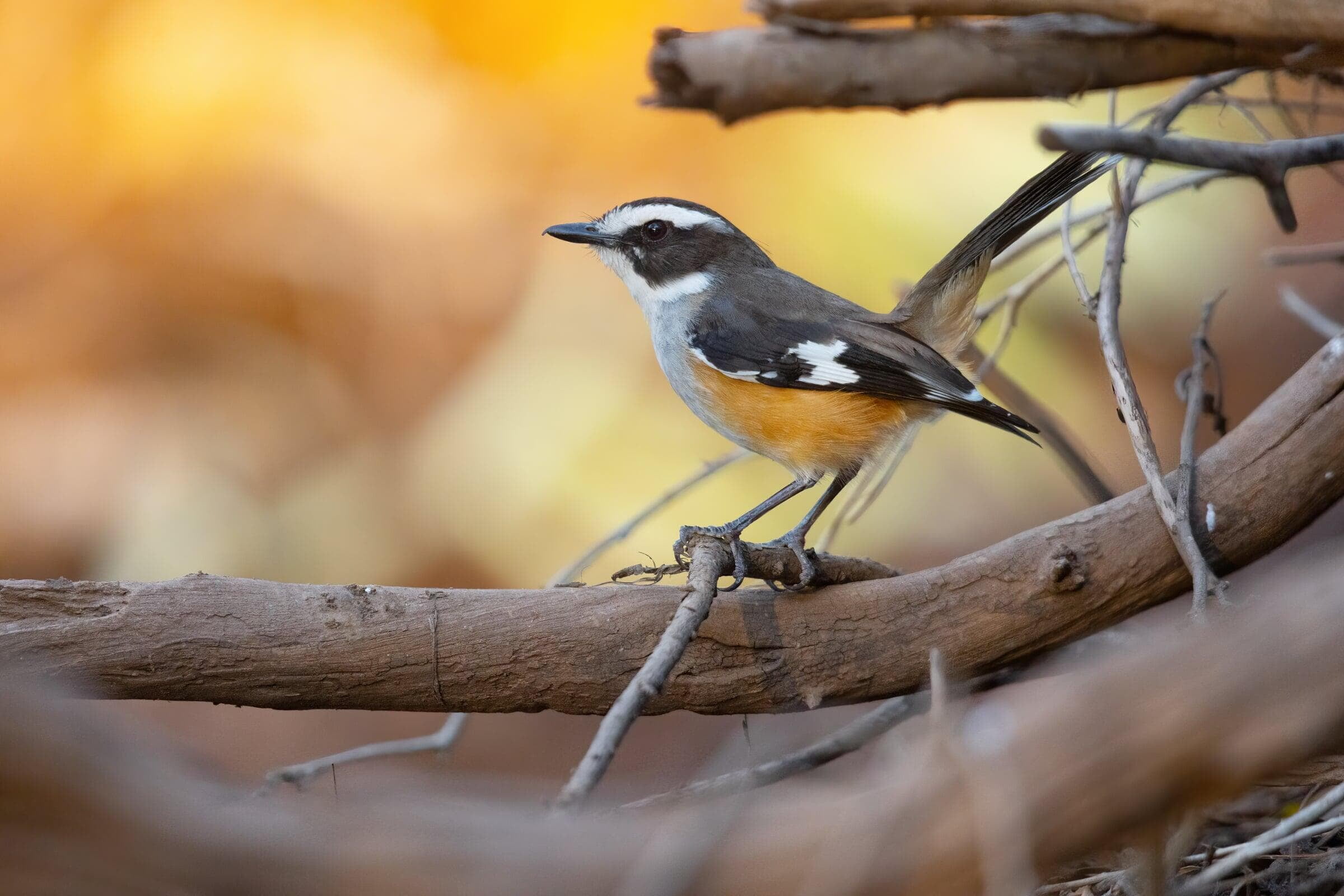
We opted to start driving pretty early. This gave us a chance to get ahead of the caravans and spend a bit less time in the car. We stopped at Kununurra for some more fresh fruit and then kept going to Timber Creek in one hit. We tried a well known waterhole for more finches, but there was too much water to make photography easy. I did get some shots of Buff-sided Robin however.
At Timber Creek, we stayed at the caravan park, which was noisy (thanks to some humans and some Barking Owls!), and the unpowered campsites were next to the septic tank, so the smell overnight was honestly not great either! Without other great options, we tried the waterhole again in the morning with similar results.
Back to Darwin
After leaving Timber Creek, we tried the waterhole near Katherine again and had a good look for Northern Shriketit without much success. We then stayed in a caravan park in Katherine before trying Edith Falls for our last attempt at Gouldian Finch photographs. This wasn't successful either - a bird that'll need to wait until next time!
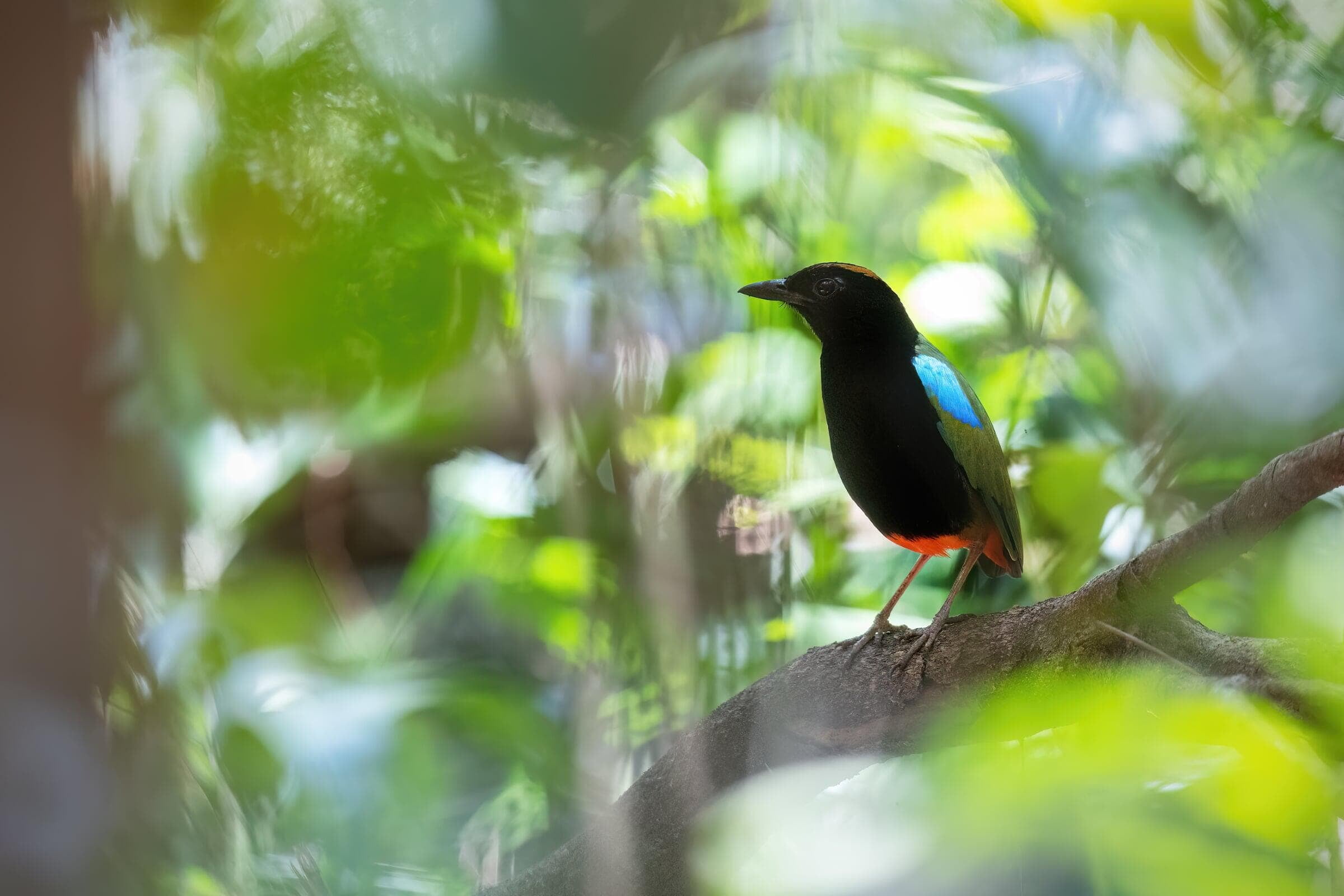
Soon we headed for Darwin. We stopped at Fogg Dam and Howard Springs on the way back. I was amused to find Rainbow Pitta within 50 meters of where they were approximately 7 years prior!
Summary
The Black Grasswren was the primary objective of this trip, and from that point of view it was a success. I had been prepared to spend several days searching if necessary, and in the end persistence and trying to read the habitat were probably the main reasons we found them. The successful area was rocky, lightly wooded and had roughly one-third ground cover of Triodia.
There were plenty of secondary highlights. Hooded Parrots at Pine Creek gave excellent close-range opportunities on the first evening, Purple-crowned Fairywrens were eventually photographed near Drysdale River Station, Buff-sided Robins showed well near Timber Creek, Kimberley Honeyeaters were widespread on the Mitchell Plateau, and Rainbow Pittas at Howard Springs were almost exactly where I had seen them years earlier. Gouldian Finch remained the main miss and will need another attempt.
Waterholes were a recurring theme during the trip too. Some of the best birding came from sitting quietly and waiting for birds to approach, particularly at the waterhole near Katherine. The contrast with the Wyndham Gouldian Finch site was fairly stark. Sitting directly on the water’s edge, moving around and giving birds little room to approach made photography much harder. If people want to see or photograph birds at small dry-season water sources, giving them space and remaining still is usually the best approach.
One observation that stayed with me on the Mitchell Plateau was the amount of Buffel Grass around many of the established walking tracks. Whether or not it is already having a measurable effect on Black Grasswrens, it certainly appeared to reduce the extent of suitable rocky spinifex habitat immediately accessible from the trails. The better habitat I found required moving further off track into less disturbed country. Without more active management, I suspect Black Grasswrens will become progressively harder to locate around the main visitor areas.
Logistics were also important to the success of the trip. We had to work around long driving days, corrugations, limited space in the vehicle and, at times, limited sleep, while remaining flexible enough to make the most of the best birding and photography conditions. If there was one lesson from the trip, it was that preparation and organisation gets you to the right place, but patience and persistence are what eventually produce the photographs.
For a bird and location list see my eBird trip report.