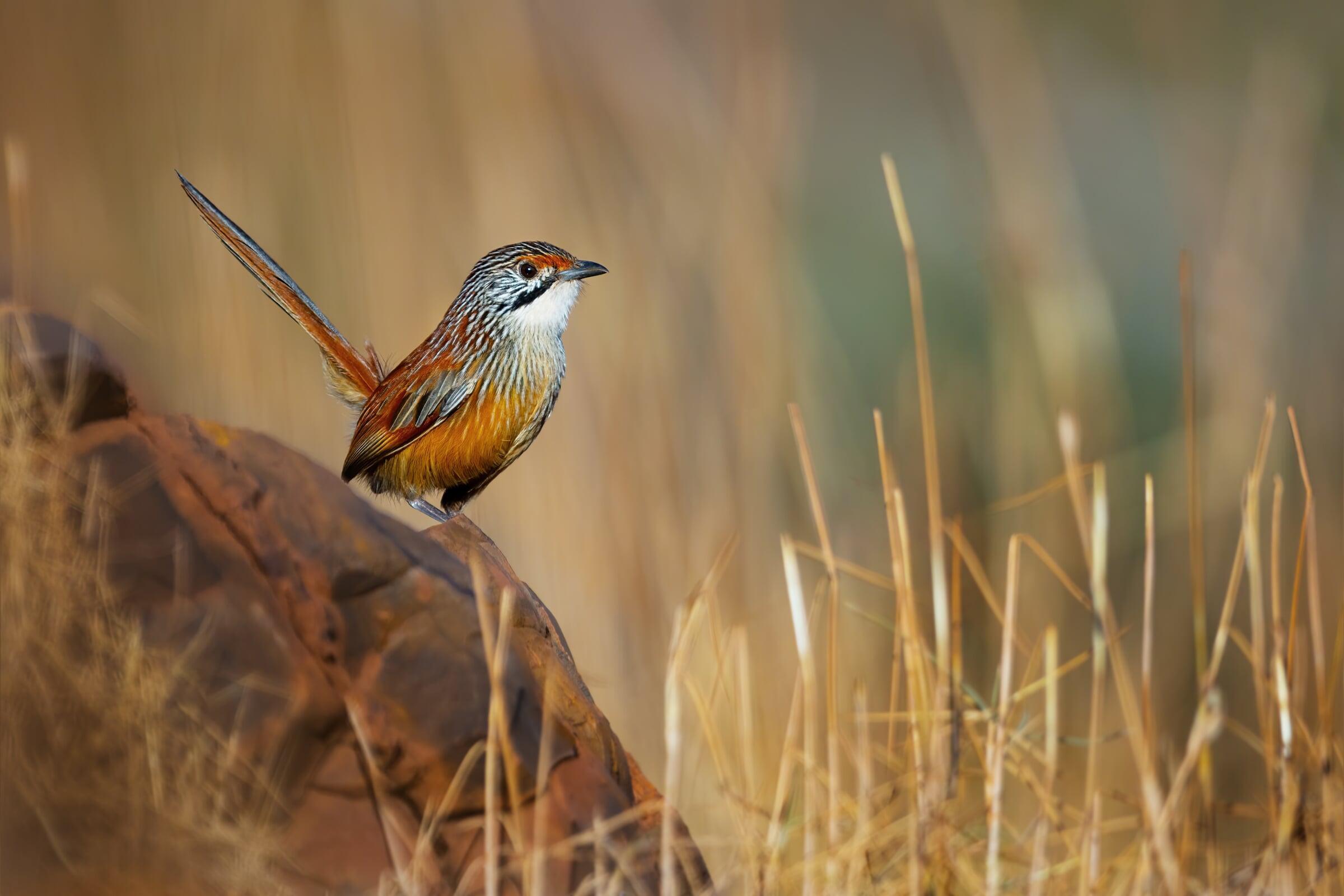
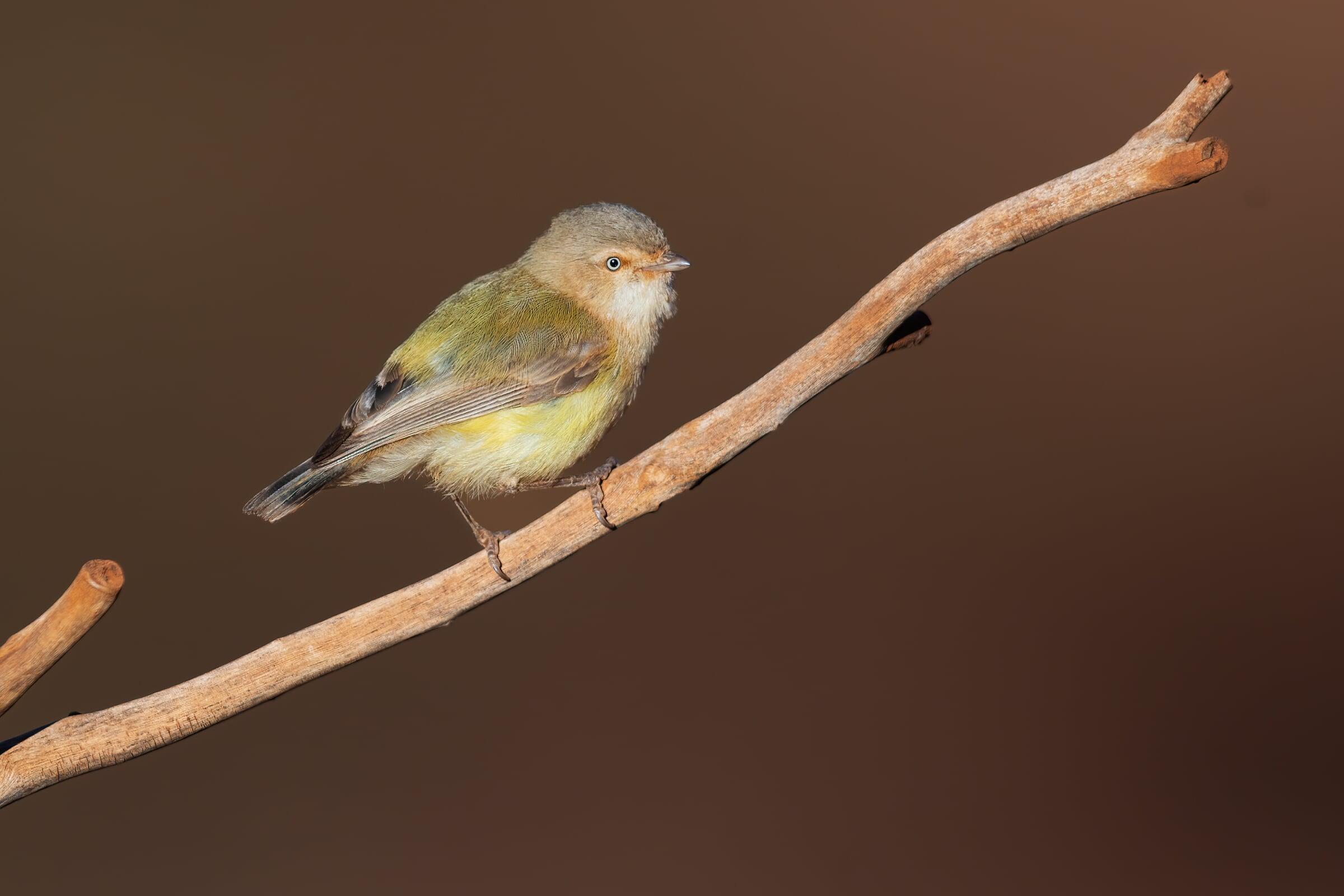
My primary objective for this trip was pretty straightforward: obtain photographs of Pilbara Grasswren and Western Quail-thrush. Banded Whiteface and Grey Honeyeater were the secondary objectives. The original plan was to fly from Sydney to Newman, spend time with the grasswrens around Radio Hill, then travel south to Austin Downs Station to search for Western Quail-thrush and Banded Whiteface before returning to Newman via Tom Price for the flight home.
The trip did not begin as planned. Upon arrival at Newman Airport, Qantas informed me that my checked baggage was not there. So I was left with some slightly-too-warm track pants, a white t-shirt and my camera. My missing bag contained all of my camping equipment, camouflage clothing, spare accessories and charger. I had a bluetooth tracker in my bag, but it had gone flat, so I couldn't even check if it was just hiding at the airport somewhere. I spent some time completing the lost baggage paperwork, then I collected the hire vehicle and headed off to do some afternoon birding.
Radio Hill - Pilbara Grasswren
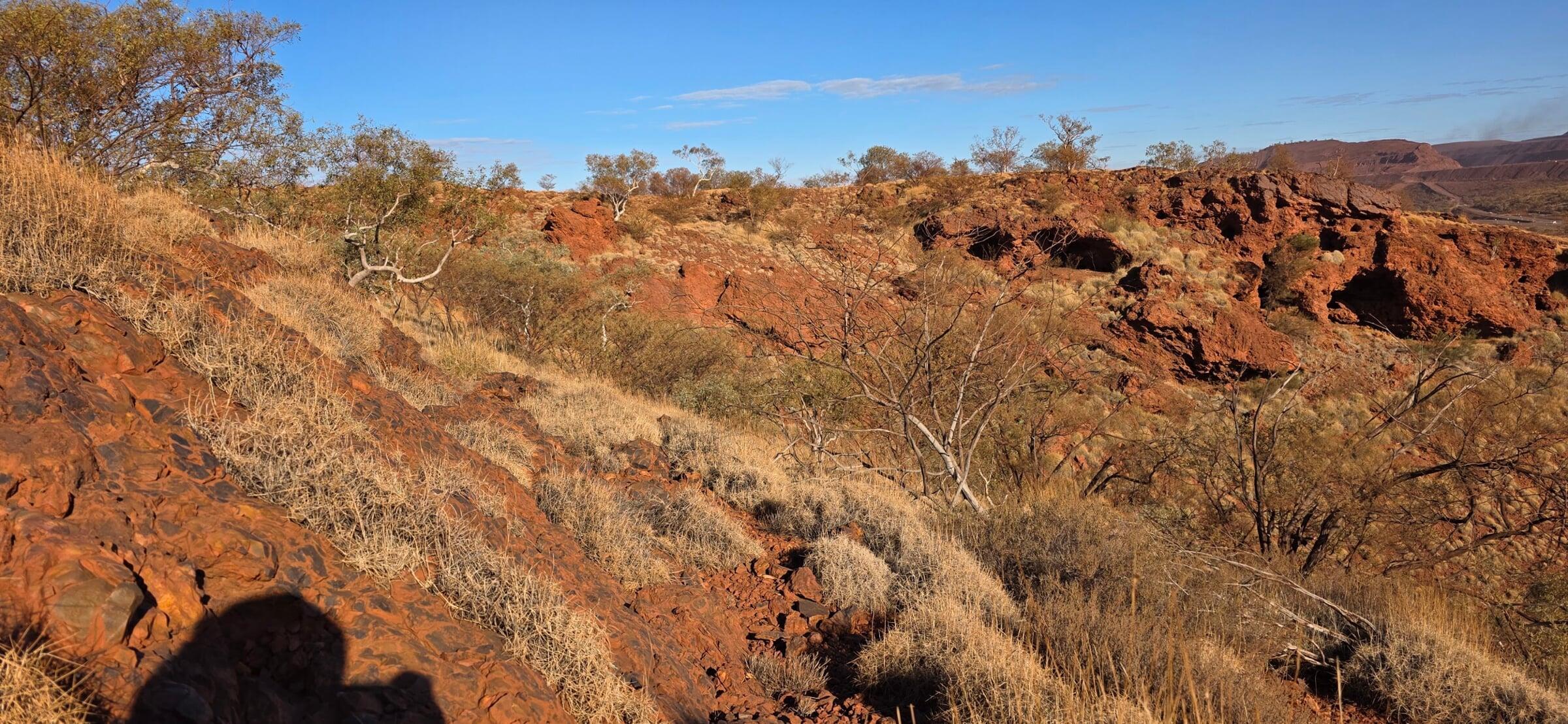
Since it was only a short drive from the airport and I had landed mid afternoon, I headed to Radio Hill in Newman to start looking for the Pilbara Grasswren. Radio Hill is adjacent to the enormous Newman West mining complex. My first impression of the area was not the spinifex or the birds, but the scale of the mining industry. Massive haul trucks, dust plumes and infrastructure dominate much of the landscape. The mine is visible from almost everywhere around the site and serves as a constant backdrop to the birding. I couldn't help but wonder if the grasswren was once found on the mine site.
My first afternoon was spent exploring a creek line and ridge south of Radio Hill Lookout Road. The habitat itself consisted of red rocky hillsides, spinifex and sparse eucalyptus. Conditions appeared dry, with many spinifex clumps looking stressed and dry. At first I found no grasswrens. Only after returning toward a large roadside turnout area near sunset did I finally hear them calling. At least three Pilbara Grasswrens were present, but the light was almost gone and only brief views were obtained. I'm sure my bright t-shirt did not help matters!
This second session was abruptly cut short when I received a call from baggage staff stating that they had my bag, but also the airport would be closed in 25 minutes as there were no further flights so I had to come straight away. It was 20 minutes drive.
South to Austin Downs
After collecting my baggage from Newman Airport, I began the drive south toward Austin Downs Station. Permission had been obtained from the station to visit, which has become known among birders as a reliable location for Western Quail-thrush and Banded Whiteface.
The journey also further highlighted the industrial nature of inland Western Australia - oversized mining loads appeared regularly. Periodically I had to pull off the highway when a mining truck wider than both lanes was being hauled with a police escort. Road trains loaded with ammonium nitrate were also a common sight.
Bird activity along the route was generally lower than I had expected. Conditions remained dry and many areas appeared quiet. I stopped at one point and had a go in what looked like decent Western Quail-thrush Habitat, but I was unsuccessful.
Austin Downs presented a very different landscape from Newman. The habitat consisted of open gibber plains dotted with low saltbush and occasional mulga trees.
Almost immediately after beginning my search I heard Western Quail-thrush. Finding the birds proved much easier than photographing them.

Compounding the difficulty was a back injury. I had a mild overuse injury from cycling before I started the trip, but this flared up in a major way after spending the first night sleeping in the vehicle without any sleeping mat. By the time I reached Austin Downs, a strained quadratus lumborum muscle made many movements extremely painful.
Walking back to the vehicle after the first evening's search was particularly difficult. Simple actions such as bending, turning or lifting the camera were triggering pain sharp enough to vocalise involuntarily.
The following morning I returned to the same drainage depression where the birds had been located previously. This strategy worked reasonably well. Initially I encountered two Western Quail-thrushes and later located a group of four birds together. Despite repeated encounters, the birds kept their distance and I only managed some habitat shots.

Mega!
With Western Quail-thrush photography proving difficult and a recent report of Forest Wagtail half way back - a really rare record for Australia, I elected to return toward Newman rather than continue elsewhere.
A stop at the Gascoyne River Rest Stop produced several enjoyable species, including Mulga Parrot, Western Bowerbird, White-plumed Honeyeater and Common Bronzewing, but I wasn't able to locate the Forest Wagtail from the previous day.
More Grasswren Attempts
The final morning was devoted entirely to improving my Pilbara Grasswren photographs.
This time I applied the lesson learned during previous visits. Rather than waiting where birds had been found earlier, I actively searched for calling birds before sunrise.
A group was initially located below a small rocky peak west of the telecommunications tower car park. The birds called freely in darkness before disappearing completely once dawn approached.
After failing to relocate them, I continued driving slowly between listening points and eventually found another group near the large turnout area where I had first encountered the species on arrival.
This encounter finally produced the photographs I had hoped for.
The birds used exposed rocks and elevated perches around the spinifex, providing significantly better opportunities than on previous attempts. While still not especially confiding, they remained visible long enough for a series of usable images.
Summary
Looking back, I would describe the trip as partially successful. Pilbara Grasswren was the primary objective and ultimately produced both excellent views and photographs. Western Quail-thrush was found repeatedly, but I wanted some portraits and not just habitat shots.
The experience also reinforced the importance of adaptability. Once the baggage failed to arrive, there was little value in dwelling on the problem. The available resources had changed and the task became one of optimising within those constraints. The same approach applied after the back injury. Whether driving, walking or operating the camera, many activities became more difficult, but the only practical option was to continue to try and make the best decisions possible with the circumstances available.
Another lesson is the importance of rainfall - much of the country appeared dry and bird activity was often subdued. Trying to go after a period of more rainfall might have made things easier.