
Madagascar has been on my birding list for a long time. It separated from Africa and India tens of millions of years ago, creating a biogeographical barrier to gene flow interrupted with a sequence of colonisation events. The geography of the island has also resulted in a diverse set of habitats - these colonisation events have often radiated out into many different species over time. For example, the ancestors of the vangas arrived approximately 20-25 million years ago, and rapidly diversified into different ecological niches.
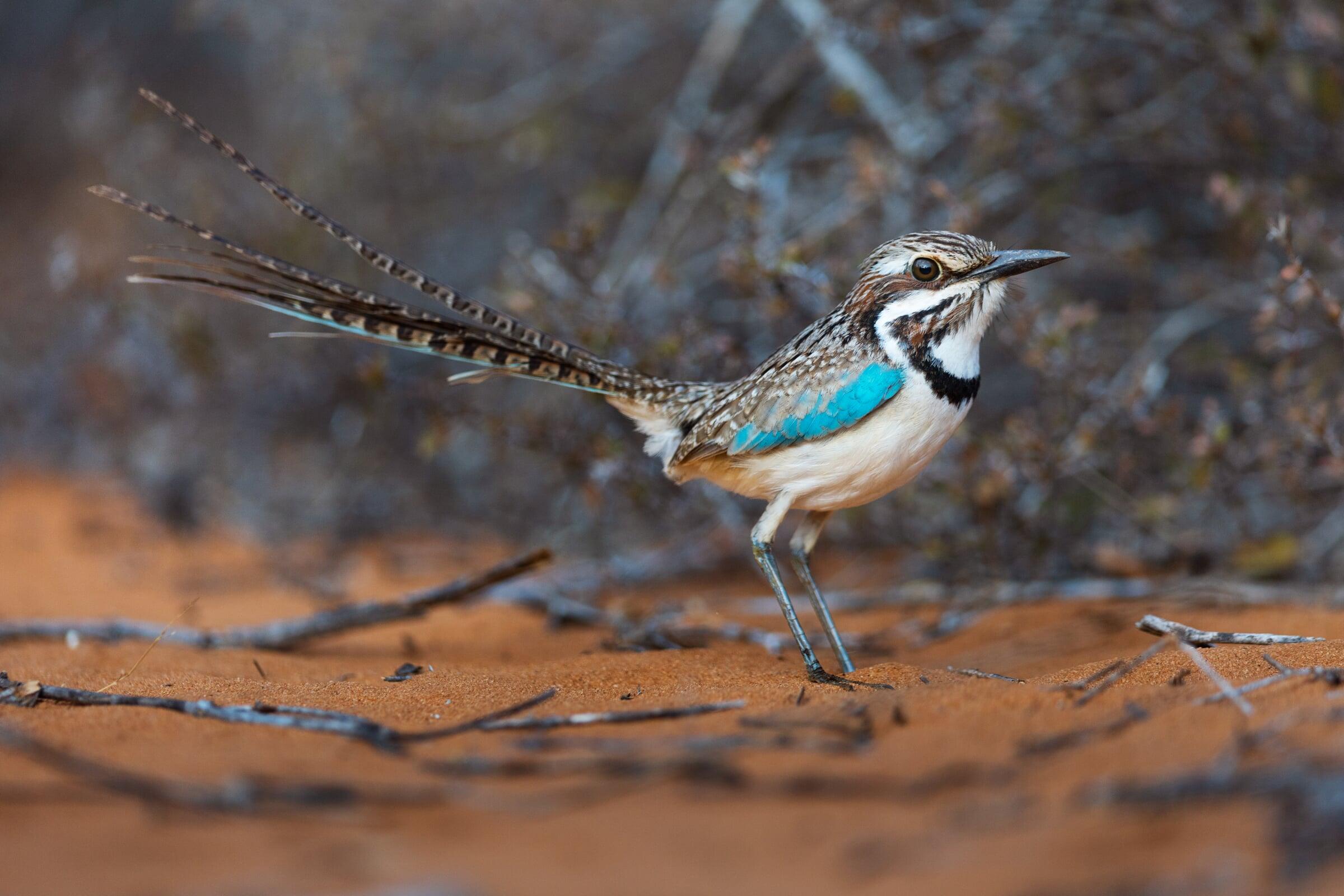
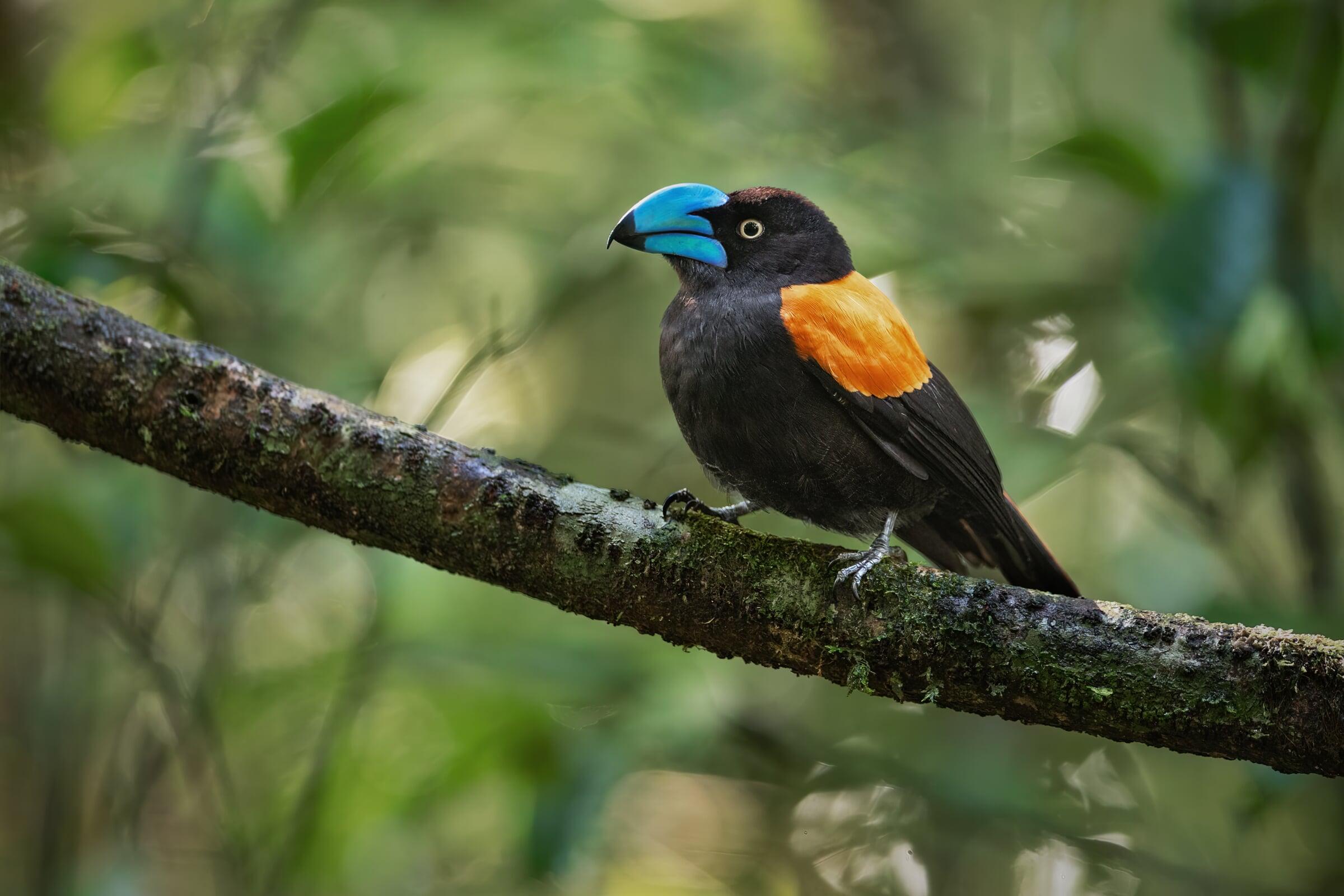
Of all the possible targets, I was particularly interested in the ground-rollers. Madagascar has five species, all endemic, and all sufficiently unusual that I wanted to photograph every one of them. The Helmet Vanga, a rainforest bird with an improbably large blue bill, was another major target. By the end of the trip I was successful with this goal. My wife and I saw around 126 bird species and a huge variety of chameleons, lemurs and other wildlife and we saw a good sampling of the habitats.
Although some birds were more difficult to find than others, the photography was often quite straightforward - birds were approachable like Australia, and overall I would recommend it as a bird photography destination.
Antananarivo: Parc de Tsarasaotra
Antananarivo: Parc de Tsarasaotra
We started the trip flying from Antananarivo via South Africa having received a message from our private tour leader to say he was with another group, wouldn't see us on the trip but had organised replacements at each location. I'd had some problems getting a response a few weeks before the trip too, but everything was fine and someone was ready for us at the airport.
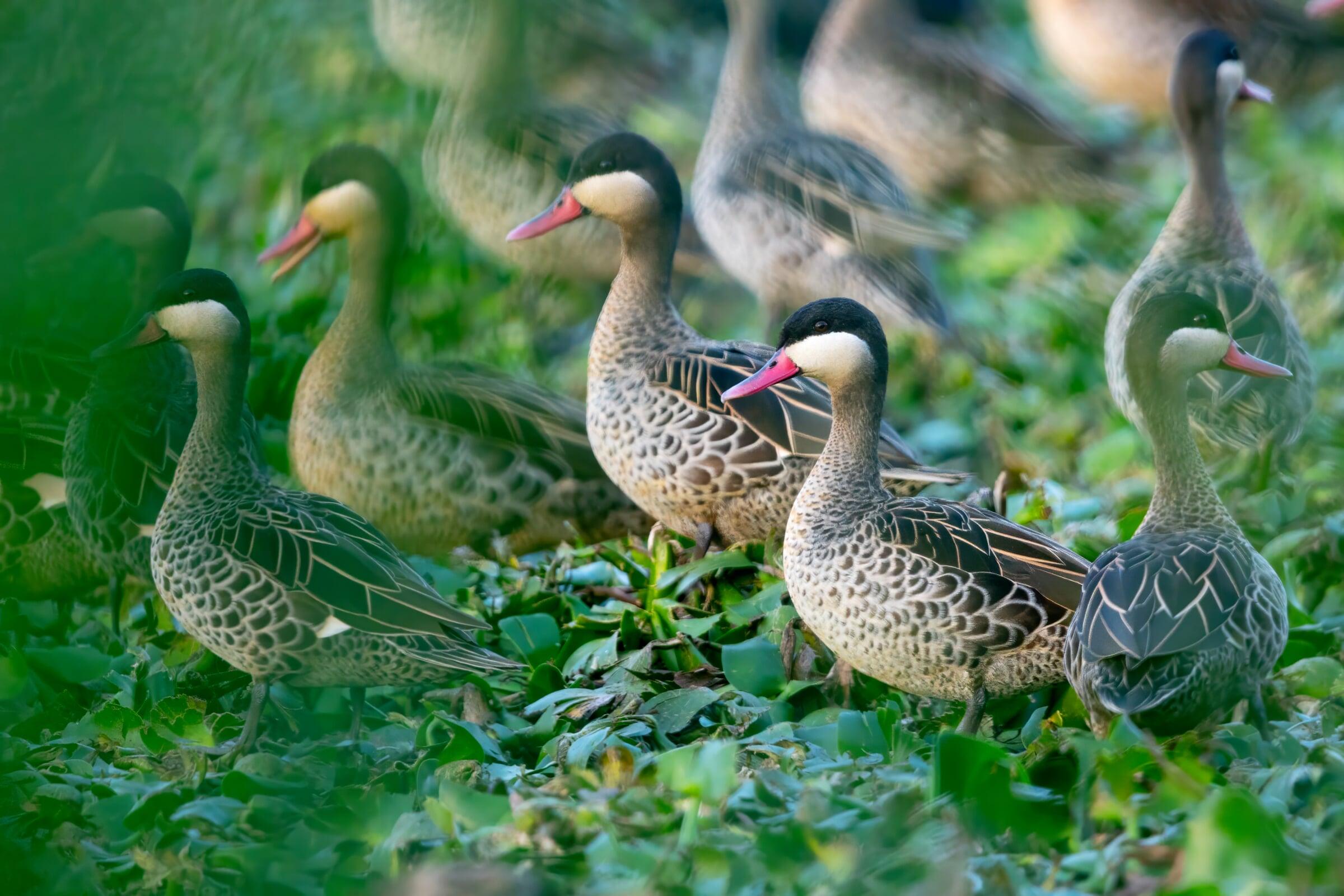
Our first birding destination was Tsarasaotra, a small wetland reserve within the city. Tsarasaotra was an interesting introduction to Madagascar. It's the world's only privately owned Ramsar site worldwide. The park featured deteriorating buildings (which apparently dated to the 1890s), a high perimeter wall, a guarded entrance, a small lake surrounded by vegetation and some large houses overlooking the park. There was a path around the water, with reedbeds and patches of lotus providing habitat for waterbirds.
There was a big contrast in the bird numbers inside and outside the reserve. The surrounding rice paddies had a few egrets and things, whilst the protected area contained a huge number of birds in a very small place. We were told that protection from hunting was the reason for this difference. We started by examining the birds on the lake, keeping an eye out for birds like Humblot's Heron and Madagascar Grebe before starting our walk counterclockwise around the lake.
Perhaps around halfway around the lake we reached an area that was more marshy. I took some disappointing photos of white-throated rail and a Madagascar Swamp Warbler and then we entered a forested area near some crumbling buildings. Here we looked for chameleons, finding several Carpet Chameleon and an Oustalet's Chameleon which we photographed with our phones.
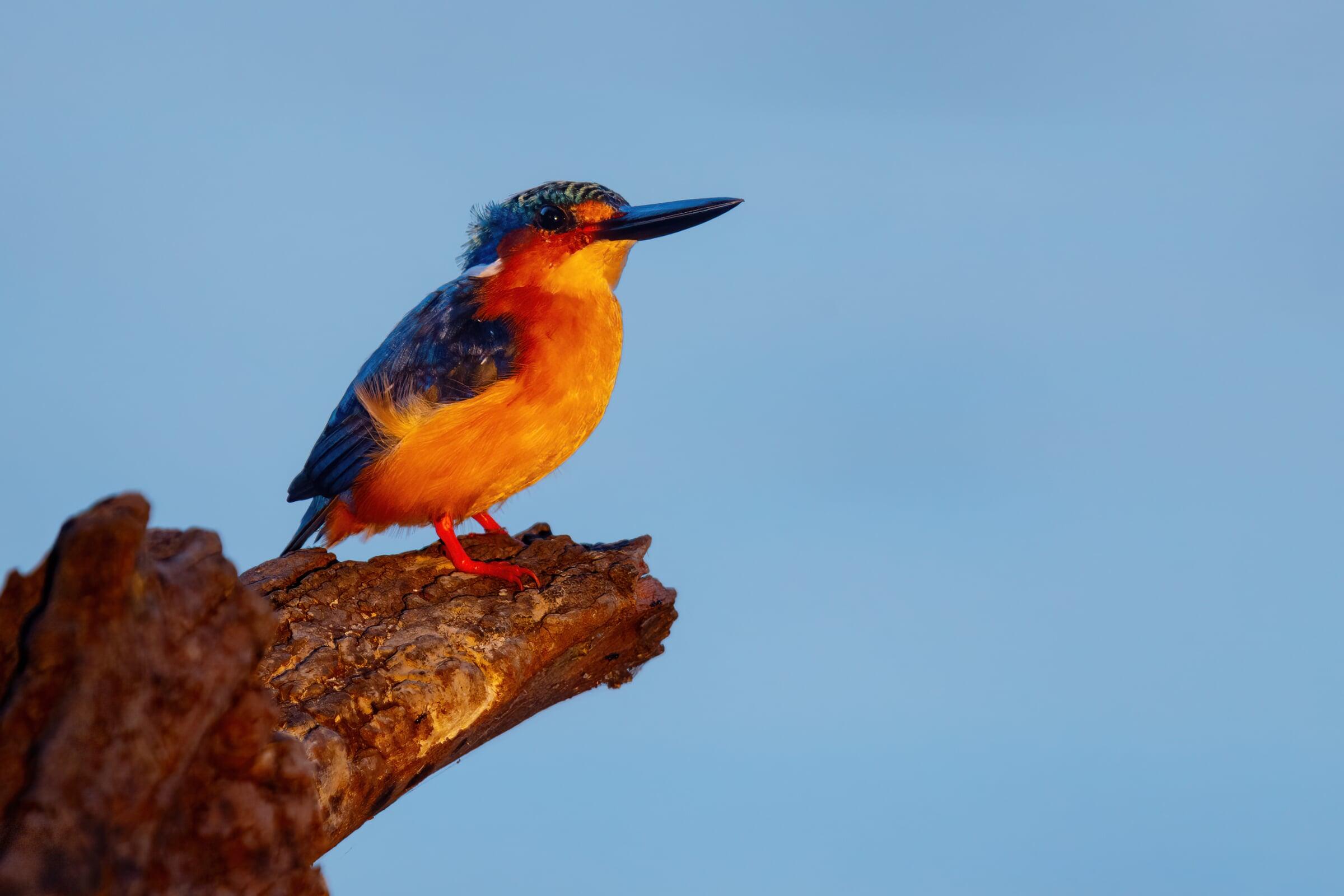
Walking back around the rest of the lake was less eventful after this. The sun was in our face and the light was generally poor with extreme backlighting. We accidentally flushed a Malagasy Kingfisher again. Although we lost sight of it after this occurred, we eventually spotted it sitting very close to the large entrance gate and I was able to successfully approach it - perhaps due to the more frequent human activity in that area.
The problem was the light. The high entrance wall was blocking the low sun, so I asked the guards whether they could open the gate. They obliged, allowing sunlight through and providing a much better opportunity to photograph the kingfisher.
Toliara: Arboretum d'Antsokay
The following day we flew southwest to Toliara where we were collected from the airport by a local guide. This part of Madagascar was very different from Antananarivo. The rice paddies were gone, and in it's place was a much drier landscape. Our first stop was the Arboretum d'Antsokay. The small reserve was a good introduction to Madagascar's peculiar southwest flora. There were a variety of trees and shrubs with forms that seemed to have evolved independently towards solutions familiar from other arid environments.
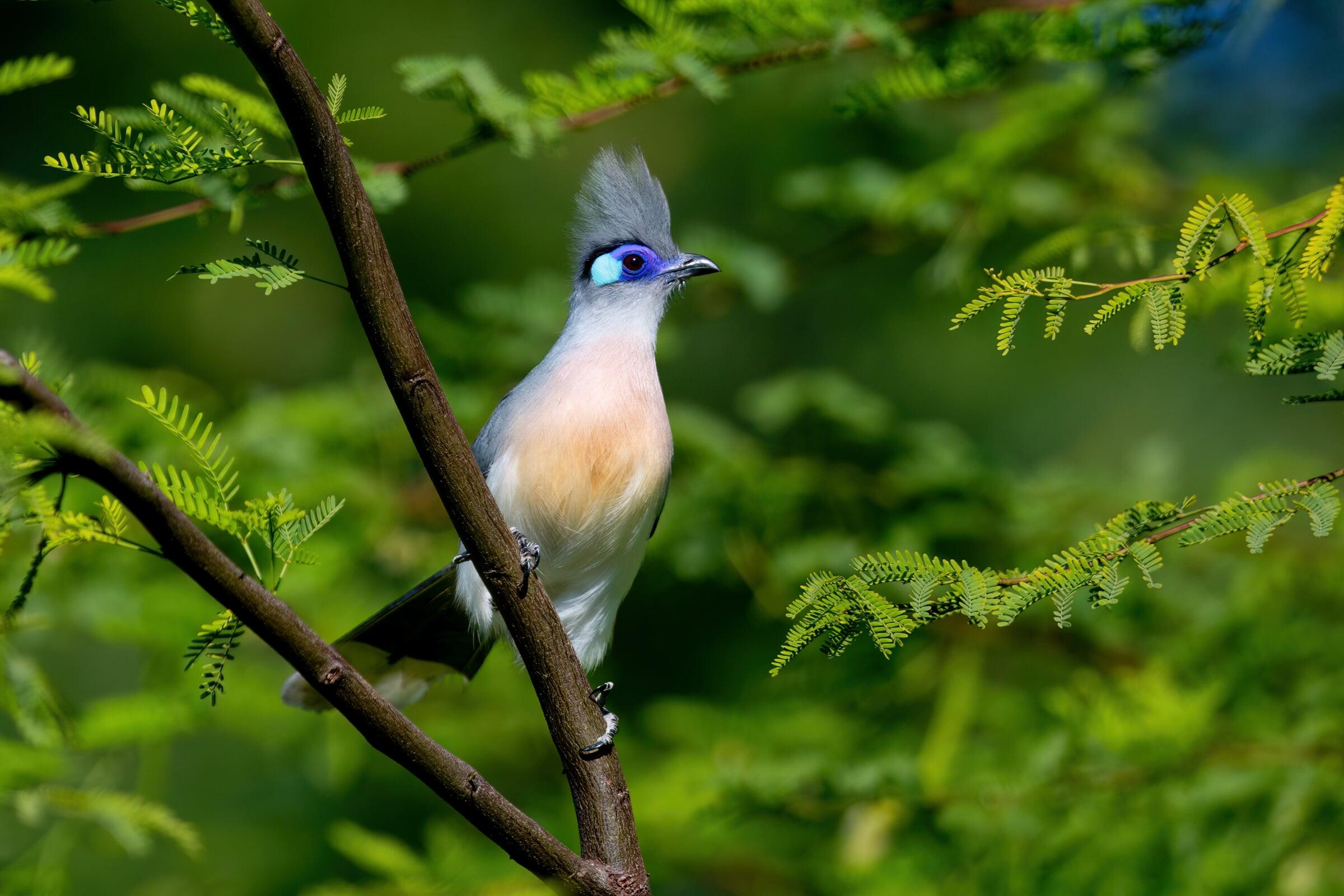
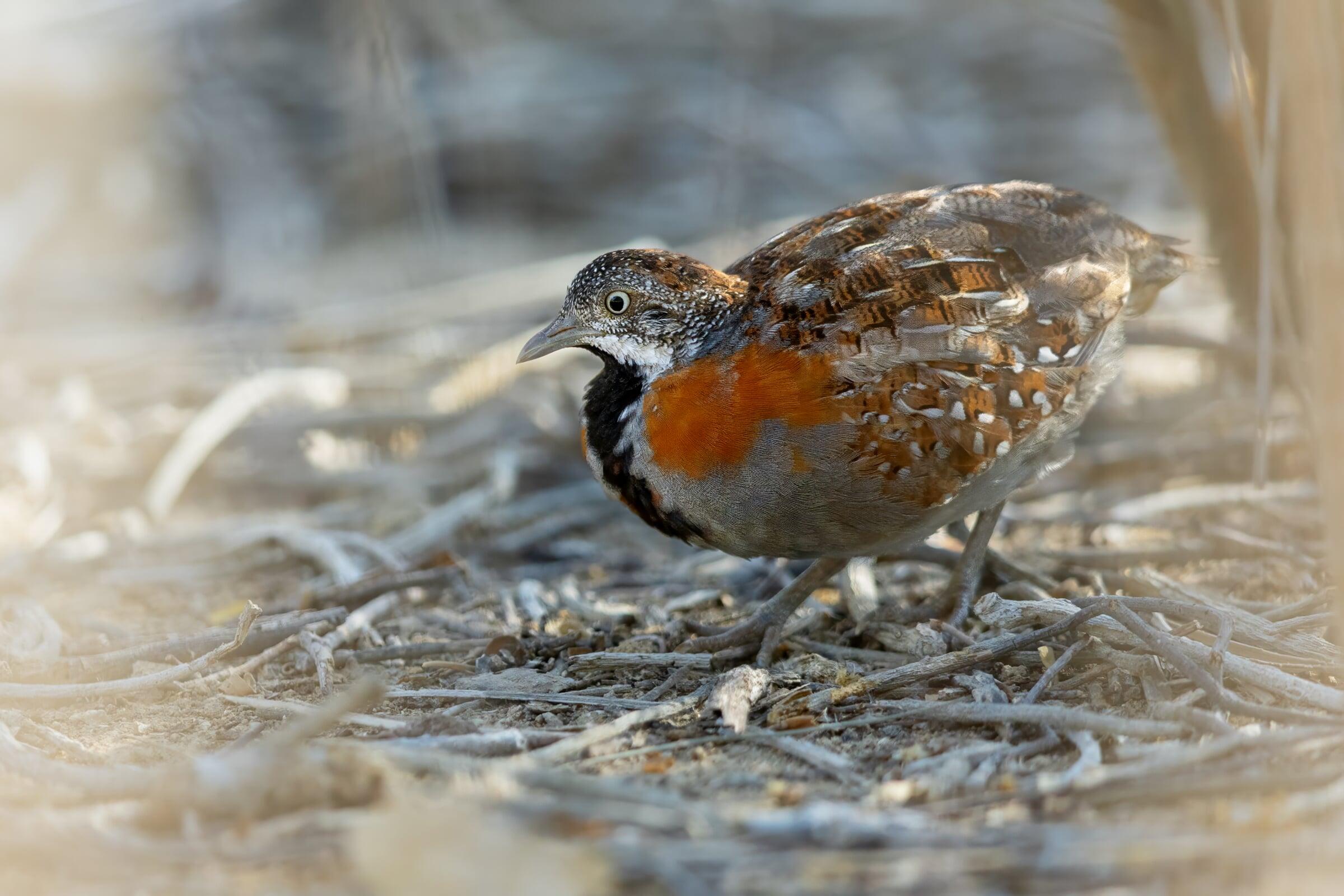
One of the early highlights was Verreaux's Coua. I also photographed Common Buttonquail and several other species, including weavers. There were the first vangas of the trip around too, although my photographs of them were less successful.
Our Toliara hotel room contained what appeared to be around 50 mosquitoes and no bed net. It wasn't clear whether any were malaria vectors, but it wasn't a particularly reassuring sight! Dinner was not too bad here - I tried romazava, a Malagasy stew, and enjoyed it.
St Augustine
The next morning we woke up early, driving to an area of dry coastal scrub around St Augustine arriving at the perfect time - sunrise. This was mostly birding by ear, moving along trails and occasionally pushing through the scrub to investigate calls with a local guide.
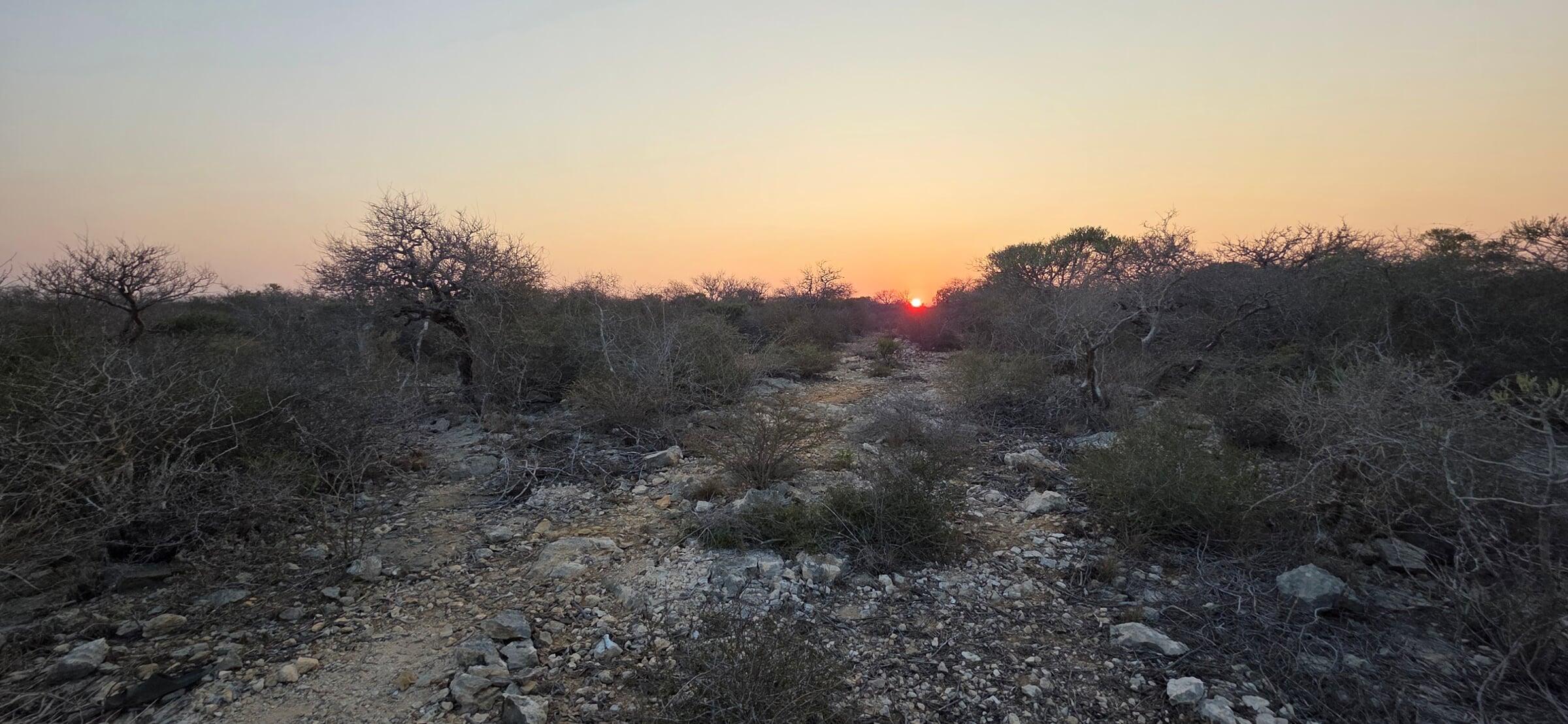
Some birds were quite close but difficult to photograph because of the dense, tangled vegetation. A bird sitting a few metres away isn't necessarily an easy subject when hundreds of small branches are between you and it!
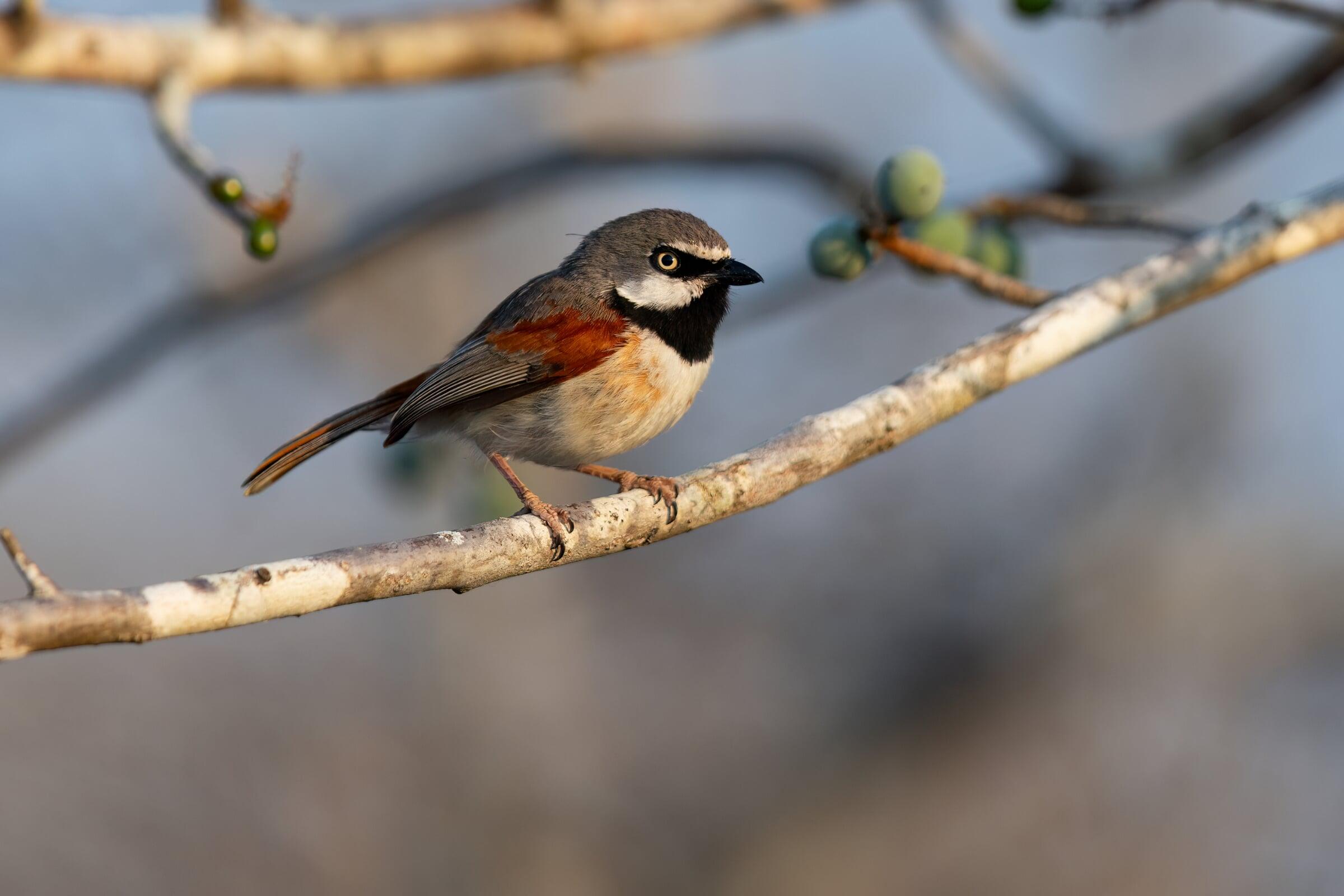
A particularly memorable encounter was with a Red-shouldered Vanga. Red-shouldered Vanga was a key target at this location. We heard it after 30 minutes and pushed into the scrub to see it. The bird was quite cooperative and I was also able to make some recordings with my TalonFab Parabolic Microphone 300 and a prototype Clippy EM272 mount.
The last part of the good light was spent attempting to photograph Chabert Vanga, Lafresnaye's Vanga and Subdesert Brush-Warbler. After this we returned to the hotel for breakfast: white bread, croissants, butter and jam, something that we were often presented through the rest of the trip - we were honestly dreading it by the end.
After eating breakfast we started driving to Ifaty, stopping at some salt pans for Madagascar Cisticola, Kittlitz's Plover and Three-banded Plover. The heat haze at this location was intense, so we didn't stay too long after some record shots.
Ifaty: Spiny forest
The spiny forest around Ifaty was perhaps the most memorable and enjoyable part of the trip. The habitat was incredibly distinctive with baobabs and octopus trees rising above a collection of spiny shrubs and trees. We visited a few different locations within this forest at sunrise and sunset each day. Sometimes the vegetation was sparse enough to walk between shrubs, and in other places it was denser.
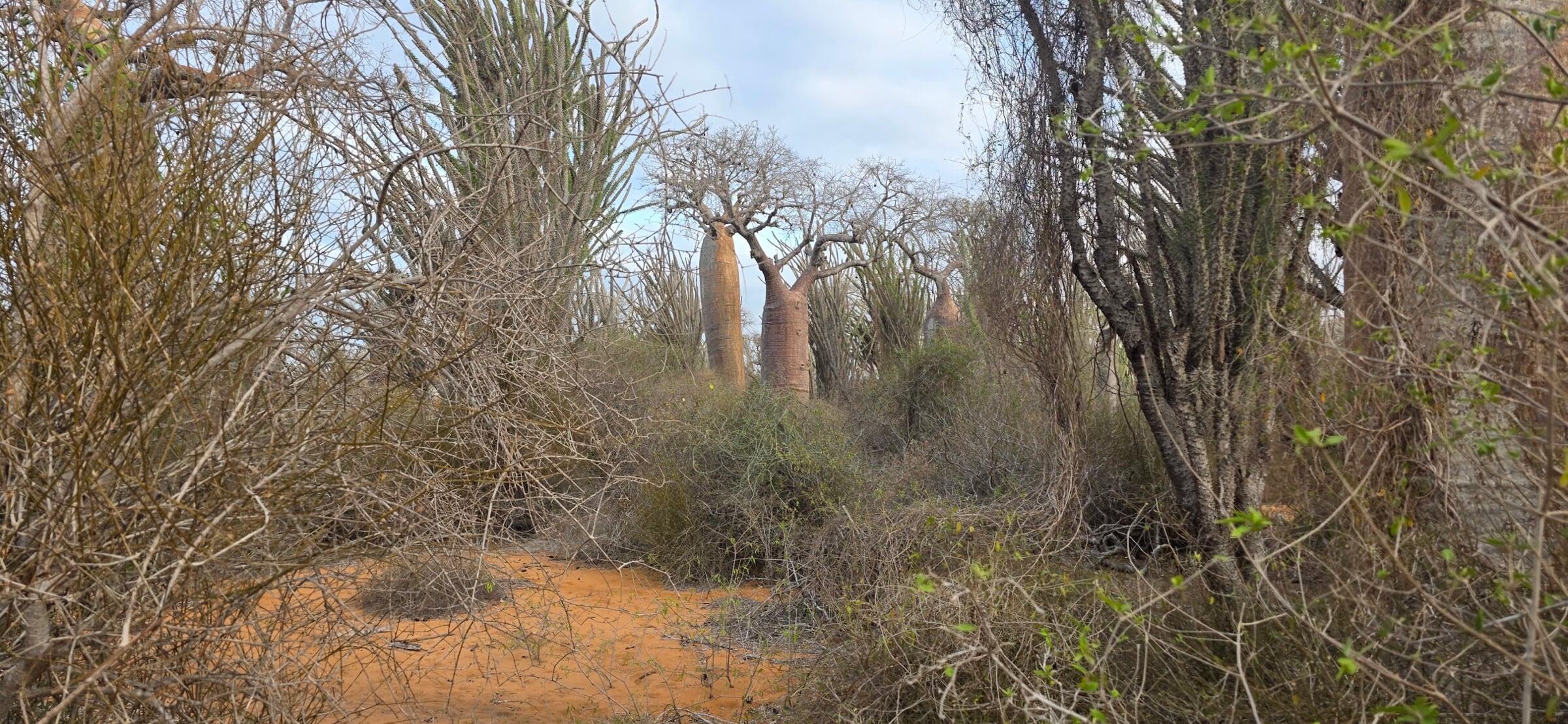
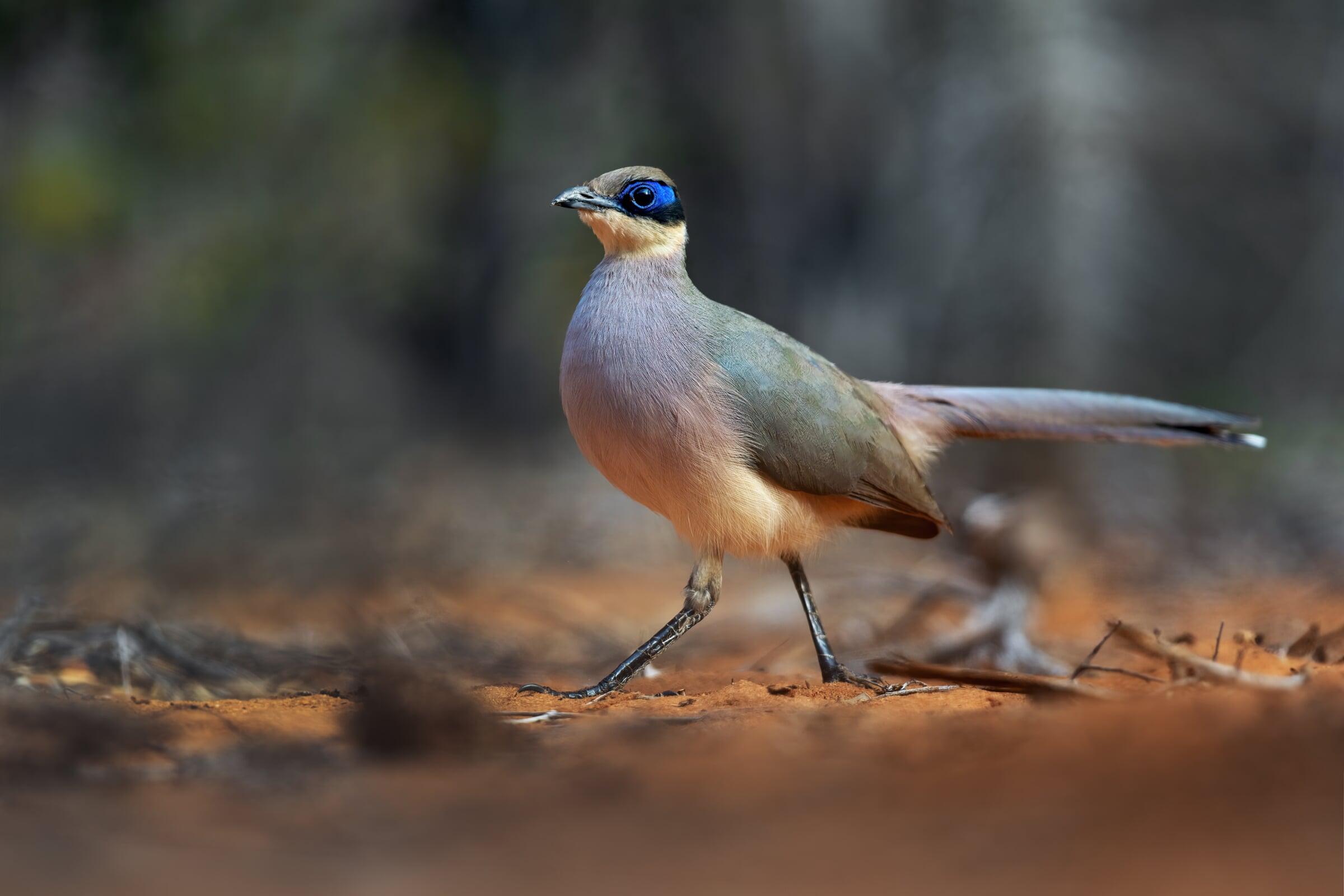
My biggest target was the Long-tailed Ground-Roller, but I was also pretty interested in Olive-capped Coua and Running Coua - ground dwelling members of the cuckoo family. For these targets and others, the local guide had employed two spotters to help locate things. On the first day they moved quickly in the forest around us as we walked the well-formed ecotourism trails, spotting birds and herps and alerting us to them - not a lot of work was required to locate things!
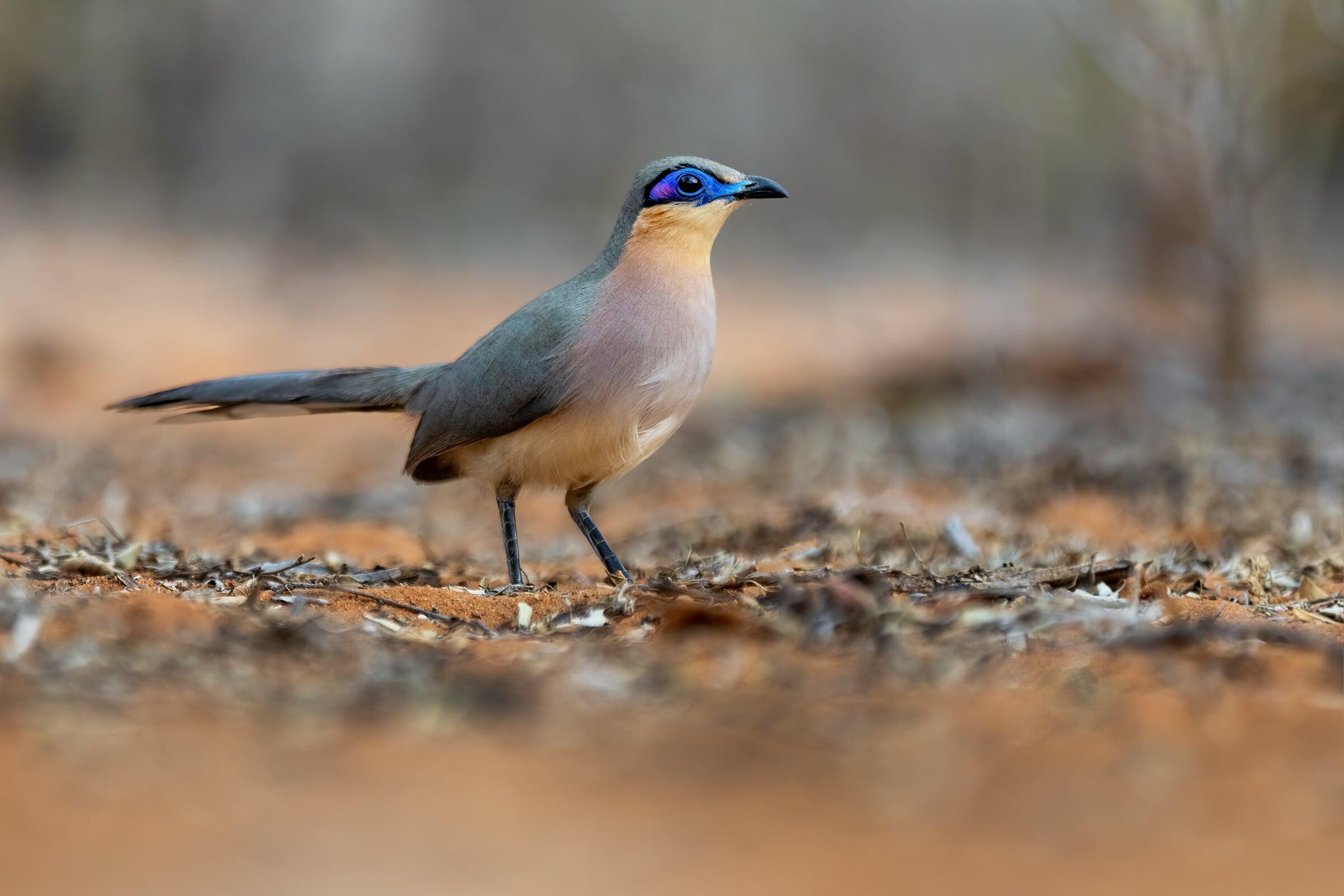
Perhaps a few minutes in to the walk we were shown some Madagascar Nightjar on the ground, probably at a regular roost. This was soon followed by some shots Hook-billed Vanga. The next hour and a half or so was spent focussing on the Coua species.
As we walked deeper into the forest, the local spotters eventually located a Long-tailed Ground-Roller. I positioned myself ahead of it's likely direction of travel in a long opening and put on a camo balaclava, gloves, and covered myself with camo material too, much to the amusement of the locals. I sat down and kept still and after a bit had spotted it!
No photo was possible for perhaps the first few minutes though - the bird skulked behind vegetation occasionally breaking into a short dash, reminding me of quail-thrushes in behaviour as my brain fried in anticipation.
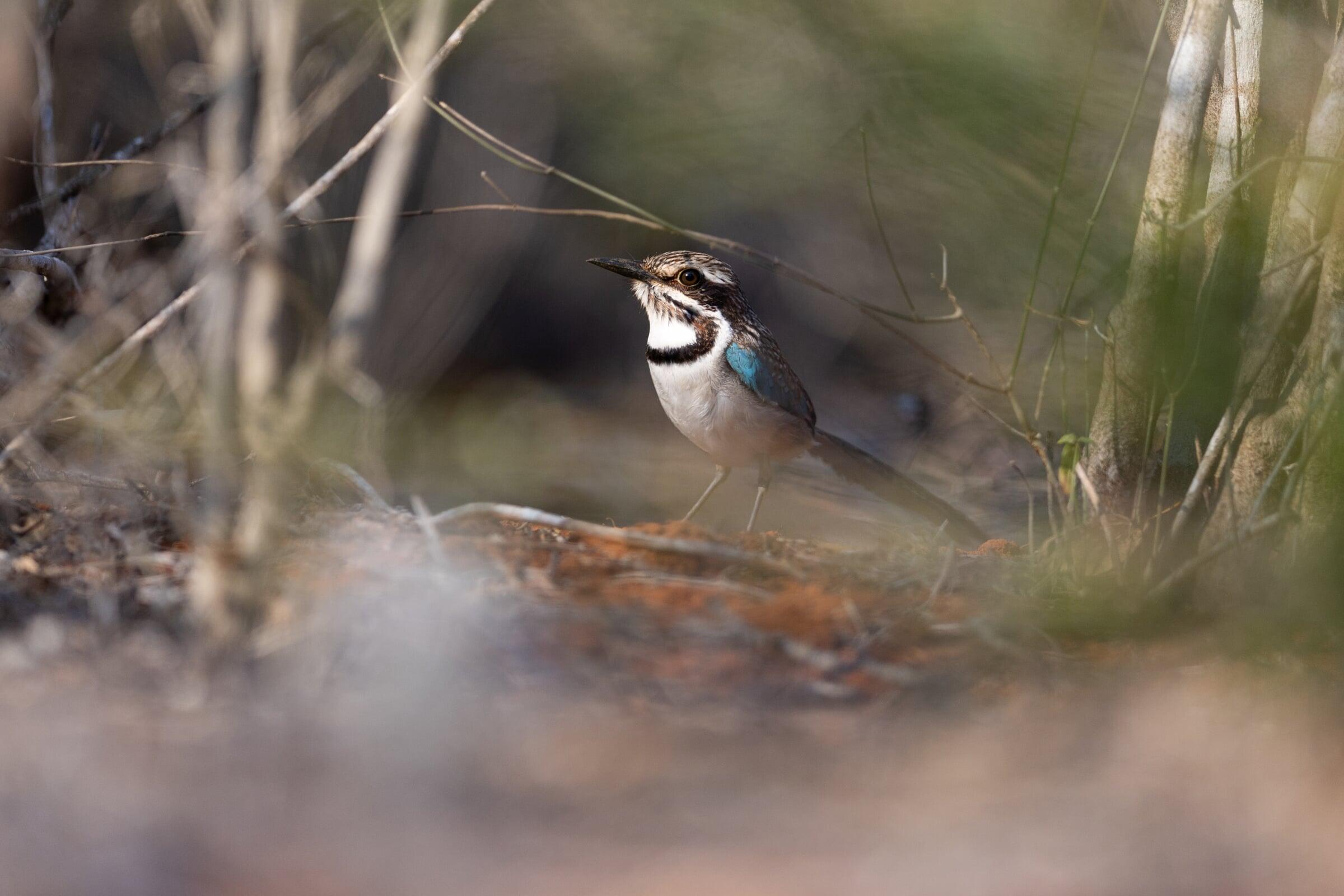
After some initial views, the ground roller ran in front of me almost too close for comfort. The crop was quite tight on my 400mm f2.8 lens, but it was exactly the sort of photographic encounter I had hoped for: enough time to observe the bird's behaviour and ultimately receive some great views.
As we walked out, the spotters also found a Subdesert Mesite, another extraordinary Malagasy endemic. This bird was doing an excellent impression of part of a shrub, sitting almost motionless on a branch and relying on its camouflage. Unfortunately, the surrounding twigs also did an excellent job of interfering with the photographs.
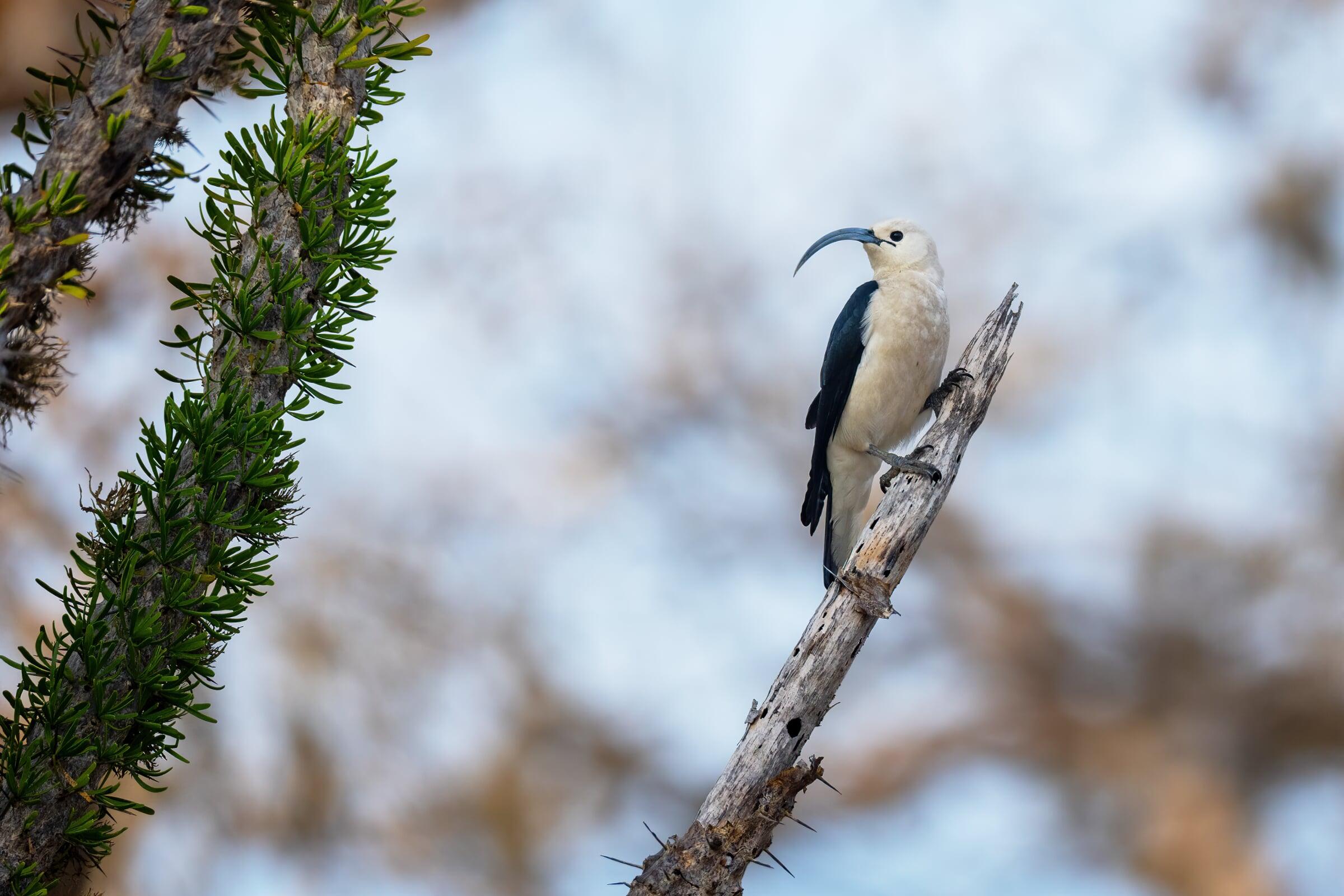
In terms of accommodation, we stayed in an aged resort near the beach. The seafood was good here, other options that we tried were less impressive. The room itself was adequate, but there was no hot water and the door didn't lock properly. It could become a bit hot without the sea breeze as the air conditioning was broken, but opening the room to get some airflow also meant inviting the mosquitoes in, but overall it was fine and a nice spot.
Sandgrouse, Zombitse, Isalo Canyon and the Road North
Sandgrouse, Zombitse, Isalo Canyon and the Road North
Our next major destination was Zombitse-Vohibasia National Park, followed by Isalo and eventually Ranomafana. We had a 2:30am start for this so that we could make progress before the inevitable traffic. This was also where our transport problems started to become a significant feature of the trip.We were travelling in a Toyota Fortuner that seemed to have almost no engine power. On some stretches it was travelling at perhaps 30–40 km/h, and even modest hills were a challenge.
Perhaps an hour or two into the drive we stopped on a modest hill, and the driver kept flooring the engine, revving it to the red line and there seemed to be some problem. The revving engine and the lack of 'go' made me think perhaps it was a clutch issue, so I checked the fluid reservoir and tried pumping the clutch whilst the driver was poking about elsewhere under the bonnet.
Later I realised the clutch was fine - but the car was stalling up the hill. After a while the driver resorted to revving the engine hard and dumping the clutch repeatedly to get up the hill. This was not particularly encouraging and I tried unsuccessfully to suggest making use of the transfer case and available low range but wasn't able to get this message across.
Fortunately the road was usually flat, so after a while we arrived at a spot where three or four locals were paid to help us find Madagascar Sandgrouse in the surrounding area. Originally the plan was to do this at sunrise but the car issues delayed this until around 7:30am. The light was still fine though.
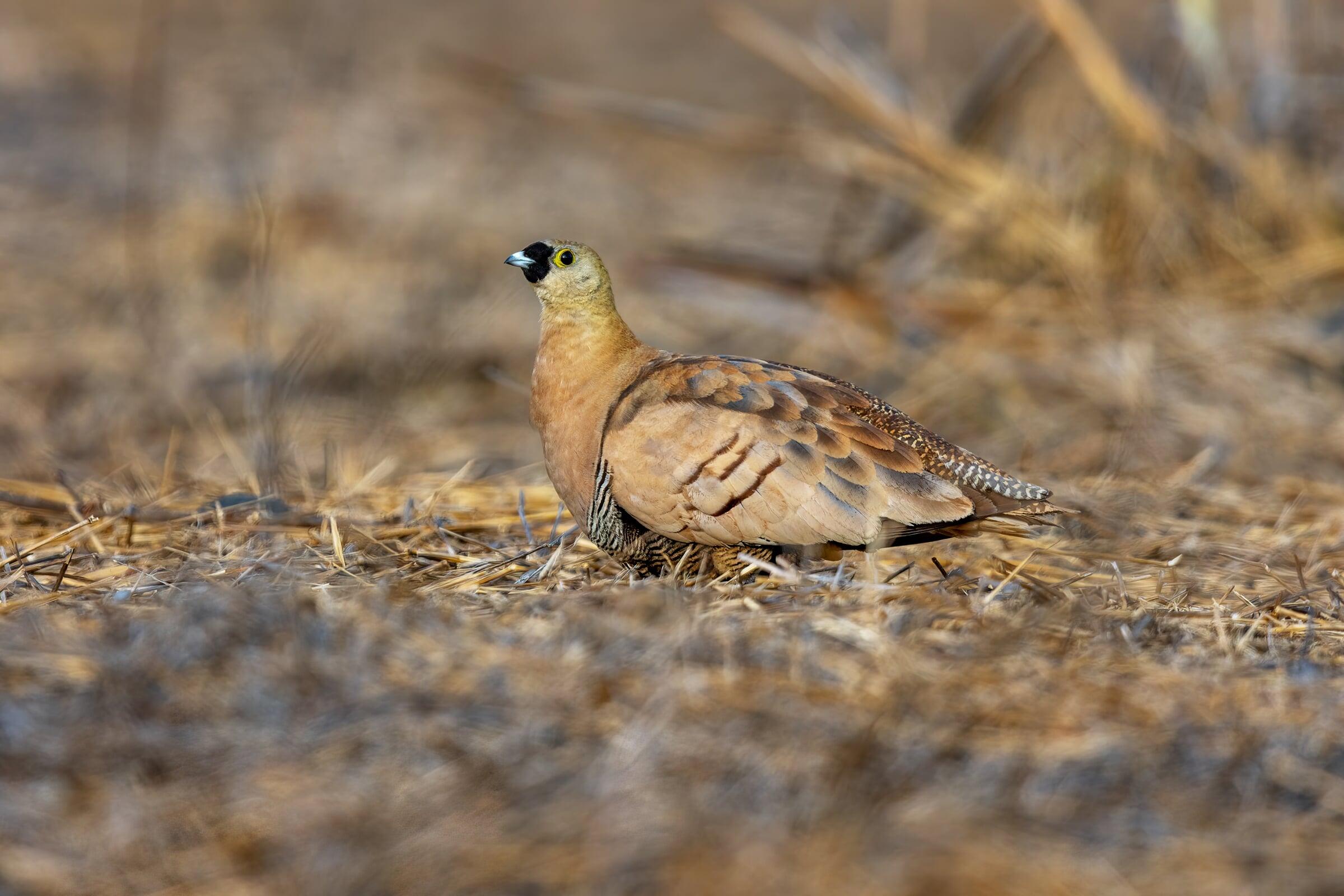
Zombitse-Vohibasia National Park
We reached Zombitse later than intended because of the car, but the overcast conditions worked in our favour by keeping the birds active. The first bird we visited was a roosting scops owl. The angle and light were poor and a tour bus of people were standing underneath it, so we continued to look for other things after a few moments.
One of the more interesting targets was Appert's Tetraka. The local guides had an extensive network of cut trails through the forest. These were generally maintained at the height of the local guides, leaving me to duck below branches. We followed these trails to look for the tetraka. I spotted a Giant Coua but was advised we'd try for it later. We also had a look at some Verreaux's Sifaka.
After a while we located the tetraka, getting a shot was tricky due to the thick vegetation and many obscuring branches. I took my best shots almost immediately, with some vegetation framing the shot, and after following the bird for a bit had a relatively clear photographic opportunity, but had managed alter my ISO setting to a terrible value - probably bumping the dial pushing through on the narrow trails. Moments later the tour group passed through and ended the opportunity.
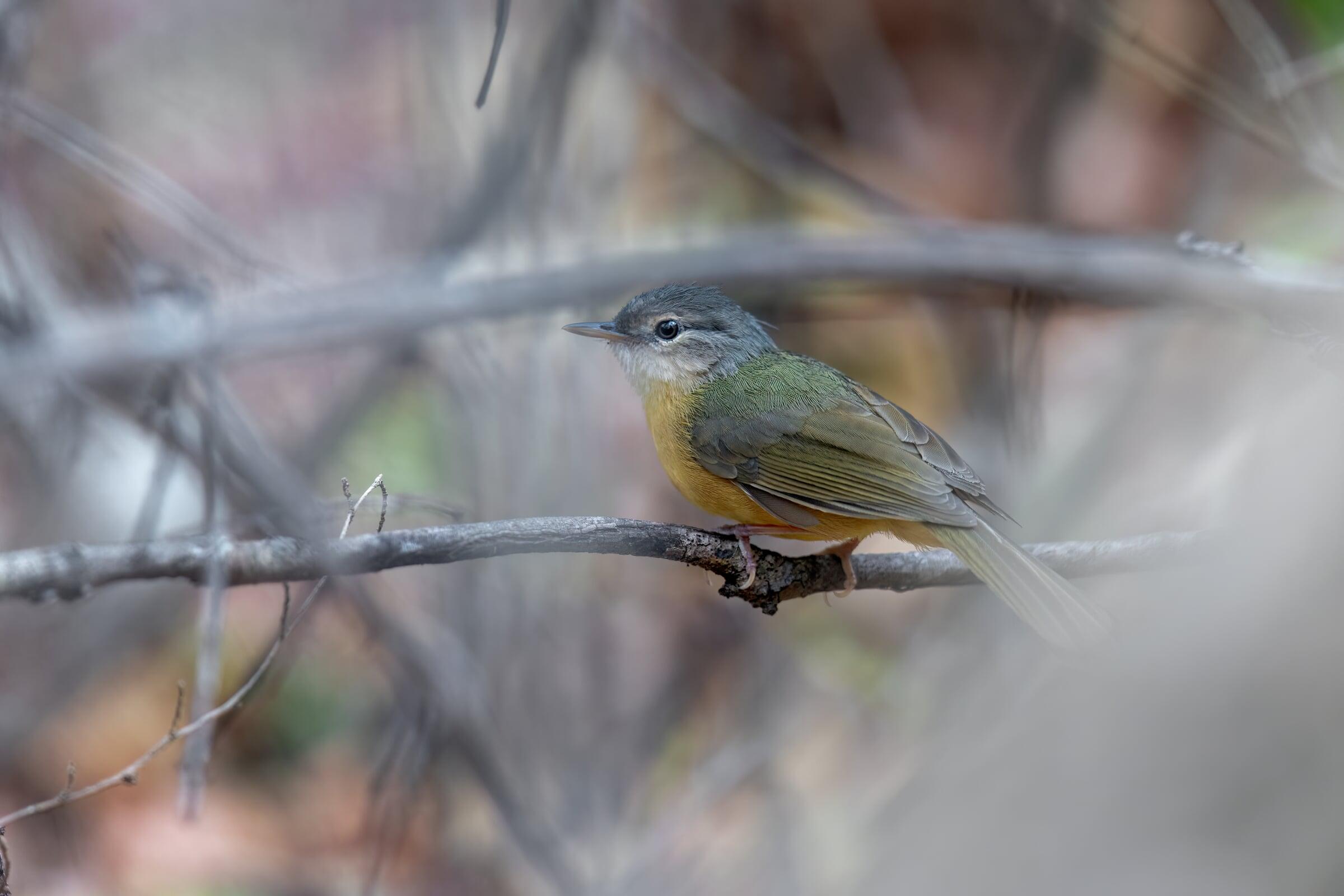
After the tetraka we soon spotted a cooperative Rufous Vanga and I was advised we'd try for the Giant Coua next. This was a slightly odd experience. The guides consulted a sizeable group of locals beside the road making food, area, and the bird turned out to be accustomed to looking for scraps around them and a nearby picnic area.
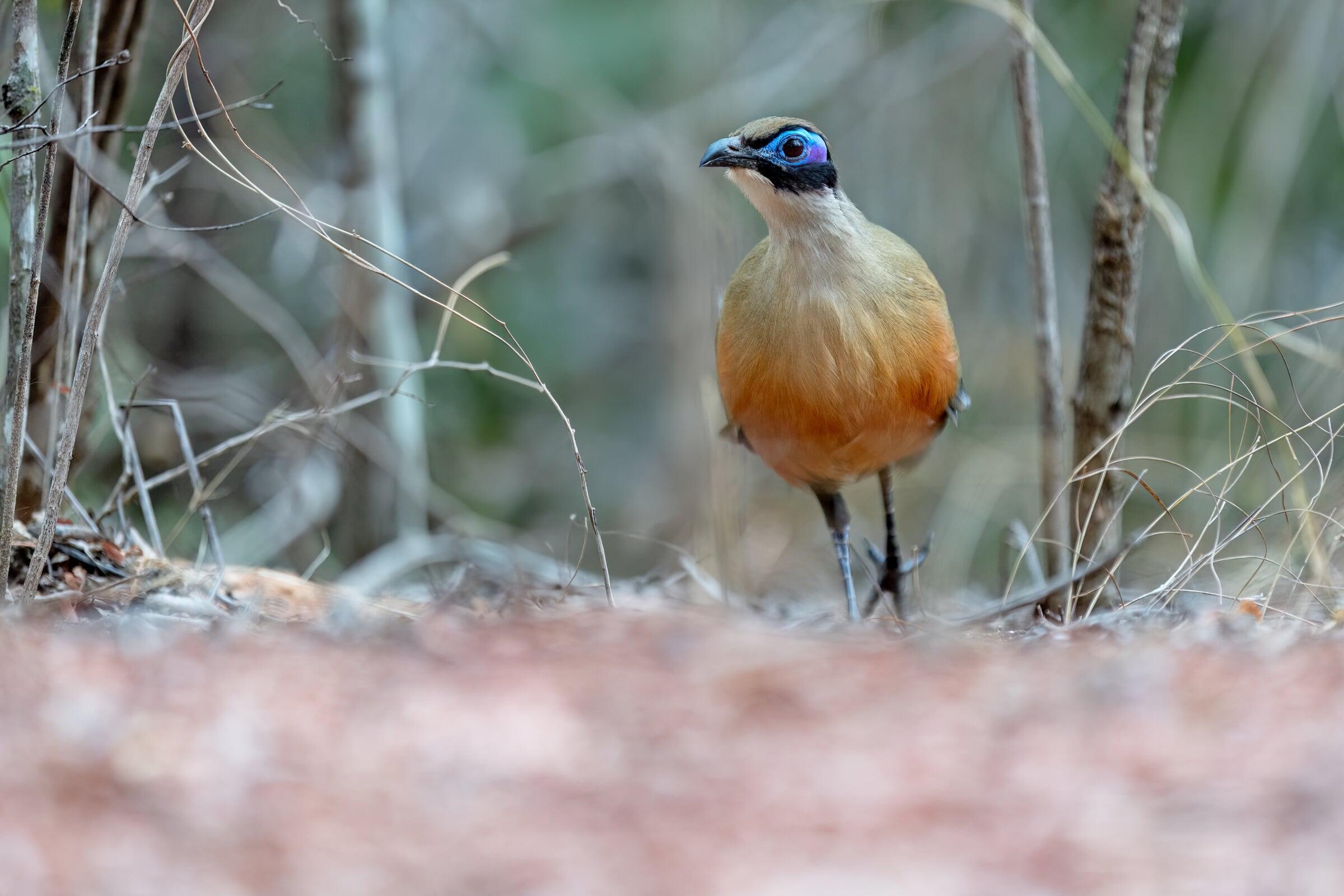
After the Giant Coua, we birded the other side of the highway. Here the habitat was much more open. I was shown a roosting White-browed Owl and I photographed Madagascar Hoopoe and Crested Drongo.
Isalo National Park
We continued driving. The car remained sick, but the road was usually not too hilly, so we made it to a hotel in time for a late lunch. Here we organised with a local guide and a different vehicle to take us into Namaza Canyon. It was quite hot, and the drinking water and a few of my things were left in the other car and I wasn't able to determine whether it was coming back. The area around the canyon reminded me a little of Capertee Valley in Australia - sandstone escarpments and introduced eucalyptus trees growing everywhere. The wet gully itself was relatively cool and the drinking water situation wasn't a big deal as a result.
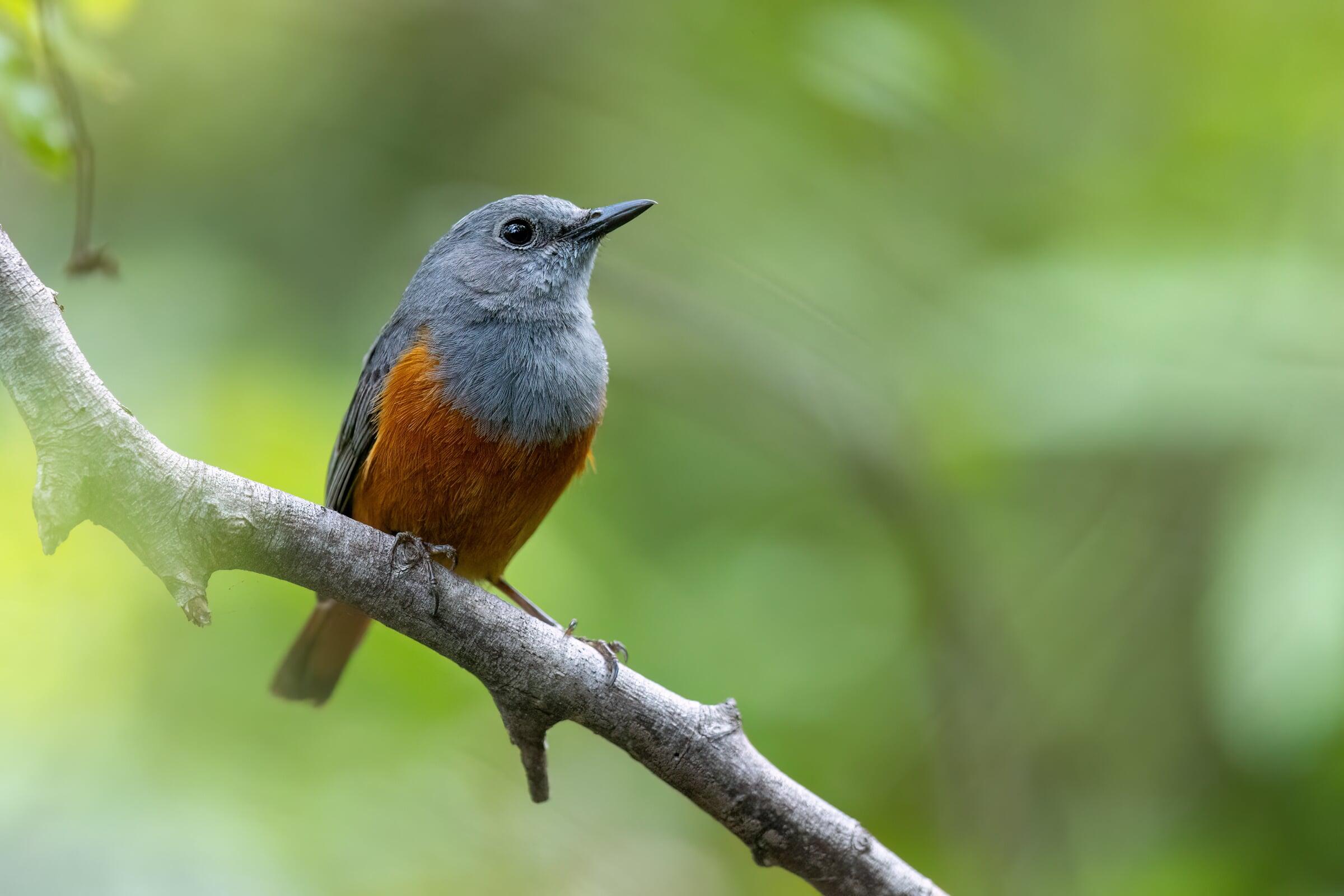
In the gully I photographed Benson's Rock Thrush, Hamerkop, a roosting Madagascar Owl, and several soon-to-be common species like Malagasy Bulbul and Malagasy Turtle-Dove. The habitat in the gully was strikingly similar to many wet gullies in Australia. It almost could have been somewhere near Wollongong!
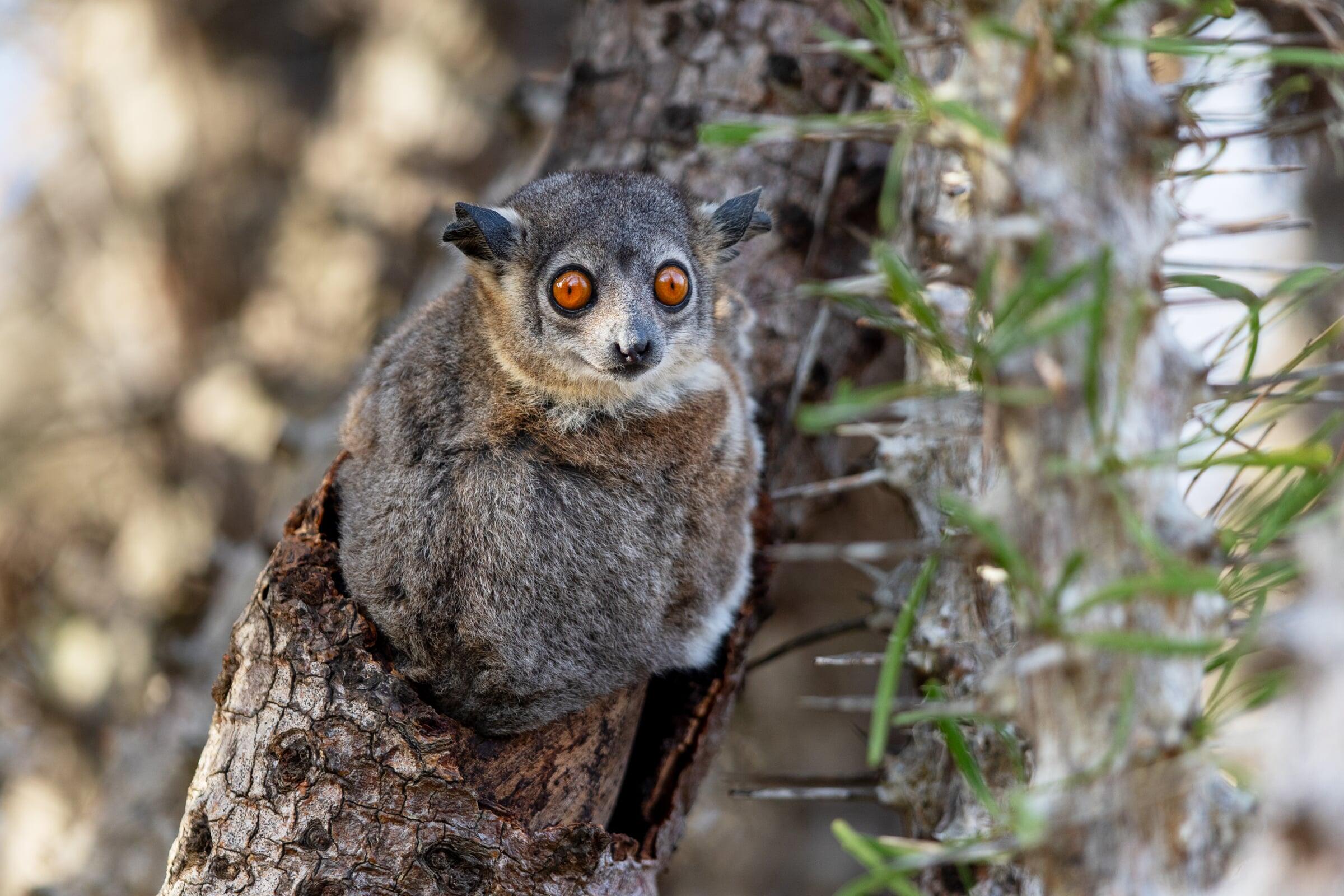
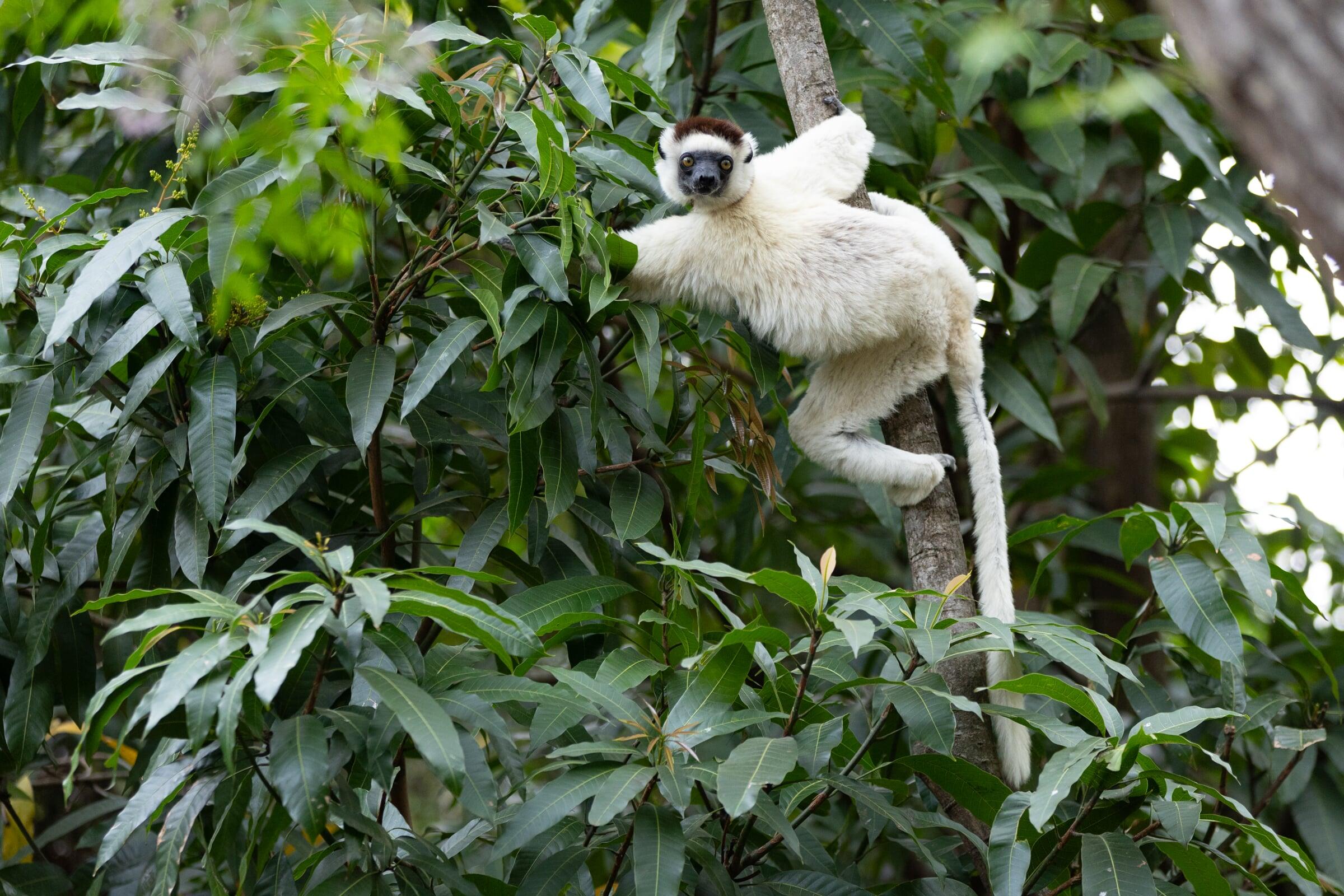
We also spent some time, what was in hindsight, too much time trying to photograph a white-throated rail - a species we later saw more easily elsewhere. Probably the star of the show though was a group of Verraux's Sifaka. The views of this large critically endangered lemur were much better than at Zombitse-Vohibasia National Park.
By late afternoon we left the canyon and tried a nearby area for Madagascar Partridge. Here the locals had laid out sugar cane to make rum, and apparently the partridges liked the long grass. This search was cut a little short by a thunderstorm and unsuccessful. I did manage to locate some partridges the next morning near our accommodation at before we started driving however.
Anya Community Reserve
The car was back, and apparently had been looked at by a mechanic who thought it might be the mass-airflow sensor. The drive this day was longer, and hillier, and we stopped many times to periodically remove the sensor and spray it with WD-40 and wipe it down again.
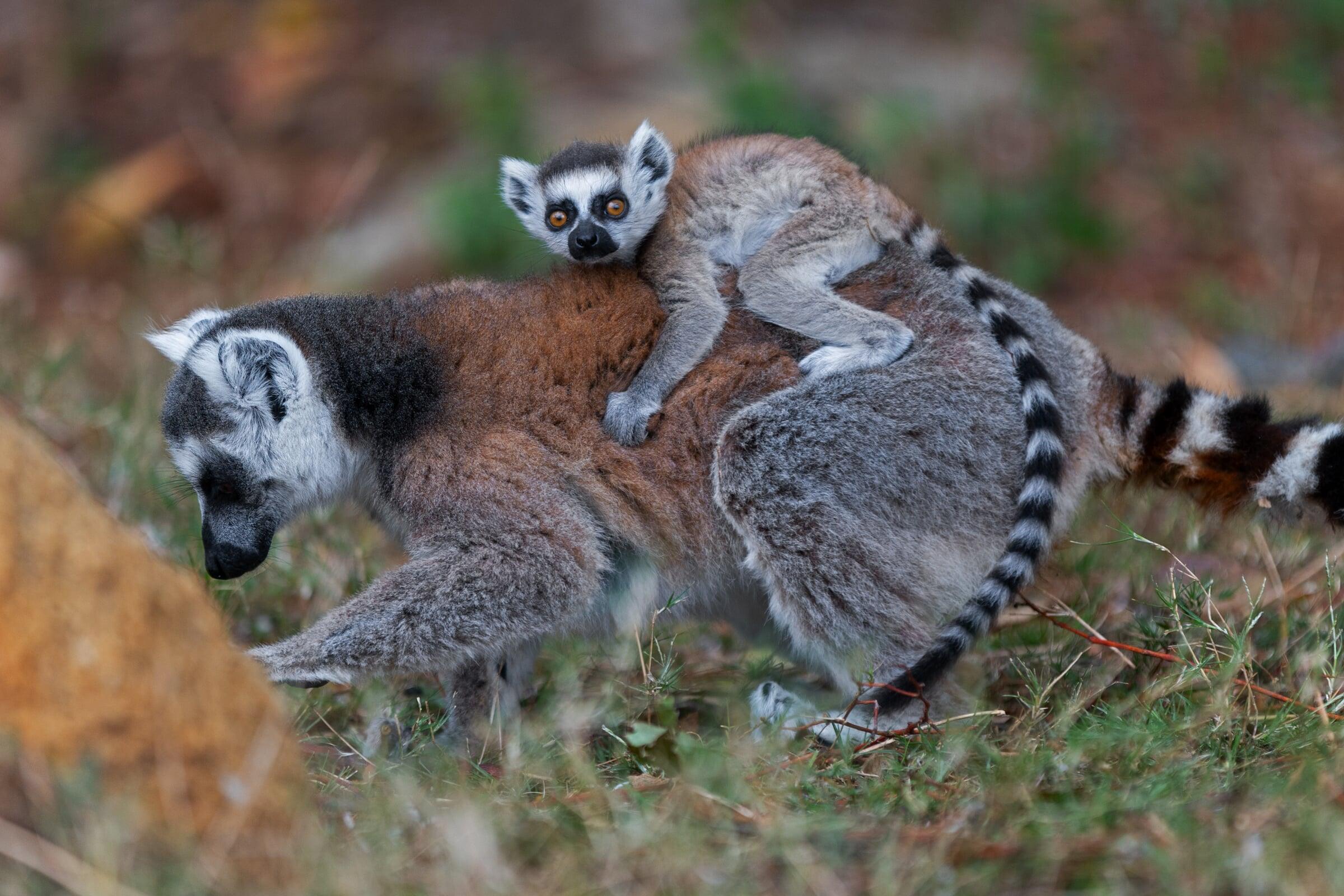
By around lunch time we arrived at Anja Community reserve. We were only able to have a short stop due to the vehicle issues. But it was a enough time to get a good look at the Ring-tailed Lemur and some herps.
Once we started driving again, we continued with the mostly ineffective WD-40 approach. We got to a steeper section of road and we were unable to proceed. I again tried to suggest low range but the suggestion didn't seem to be understood.
Eventually a helpful passer-by in a thankfully new Ford Ranger gave us a lift to Fianarantsoa. Here we transferred into a Hyundai taxi for the rest of the journey to Fianrantsoa. The taxi looked to be perhaps 30 years old and was in fairly poor condition. We drove through heavy rain, with a windscreen that kept fogging up, ineffective wipers, and headlights that were not functioning properly.
The windscreen fogging problem was solved manually with a rag, and the road soon had massive potholes. The underside of the car scrapped repeatedly, making horrible steel-on-asphalt sounds.
By the end a journey that should have taken maybe six hours ended up taking around twelve. We arrived a bit exhausted and lost of afternoon of birding. During this episode there also really wasn't much communication about what was happening, what the plan was, and when we would have a functioning vehicle. But I knew we had a few nights at our destination, so figured there would be time to sort it out.
Ranomafana: Ground-Rollers in the Rain
Ranomafana: Ground-Rollers in the Rain
Ranomafana was one of the most important destinations on the itinerary. The rainforest is home to several highly desirable endemic birds, including potentially three ground-rollers species, and I had particularly high expectations for the photography.
The weather was not cooperative. It rained all night and heavily throughout the following days giving me flashbacks to a similar experience in Vietnam a few years before. At least this time I didn't have a fever!
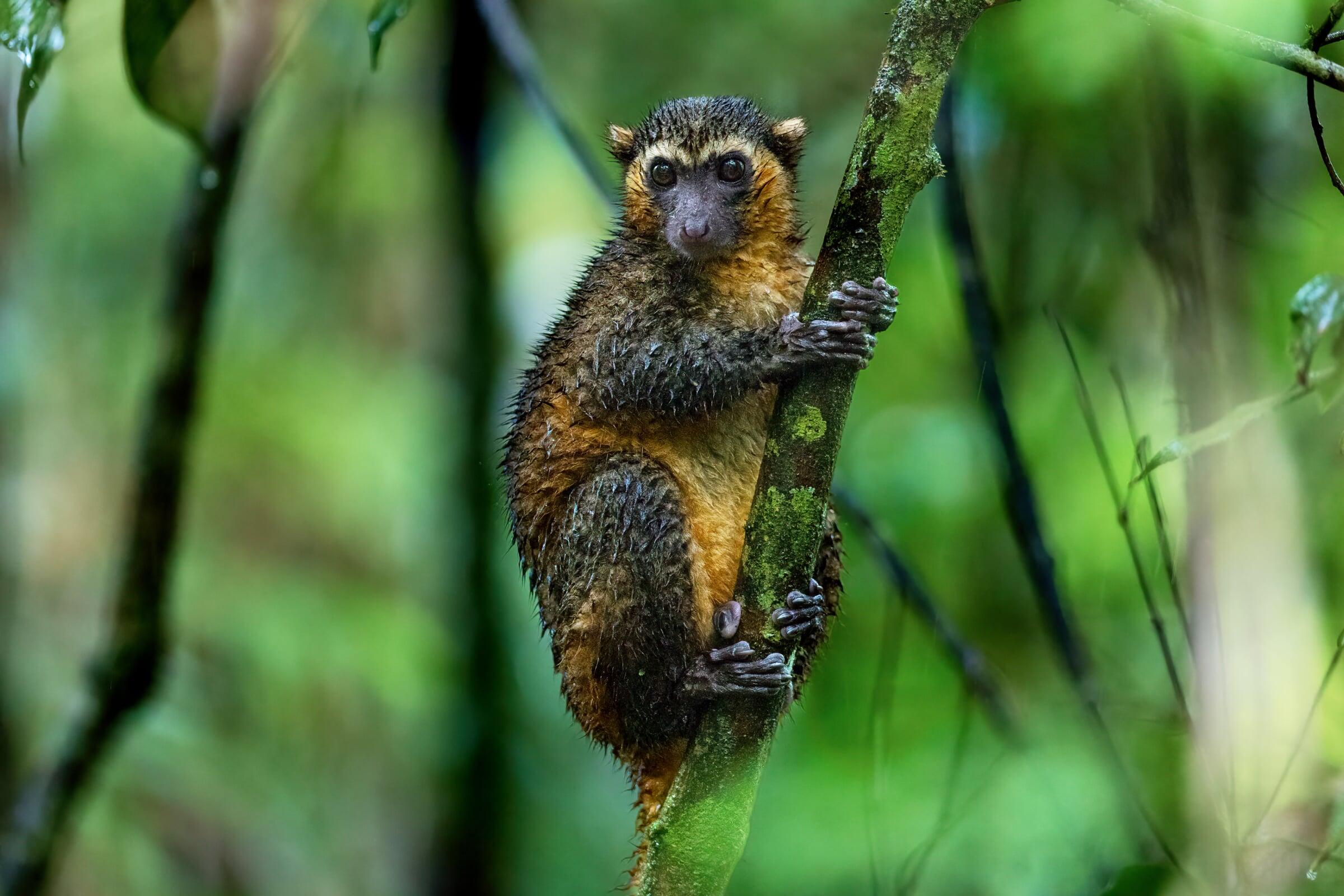
On the first day, I went with a guide for the national park with a spotter. My wife stayed nice and dry in the hotel! There was very little bird activity due to the heavy rain, and it was hard to even hear much calling. A solitary Golden bamboo lemur was a nice find after an hour or two of nothing much!
As we looked for the ground rollers, I was told that some of the Ground-Rollers used to be baited at Ranomafana, but that this resulted in the birds being killed by other guides - apparently the bird guides earn more money typically which resulted in jealousy and the killings from some of the general nature guides, so this practise was stopped.
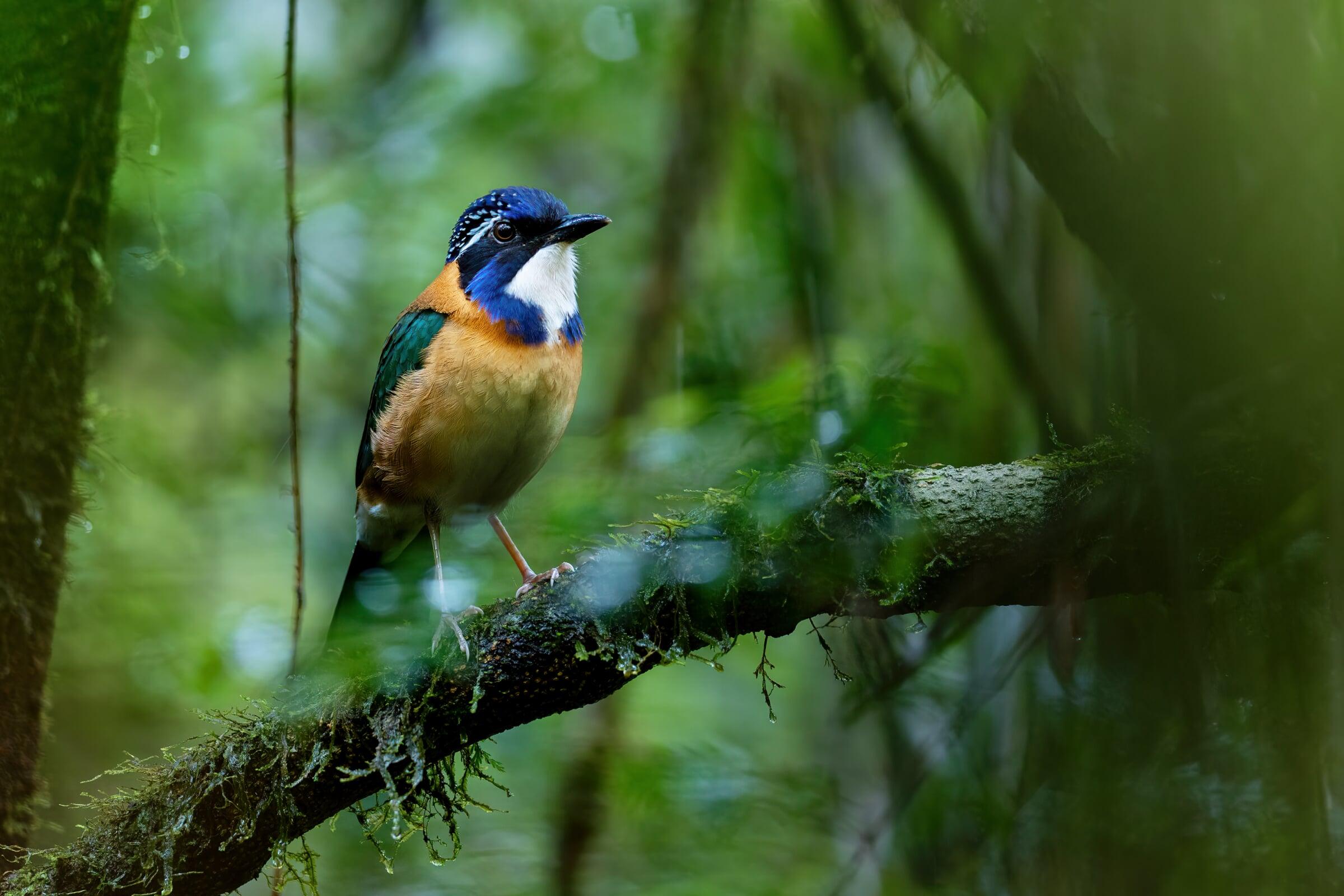
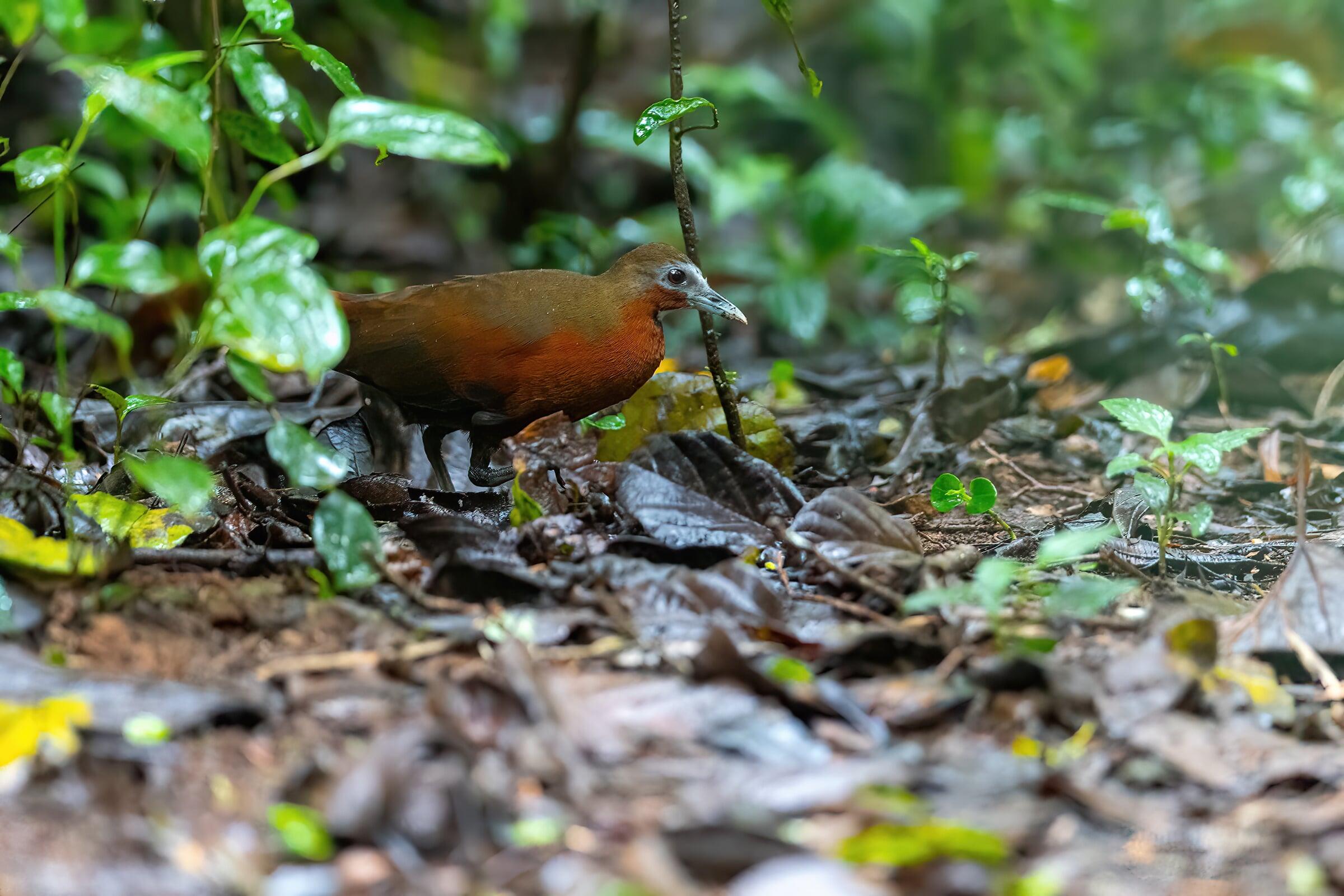
After finally locating and photographing the Pitta-like Ground-Roller, my mood was elevated, though the birding was still pretty slow. We next tried targeting Madagascar Forest Rail. I attempted to photograph it in the pouring rain with the 400mm f/2.8. Even with the large aperture and a high ISO setting, the shutter speeds were difficult to manage with the movement, so the results were a little bit mediocre.
That afternoon we did some roadside birding in the continuing rain. We heard Madagascar Flufftail but the session produced little of interest photographically. This was followed by a night walk - information that was not communicated ahead of time.
The night walk was an inauthentic experience. I opted to just pack my phone because it was still raining heavily. Basically several tour groups all descended on a strip of road. Apparently this was the spot for Mouse Lemur. We did see it, but it turned out that it was being baited with some bits of banana and I didn't particularly enjoy a foreign tour guide shouting orders in German constantly or the people everywhere. The night walk yielded many chameleons roadside as well. I quietly wondered if the nightly torchlight was bringing insects to them or whether the density was natural.
Ranomafana: Sahamalaotra Track
Ranomafana: Sahamalaotra Track
The hotel was mostly fine, except that some pluming-related issues meant that the shower sprayed water on all the walls of the bathroom, and the water ended up an inch deep by the end. The permanently installed bathmat was very mouldy as a result, and the towels had spots of mould too. There were also frequent power outages. But at least the water was hot!
The following morning we visited the Sahamalaotra Track, at higher elevation. I was disappointed to see the fortuner back again, but I'd received a message from my organising tour guide to say that there had been water in the fuel and that everything was fixed. It was still raining, but not to the same extent as the previous day.
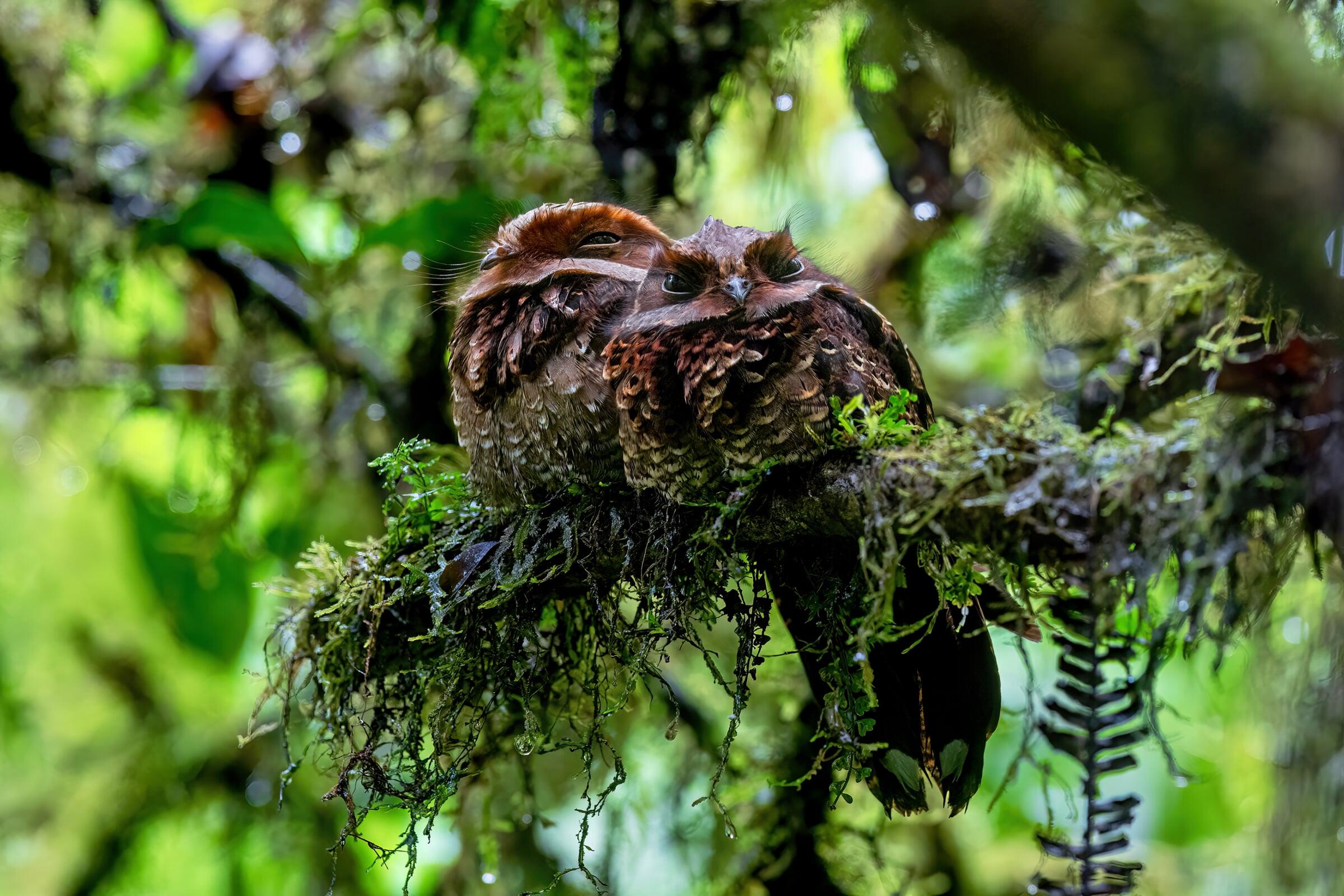
We initially looked for Rufous-headed Ground-Roller without success, then walked uphill along a narrow forest trail. I searched as we walked with my thermal, and found a pair of Collared Nightjars roosting on a low branch. Apparently they usually perch on the ground, but given the wet conditions, I think they opted for the branch.
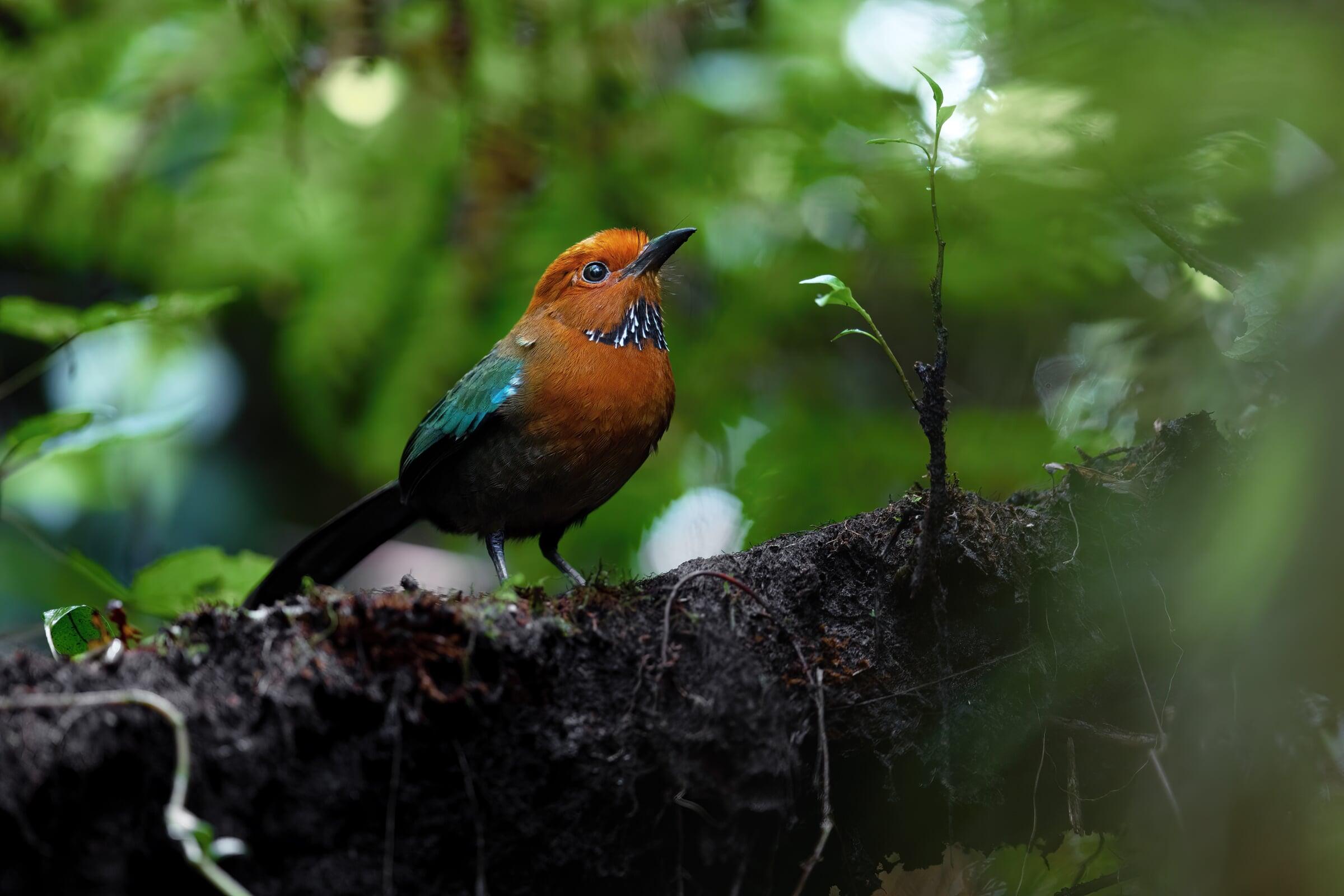
As we walked up to higher elevation, we searched for Common Sunbird-Asity and passed by a Pollen's Vanga nesting close to the trail. Eventually we heard a Rufous-headed Ground-Roller calling at some distance and were able to gradually make our way towards the sound.
The next target here was Brown Mesite. Once we heard one calling there was a long off track adventure through thick rainforest. It reminded me of seeking out a very shy Rail-babbler in Malaysia - every time we approached another 25 meters, the bird was calling 25 meters further away. I never really got a good look at it and we gave up. A Madagascar Flufftail was a nice consolation prize during this mission, however. These were actually quite common roadside the previous afternoon, but we saw very little, so it was nice to get a good view.
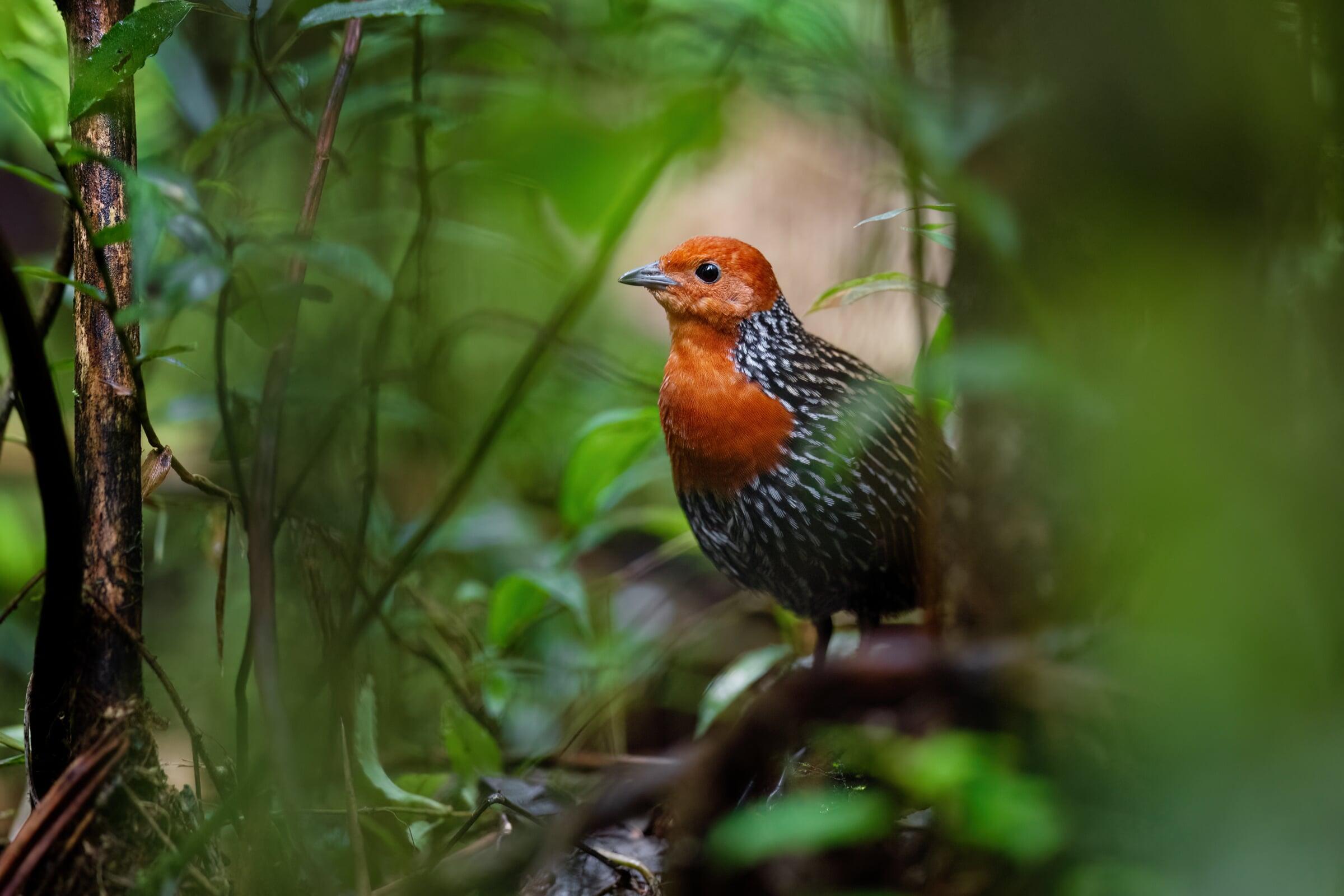
Although we hadn't actually travelled that far, the ground was slippery and often steep off track and I spent a lot of time contorting myself around the vegetation and trying not to slip on muddy ground. I had also accumulated a blister or two on my toes from two days of wet socks.
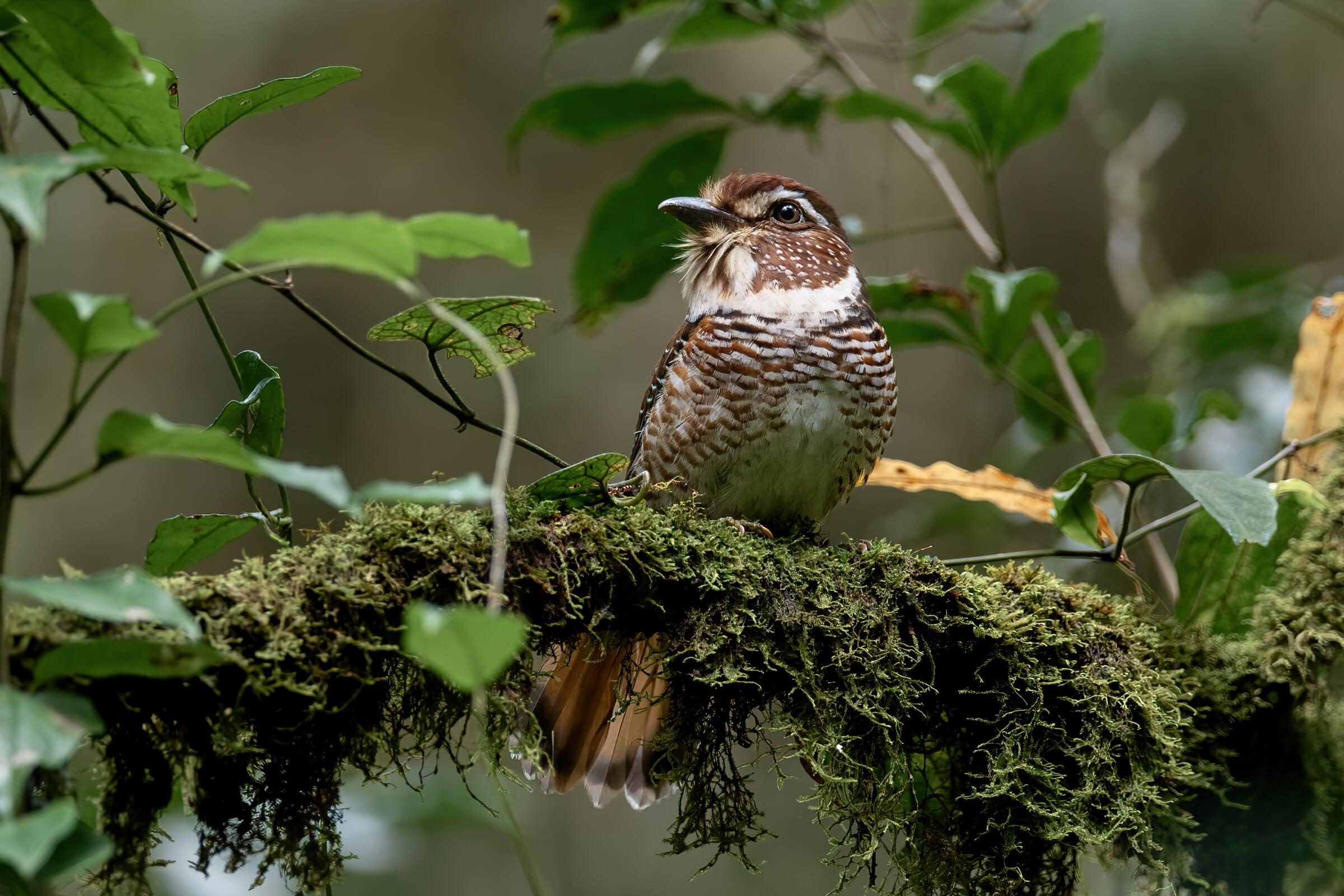
Mantadia National Park
Mantadia National Park
The next day we drove to Andasibe national park, stopping in Antananarivo for a much better than the average lunch. The fortuner was functioning better than before but we had new intermittent problems that left us stopped occasionally again - a brake caliper dragging or sticking. This was generally rectified by letting the brakes cool sufficiently.
We reached the area around late afternoon, but as on some previous days, were told it was too late for the planned birding session. Whether that reflected park restrictions or simply the arrangements made or not made wasn't especially clear. Instead we went out at night for another look at Mouse Lemur (thankfully more natural), and some other herps including a number of chameleon species. Like Ranomafana there were a lot of tourists jammed into a relatively small area for this, but at least we didn't need to dodge the passing cars. We saw Indri, Goodman's Mouse Lemur, Parson's Chameleon and Mossy Leaf-tailed Gecko, amongst other things.
The room here was relatively fine, though I did hear another guest upset about getting wet during the night due to a leaking roof. The restaurant was poor enough that we were happier eating at an independent establishment across the road.
Mantadia was one of the stronger birding days of the second half of the trip. We arrived well after sunrise leaving an hour after and driving for an hour and a half. Fortunately this did not matter much as it was overcast. The hotel had also failed to prepare the lunch we had ordered, so I figured I'd do some intermittent fasting for the day!
We had a brief roadside encounter with a Madagascar Pygmy Kingfisher driving, and spent some time sliding around on the muddy access road before arriving at the Circuit Eulophia trail. Since it was cloudy, I had my thermal monocular out, and almost immediately spotted a Scaly Ground-Roller in a river bed next to the trail!
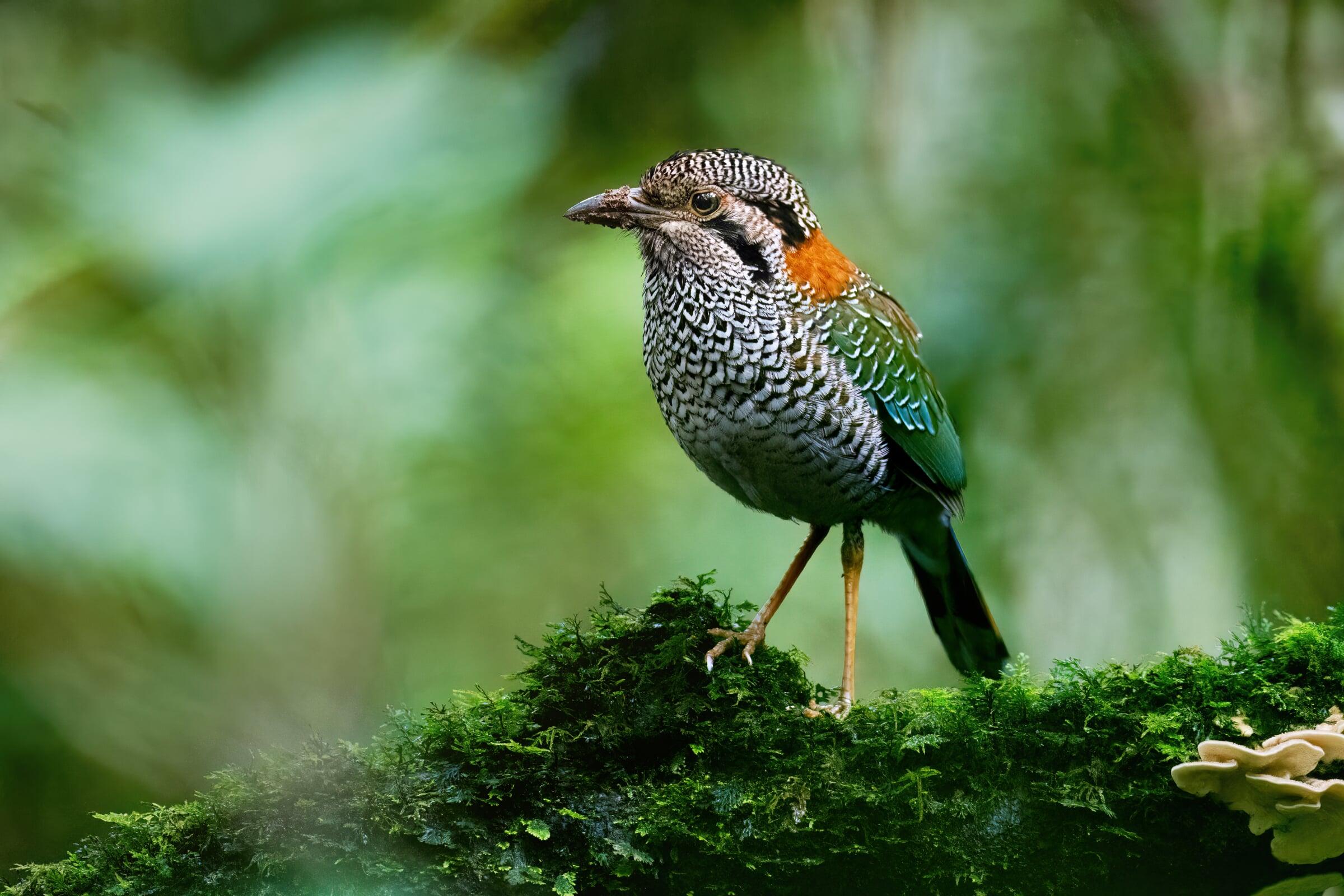
We spent the remainder of the morning looking at other interesting subjects, including a few Nuthatch Vanga (which really should be called Treecreeper Vanga because they work their way up trunks and not down them) and Crossley's Vanga. As with other locations, some of the canopy birds were often distant and tricky to photograph.
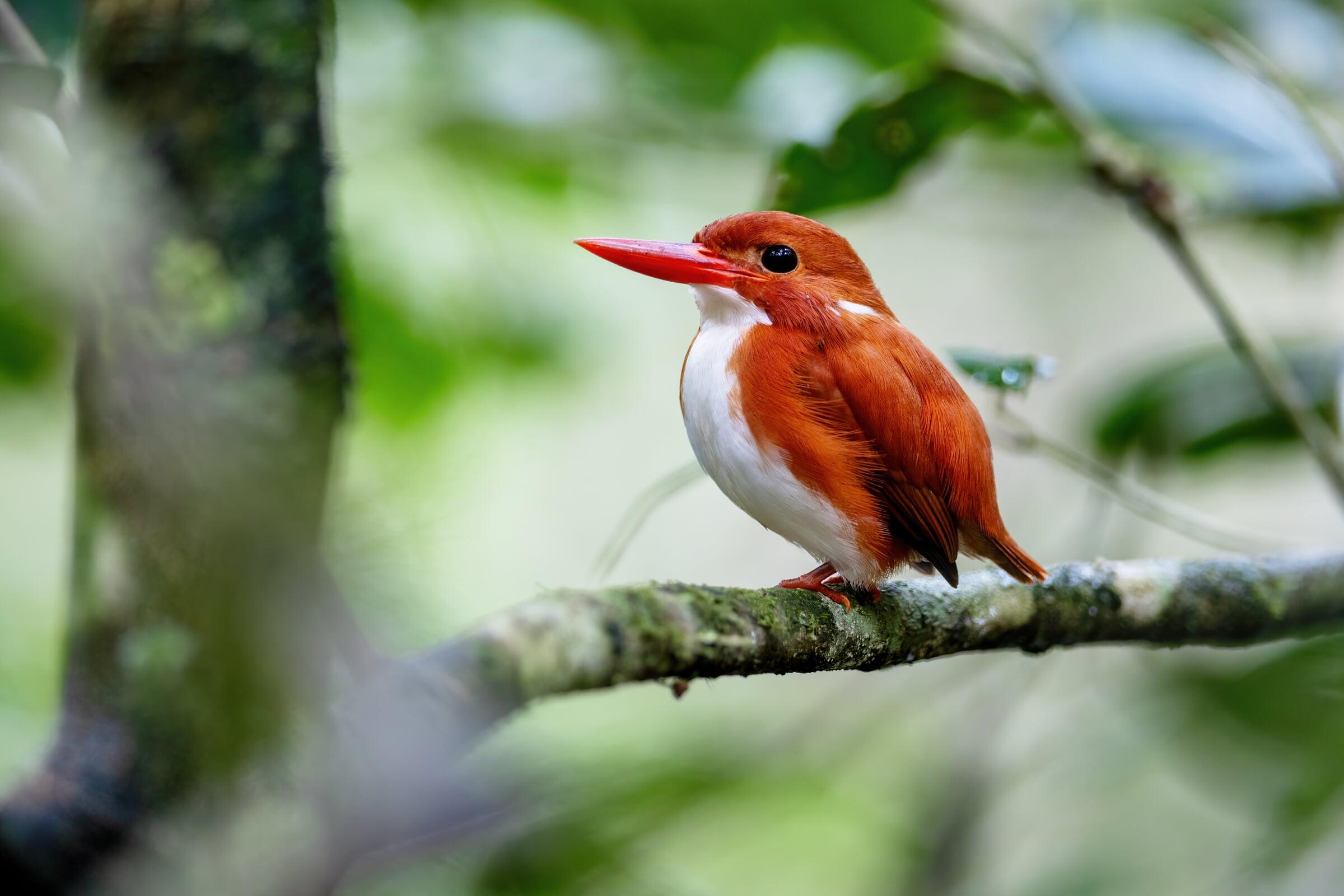
As we ended the walk, we ended up back on the road. Here I photographed Madagascar Munia and recorded a few Malagasy Bulbul calls, again with the TalonFab 300 and the Clippy EM272.
When we got back to the carpark, there were perhaps fifteen four wheel drives with tourists unloading from them. I was glad for the "early" start here!
Torotorofotsy Marsh
That afternoon we visited Torotorofotsy Marsh. The habitat was a welcome change from the last week or so of rainforest, and there were several interesting birds to pursue including Madagascar Rail, Madagascar Snipe and Madagascar Cisticola.
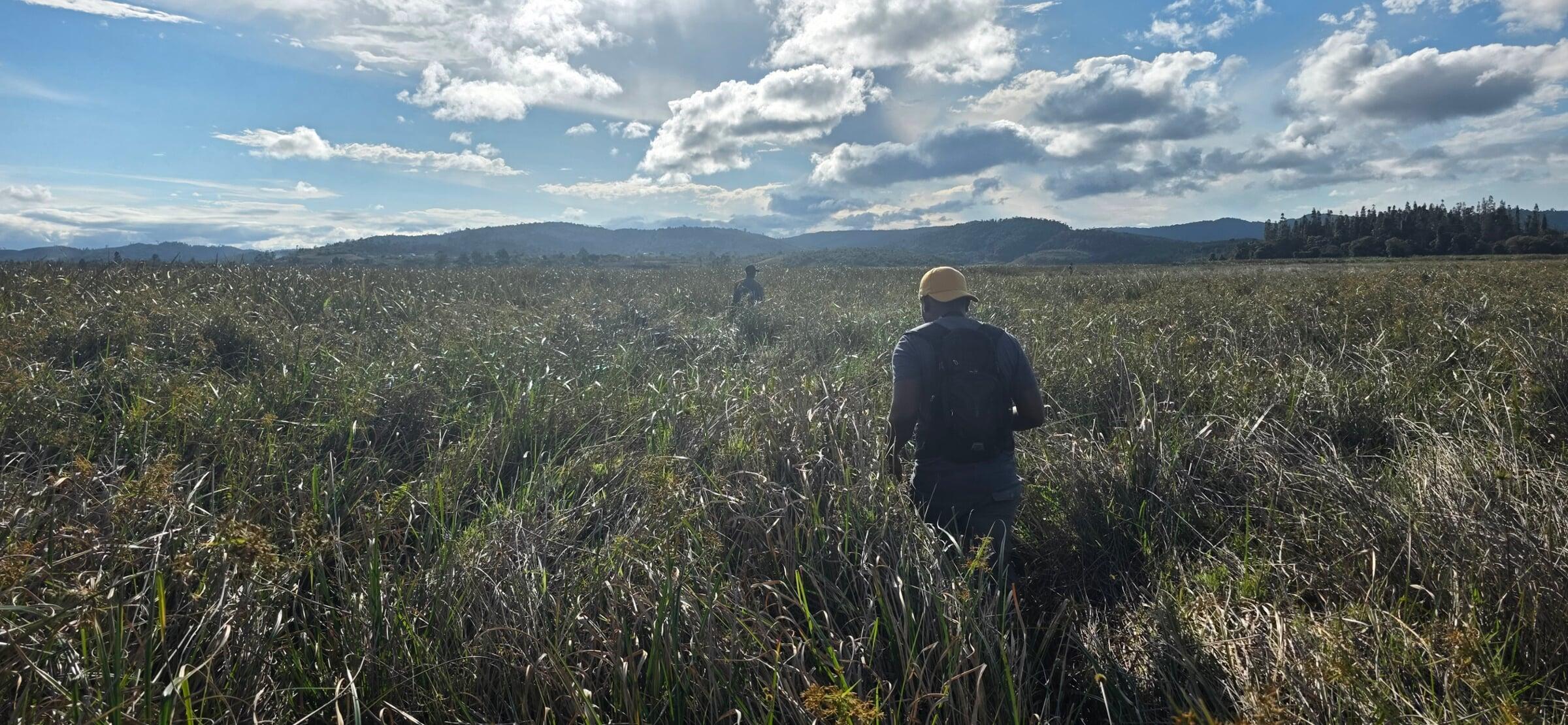
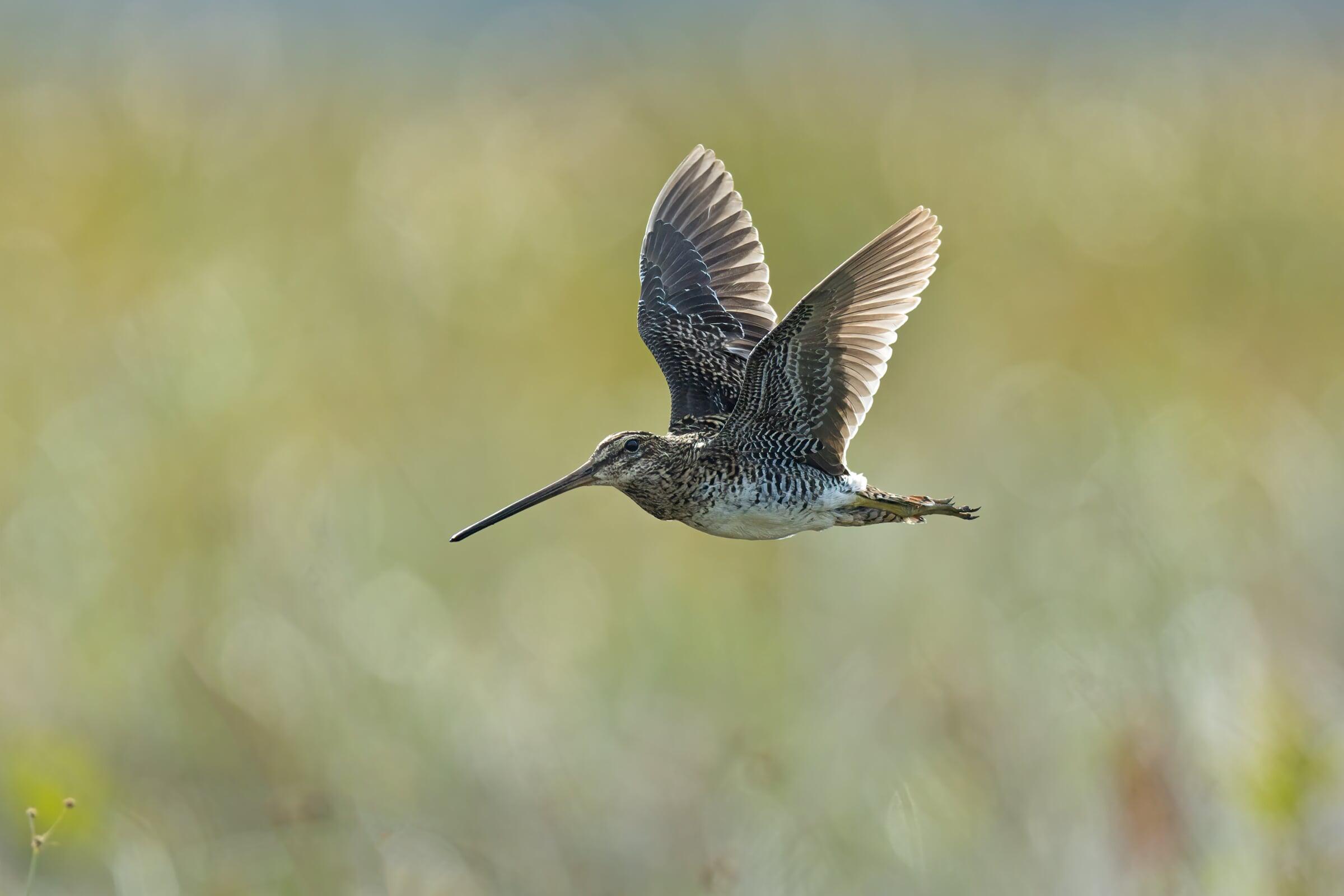
The marsh was dry enough to walk through as long as you watched where you were stepping. So we went for a walk towards a wetter area hoping for the rail. Before very long, a snipe was flushed unexpectedly by the local guide, but I managed to react quickly and get some flight photographs.
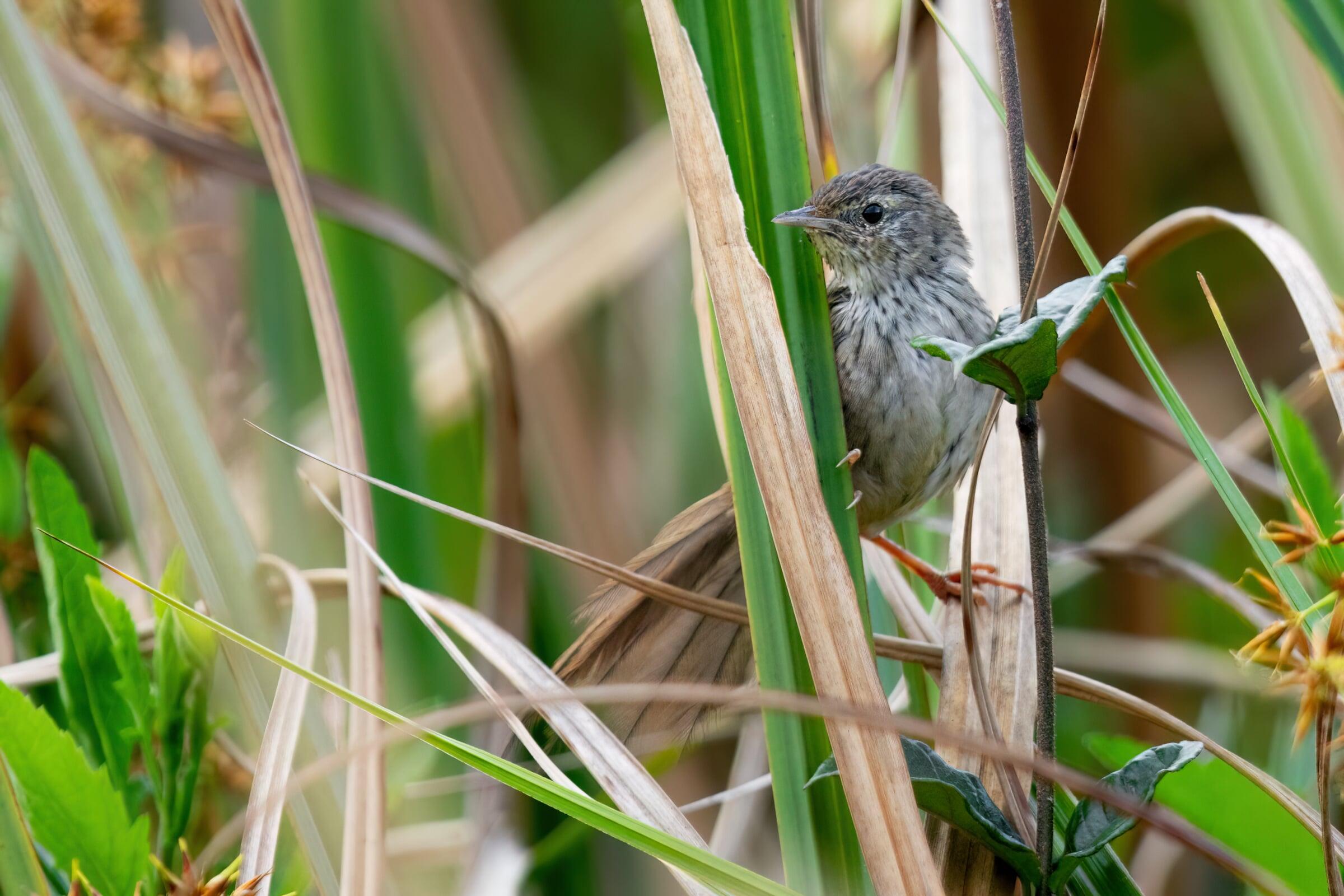
After some time, we ended up in a wetter area. We heard a cisticola calling, and another unfamiliar call which turned out to be Grey Emutail. We spent some time trying to photograph the Grey Emutail who always seemed to have some vegetation between me and them!
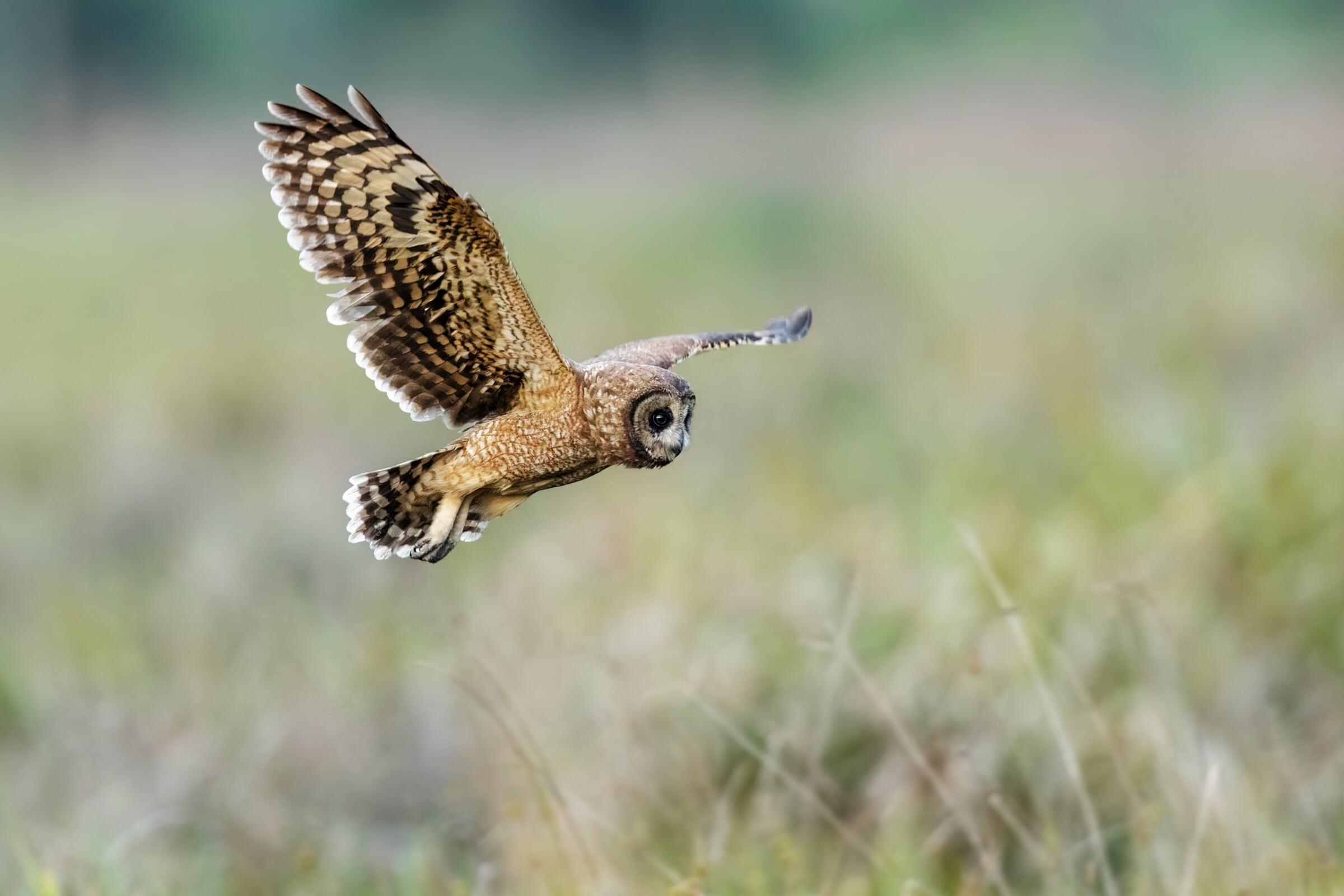
After the emutail we started hearing some madagascar rail. They reminded me of Lewin's Rail calling happily in impenetrable vegetation, but with a super long beak. I managed possibly the world's worst photo only. We'd later try some other sites the next day, but never we never ultimately succeeded in getting a good look. As the sun was setting by this time, it was time to walk back to the car. Soon we saw a hovering marsh owl and it swooped down, probably spotting some prey. I rapidly and silently closed the distance, crouching low and using some taller vegetation as cover. Rather than risk flushing the owl, I just waited ready for a flight shot. The light level was very low at this point - my shutter speed was 1/320 sec at 840mm f5.6 and ISO 6400. But I knew from experience that if the owl hovered without flapping it's wings for just a moment this was totally viable with a high frame rate, and sure enough the owl took off after a few minutes and I got three or four sharp frames with a good wing position in a five second burst of a few hundred shots.
During the owl related excitement I'd managed to step into one of the many muddy puddles. After having barely dried them out after days of rain in Ranomafana I had wet shoes once again. After the first owl encounter we took a longer route back via the local village. I had my thermal out at this point and was shocked to suddenly spot another Marsh Owl sitting very close to us on one side of the track. The light was too dim for a photo by this point so we kept walking.
Analamazaotra
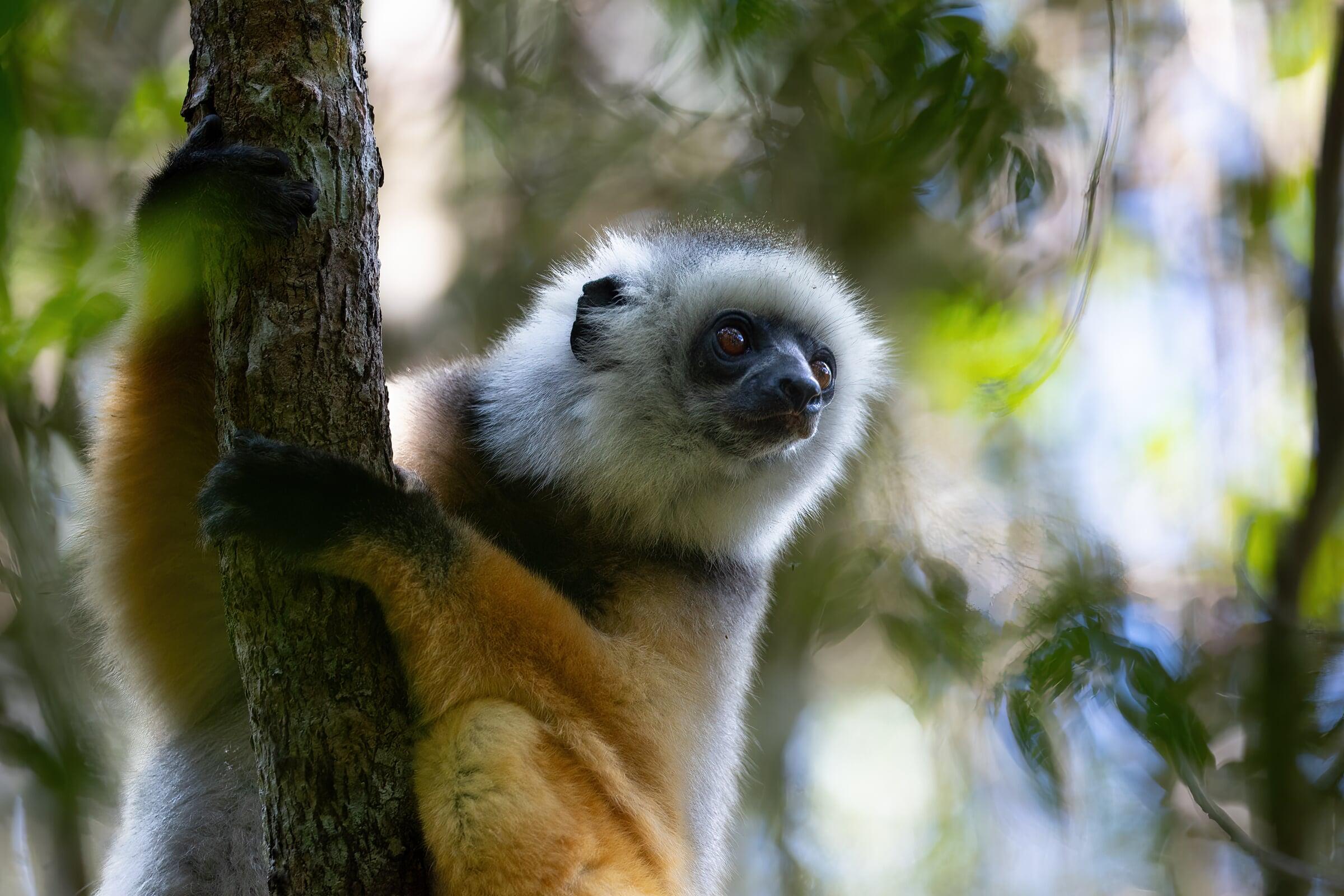
The following day began much less successfully. We started very late, 8am, and it was sunny. Possibly this was due to entrance opening times for the park or what the local guide was willing to do, but I'm not sure. By the time we were walking the sun was up, the light was poor and there was little bird activity. I did get a few shots of Diademed Sifaka, but had made the mistake of not carrying a shorter lens, so it was really just a portrait. The sifaka was the key point of interest for some other tourists at this location, so a tour bus standing underneath the family group soon became part of the experience.
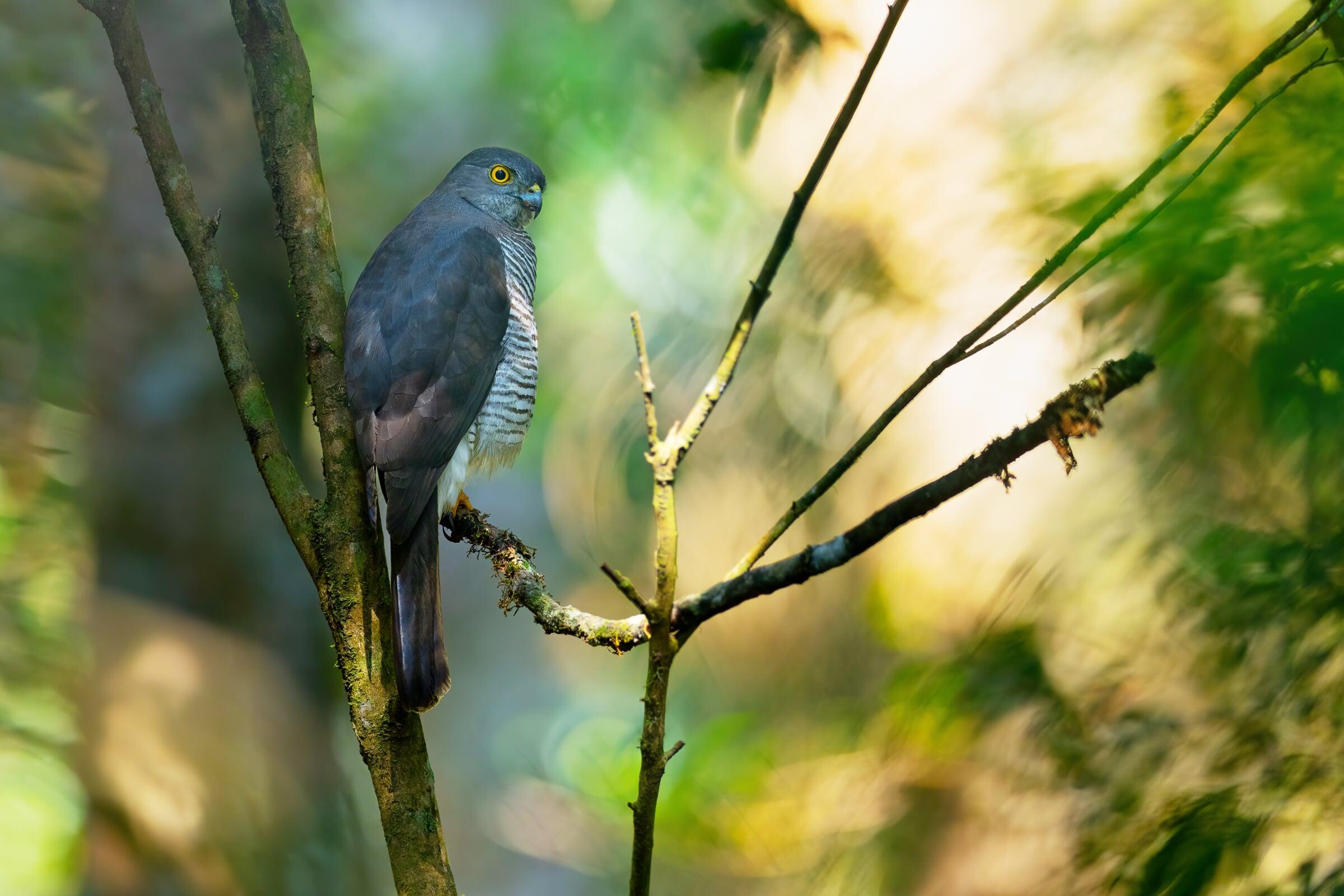
The afternoon was better. We visited another small private reserve. We had a super close encounter with a Madagascar Pygmy Kingfisher beside the trail. I was able to fill the frame at 400mm, though I preferred the light and composition from the previous encounter. Shortly after this we also spotted Frances's Sparrowhawk perhaps 10 meters from the trail.
Ominously we started hearing loud thunder, and it soon became clear that it was going to rain. I had left my rain protection for my camera back at the hotel by accident, but had a waterproof camo poncho. Obviously I was going to need to get wet and keep the camera dry if the storm hit. Canon weather sealing is not thunderstorm proof - I've experienced this with a friend's 800mm f5.6, my own EOS-1D Mark IV and a EOS-1D X in the past.
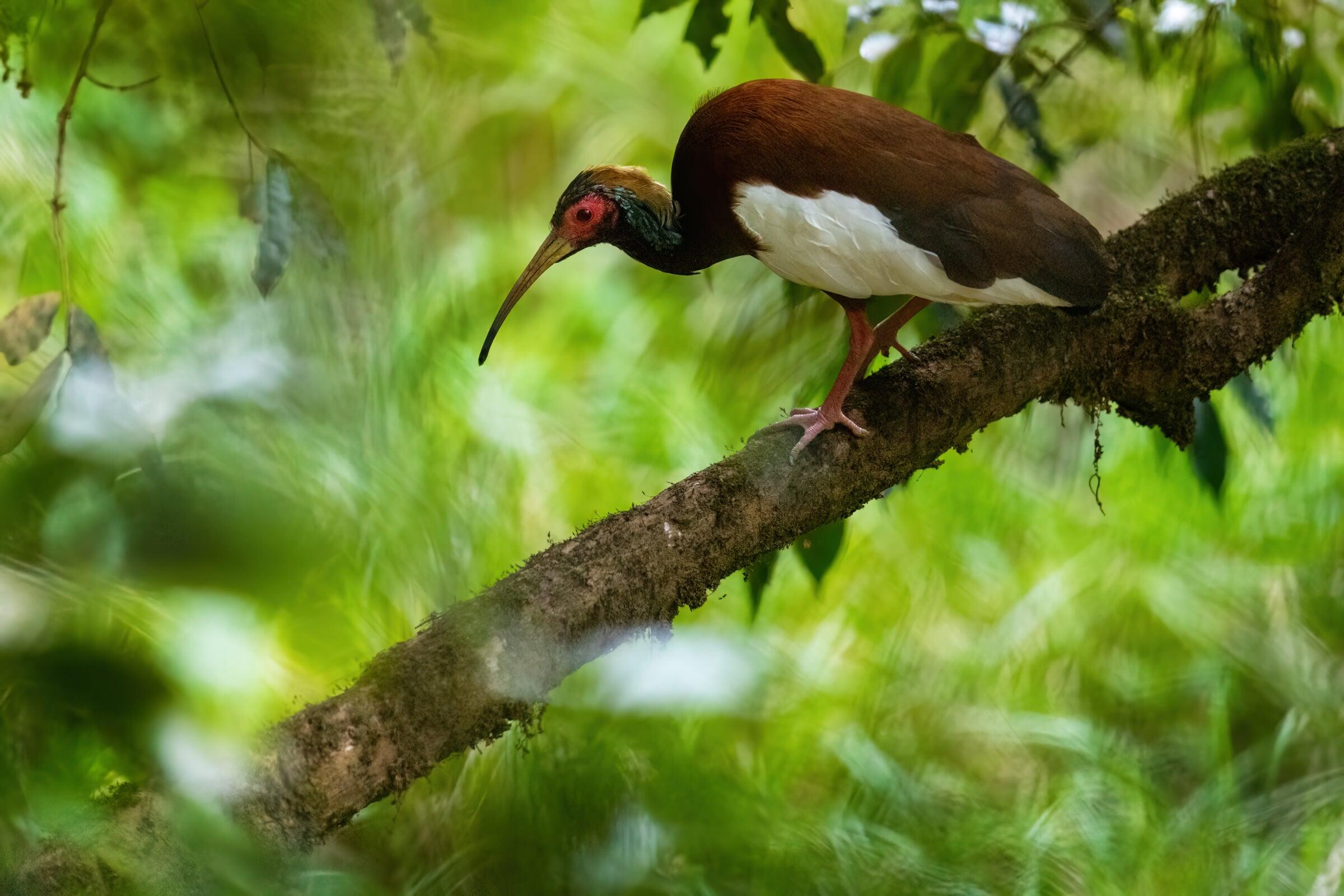
We spent the last bit of time before the storm looking for Madagascar Ibis, eventually finding a perched pair beside the river. The light was exceptionally dim at this point and I took some moderately average shots. Then the rain hit and I covered my gear. The local guides decided we were going to run all the way back to the car. So we did. But we were totally soaked to the bone by the end, so the running was unnecessary, except perhaps for staying warm. We tried a few other sides for the Madagascar Rail in the last part of the afternoon after the storm cleared, but this was unsuccessful. Probably it would have been better just to stay in the private reserve I think.
Marojejy: Helmet Vanga and Silky Sifaka
Marojejy: Helmet Vanga and Silky Sifaka
Our final major destination was Marojejy National Park, in northeastern Madagascar. We flew from Antananarivo to Sambava at 6am in the morning and we met yet another local guide. The local arrangements got off to a characteristically slow start. Apparently the car wasn't ready and instead we were loaded into a tuk tuk. Our vehicle wasn't ready until around 11 am, so we spent several hours waiting in the lobby at a hotel.
When the vehicle eventually arrived, it was time to go shopping for our food for the next days. So we stopped frequently, buying ingredients. The plan was for a three day overnight hike, paying porters and cooks and renting a cabin on the mountain at Marojejy. The air conditioning in the car was broken, and this vehicle was sick. The check engine light was on and we struggled up each hill on the way to our destination. Fortunately at least it was an automatic with a torque converter, and it only stalled a few times. At one point the driver thought something more serious was wrong - the car wouldn't start again. I pointed out it was still in drive and this was rectified and we were soon on our way again.
By about noon we arrived at the park headquarters, paid to have our bags stored, and put the stuff we needed into a smaller bag for a porter to carry. We had lunch at a small local hotely, with rice, soup and zebu. The meal was simple but enjoyable - as always authentic food is preferable to western meals in tourist hotels.
The plan was to spend two nights at Camp 1, making an excursion towards Camp 2. We opted to stay at Camp 1 rather than Camp 2 because some newly built cabins there allowed private accommodation and had solar for phone charging, which was preferred by my wife. Camp 2 involved more basic shared facilities. The walk between the two was only 1 or 2 kilometers, so I think staying at Camp 1 for two nights is probably the best way to do things.
The walk to Camp 1 was roughly 11 km. Unfortunately, the first several kilometres were along a road that was clearly drivable in a suitable vehicle. We passed through villages and agricultural areas in humid temperatures of around 31°C largely out in the sun, carrying our camera equipment while other tourists passed us in 4WDs. I'm sure the walk would have been quite pleasant in the morning but we'd instead waited during that time.
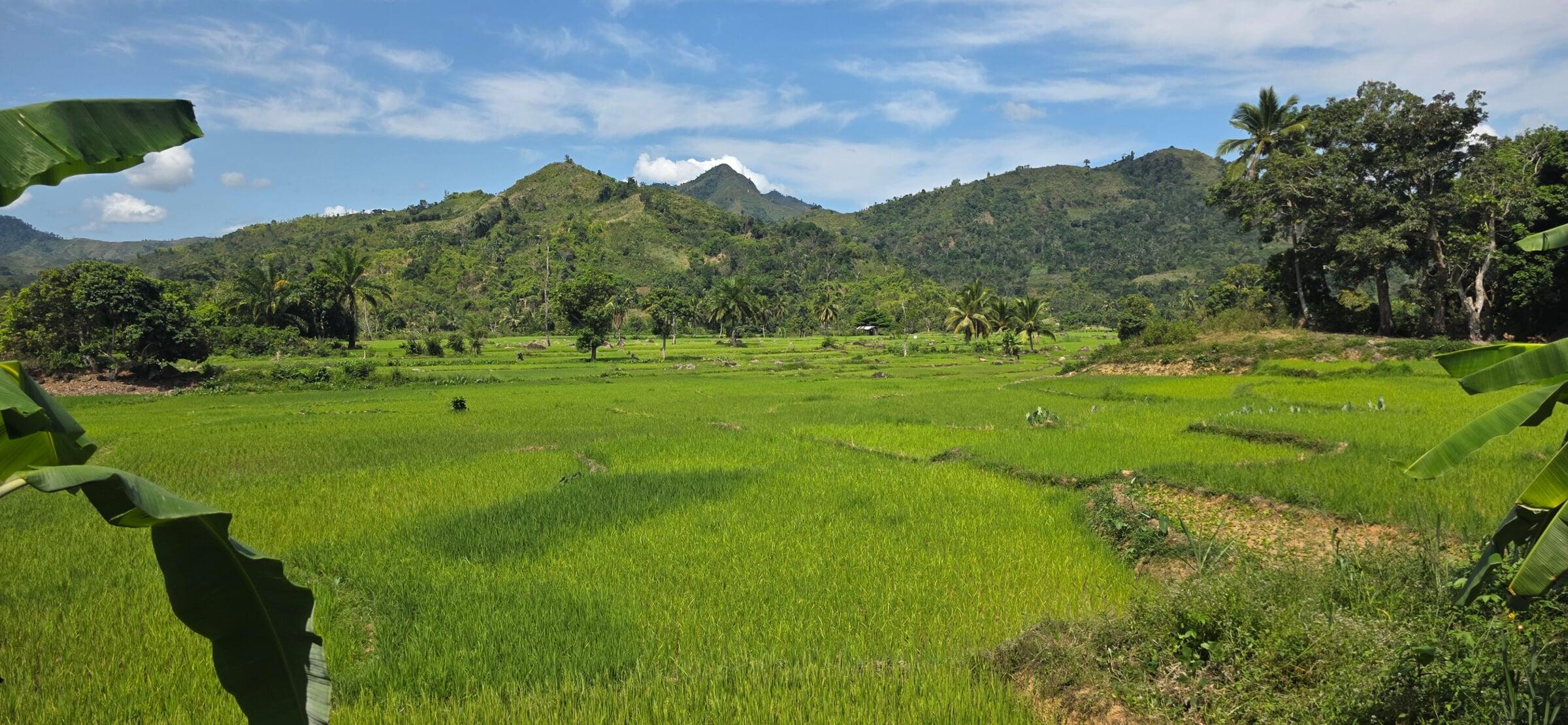
Aside from cooking a little in the sun, the surroundings provided an interesting, look at rural Madagascar. There were rice fields, vanilla cultivation and heavily modified secondary vegetation. The more substantial rainforest appeared gradually as we moved further into the park. Bird activity remained unsurprisingly low for much of the walk given the time of day. My water consumption was not low, and I ended up carrying my wife's backpack as she wasn't having fun either.
We eventually reached the area of a Helmet Vanga nest beside the trail. By that time it was late and the light was deteriorating. So I took a few photographs from the but we didn't hover. Camp 1 was actually quite pleasant. The cold shower was a little shocking but welcome after extensive perspiration. The food prepared by the camp cooks was also much better than I'd expected. We had meals including salad, chicken and soup.
I'd hoped to make an early start the following morning. Unfortunately, the guide was unwilling to leave before about 8 am, despite my preference to be birding at first light. We walked uphill towards Camp 2, gradually moving into better forest. Things were already quiet and the dawn chorus was over. We only really had two encounters from a birding perspective. But these were good ones. Another Helmet Vanga, and a pair of Short-legged Ground-Rollers perched over the steep track.
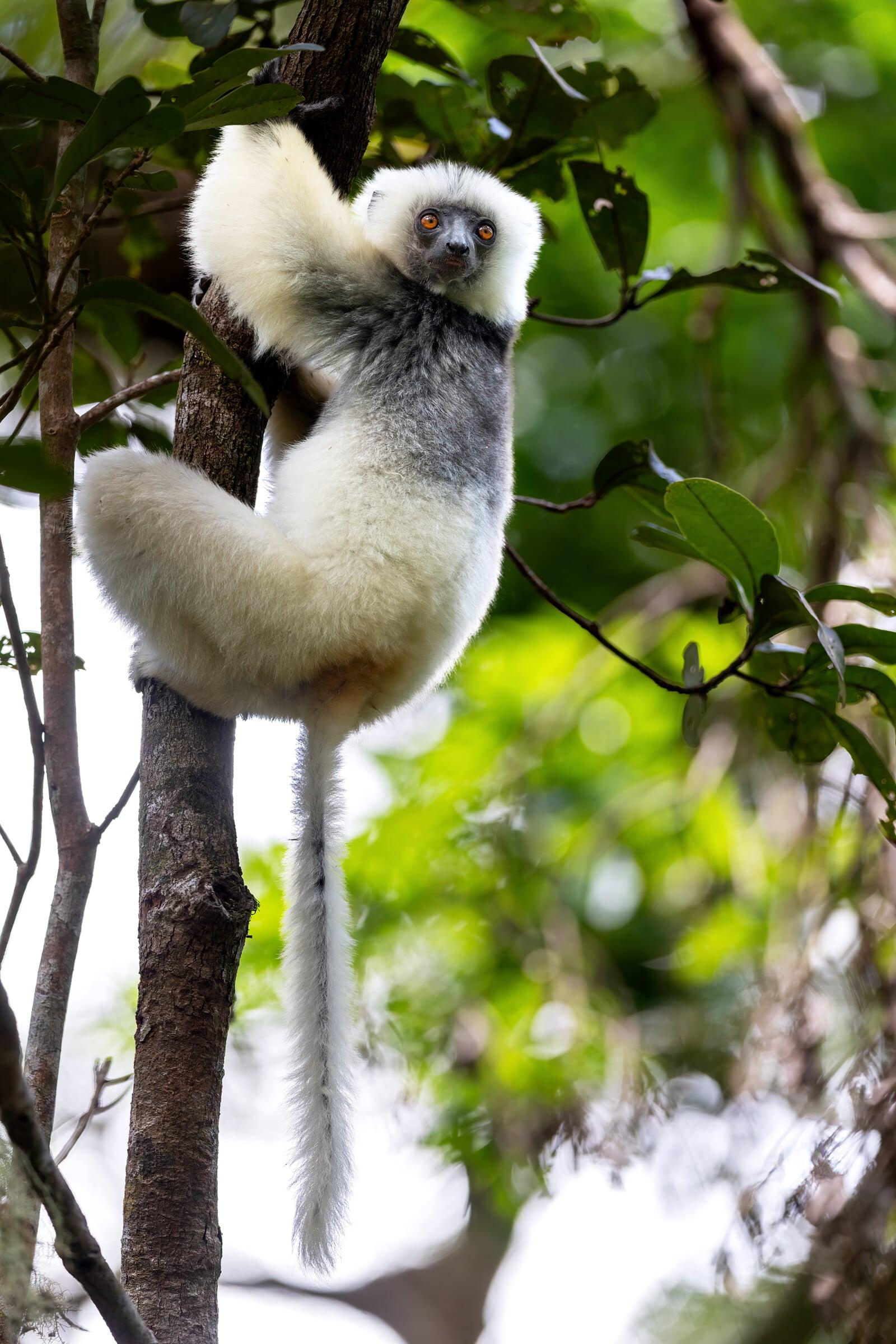
The other major target of the excursion was Silky Sifaka, one of Madagascar's most spectacular lemurs. Two trackers helped locate the animals, taking us along a rough trail cut through the forest. As I understood it, they were basically paid through UNSECO funding to follow the lemurs around full time and stop them from being eaten. The location of the lemurs was very close to camp 2, but we had to go into the forest to get views and the trail was very slippery and steep.
We returned to Camp 1, and I managed to slip on a wet rock while negotiating a section with a rope. The paint was scratched off a corner of my EOS R1. Not as deep as the gouge from Western Australia and everything was fine. Lunch included sardines, beans, vegetables and rice, and was again quite good. Unfortunately, our guide then effectively finished for the afternoon and went off to socialise. Yellow-bellied Sunbird-Asity was on our itinerary but this was abandoned without discussion. I didn't worry about it too much as I had a few blisters from a few days of feet wet with sweat.
The next morning the guide again declined my request for an early start on the final morning, and we began descending around 8 am. As we reached the villages again children shouted out a local expression that I was told translated as "white skin, soft feet". Not far off!
The journey back involved a different car, but also transporting other people and cargo and making unrelated stops along the way, but we made it back without another major breakdown. Altogether, we'd walked around 25 km or more during the Marojejy excursion. The walking wasn't too bad, but I'm sure better timing would have meant a lot less sweat and a few more birds!
Conclusions
Madagascar was an interesting mixture of extraordinary wildlife and occasionally appalling logistics. I had booked through a well-known birding guide who came recommended, but he ultimately didn't accompany us, letting us know this after a long period of not responding to my messages for a nine day period ahead of the trip. Instead, we were handed between several company representatives and local guides. The local guides and spotters were generally excellent, and we succeeded with nearly all our major targets. Unfortunately, the overall organisation was considerably less impressive, with poor communication, unreliable transport and several missed birding sessions.
The final complication came in Sambava, where we were told by our organiser that our return flight to Antananarivo had apparently been cancelled. Some googling revealed that this was due to a schedule change weeks earlier, but the alternative had not been communicated to us. With international connections and little response from the organiser, I purchased expensive replacement tickets on one of the few remaining flights. We subsequently learned that we'd been rebooked onto a flight the following day, but weren't told until we'd already returned to Antananarivo. None of these problems was disastrous, but the cumulative experience leaves me hesitant to recommend the operator, particularly given that even the troublesome Fortuner was a company vehicle!
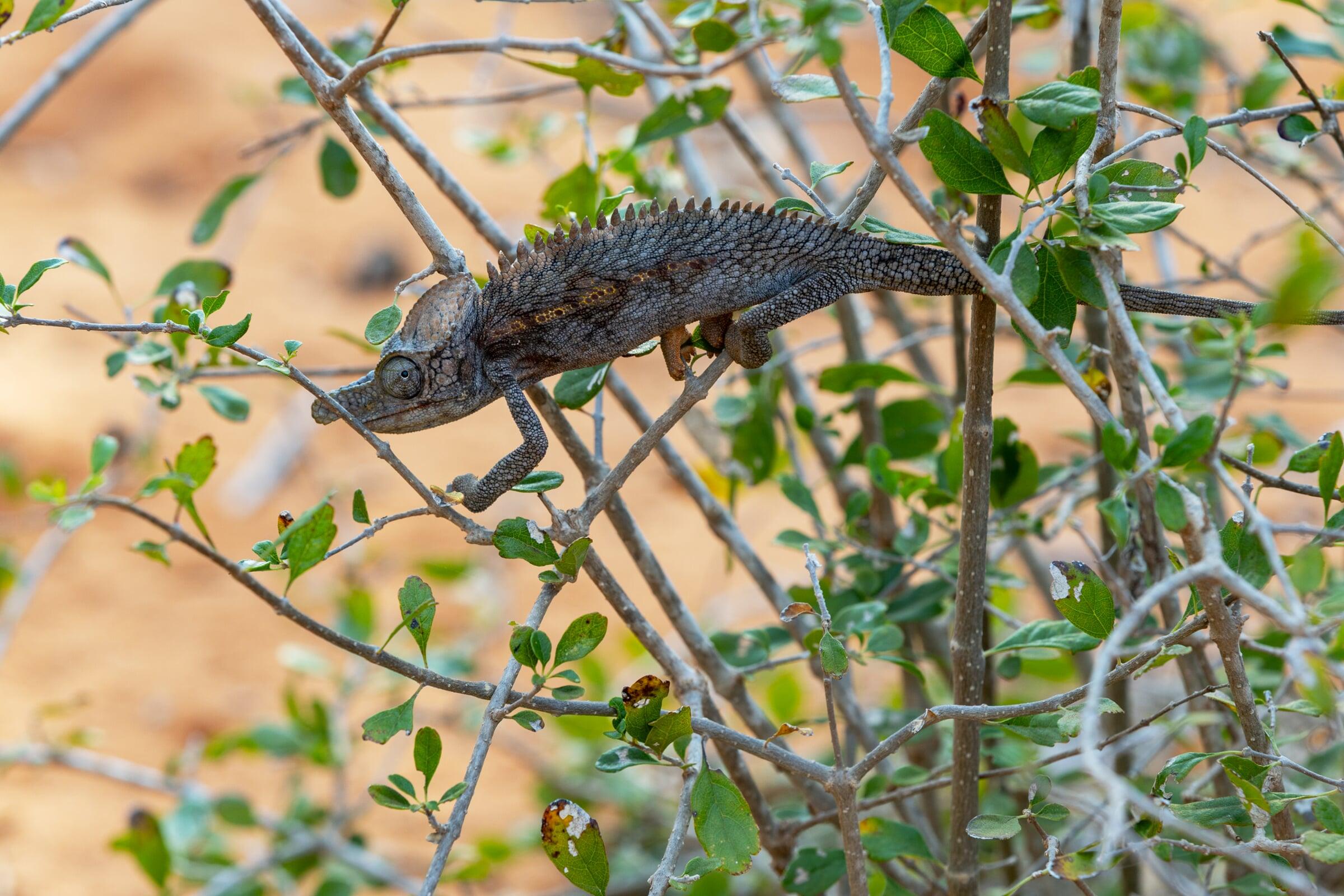
Photographically, I was glad to have both the 600mm f/4 and 400mm f/2.8. The former was useful for distant subjects and more open habitats, while the latter was invaluable in the often gloomy rainforest. Being able to zoom out was also important, with several encounters close enough to require focal lengths around 200–300mm. A 100–500mm or 200-600mm with good image stabilisation would be a fairly practical and much lighter alternative, particularly given how still some subjects were. The thermal monocular also proved extremely useful on several occasions, particularly for locating birds concealed in the often dense vegetation.
Despite the organisational frustrations, I thoroughly enjoyed Madagascar and would happily return, particularly to spend more time in the extraordinary spiny forest and explore some of the areas we missed. I understand 'logistics issues' are sometimes part of the experience, but I'd probably be more careful about the arrangements next time. With all five ground-rollers photographed, Helmet Vanga secured, and a remarkable assortment of lemurs, chameleons and other endemics encountered along the way, the trip achieved almost everything I'd hoped for. Madagascar is an exceptional and unique destination for bird photography.
The complete bird list, is available in my eBird trip report.